






































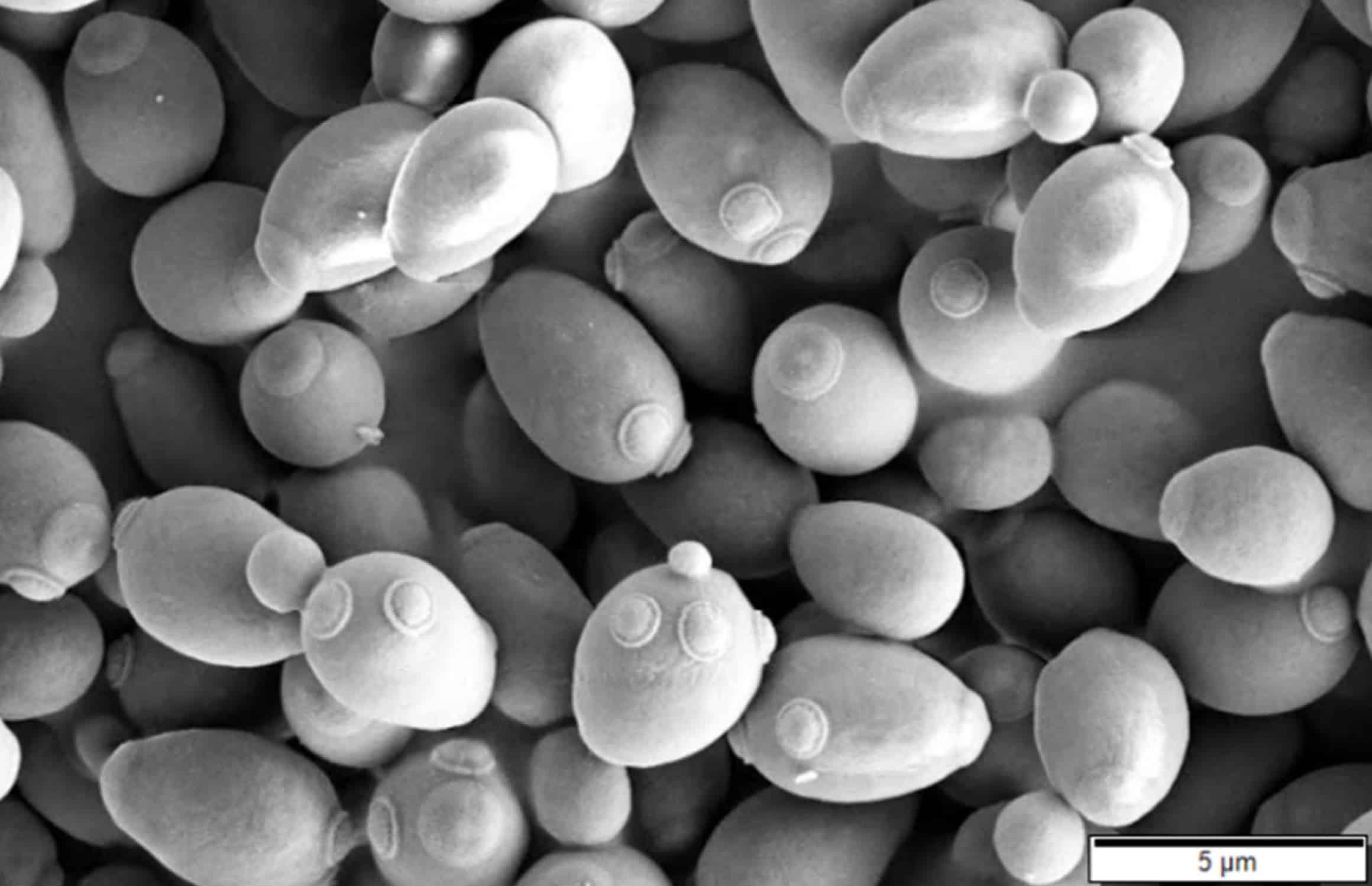
We continue our journey through Christoph Adami’s book, The Evolution of Biological Information. We come now to Chapter 6, “The Evolution of Robustness.”He begins the chapter by talking about the robustness of living things like budding yeast which maintain many genes to be used only in particular conditions. He also writes of redundant systems in airplanes that ensure survival even in dire circumstances. The title of the chapter suggests that we will be given an explanation of how evolutionary processes can account for such redundancy.
Adami presents experiments done using the Avida platform in a series of papers. They increased mutation rate to high levels and found that the evolving Avida programs were able to adapt to a high-mutation rate environment. The genomes were adapted such that mutations were more likely to be neutral thus facilitating the programs’ survival in that environment.
Mechanisms of Robustness
However, despite the several papers published on this kind of experiment, none appears to go into any detail of the mechanisms of that robustness. Indeed, a 2019 paper states about it that “the exact genetic causes of robustness are unknown.” None of the papers compares a mutationally robust Avida program to a more generic one.
It is surprising to me that the authors of these studies did not consider it more of a priority to understand the mechanics of robustness. As it is, the data from the 2019 paper is available and can be analyzed. The programs adapted to high mutational load employ a particular strategy: repeatedly running a small section of code. This constitutes a simpler but less efficient method of performing calculations. The code outside of this short repeating section has little or no effect. That is what makes more mutations neutral and makes these programs robust to mutations.
Evolution Made Easy
Avida is deliberately designed to make evolution work easily within its environment. There are a variety of places in its design that aid the evolutionary process. This is why it is able to evolve “complex” functions. All that has happened in this case is that the typical format of such functions is not robust to a high mutation rate, and it instead evolves a more compact form.
But this is a different thing than the kind of robustness that Adami opened the chapter with. There are no conditional sections being activated to handle new circumstances. There is no redundancy introduced into the genome. There are no sophisticated error-correcting mechanisms being introduced.
This is crucial because it is that kind of robustness which poses a challenge to evolutionary theory. How could evolution build a genome filled with genes to be activated only in particular circumstances? How can selection build a redundant system? In both cases, selection would have to favor the building of a system with no immediate benefit.
What Adami shows is that under high mutational load, selection can favor solutions that are more robust to mutations. Typically, this means that evolution will favor simpler solutions which need less information to accomplish their task. If he wants us to think he’s explaining the evolutionary origin of information, he has not done that.