






































On a chat group last week, a friend shared a local rabbi’s newly recorded class, in part about the Book of Job. I listened and was slightly surprised at myself by being irritated by the braininess. The rabbi dismissed as “stupid” what he considered to be naïve views on theodicy represented in the book by Job’s friends.
A Sociological Shift
“Stupid”? That’s a bit harsh. I mention this because an article in The Telegraph yesterday made me think of it. Urban studies scholar Joel Kotkin highlights a shift in religious sociology. He reports, “Scientists who believe in God are challenging the expert atheist establishment.” Well, that I knew. He cites our colleague Stephen Meyer:
For much of modern history, religion and science have been cast as natural enemies. But today there is a growing (albeit minority) view among scientists that God may well be behind their new discoveries.
As they continue to untangle the complexities of the universe and molecular biology, they see a system that only a higher power could construct. Simple mechanical explanations simply fail to meet the explanatory test.
“The new discoveries in science push us in this direction,” notes Dr Stephen C. Meyer, who recently wowed the broadcaster Piers Morgan (and millions of his viewers) on his eponymous YouTube show.
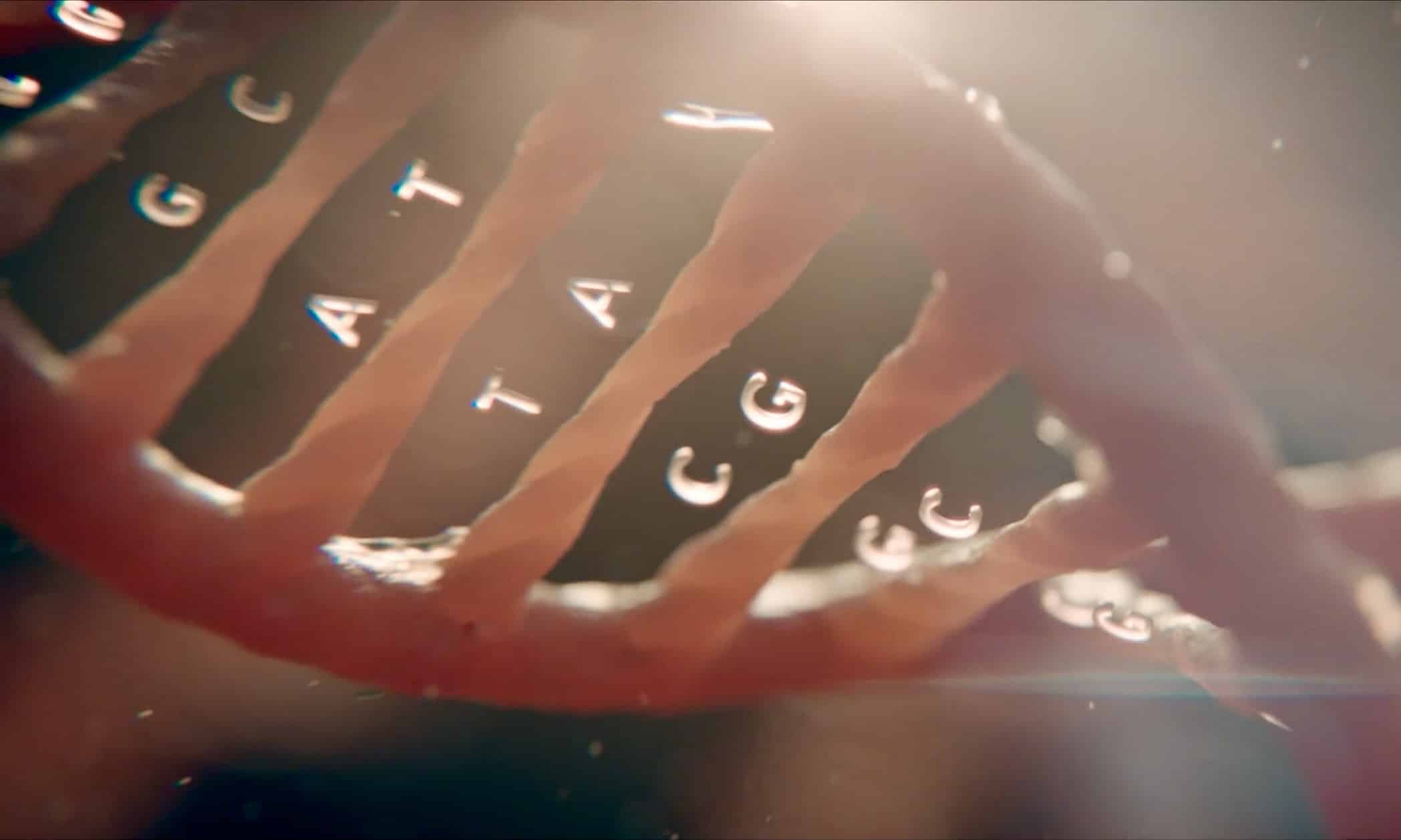
As scientists learn more about cells and chromosomes and the programming they share, some are openly challenging Charles Darwin’s theory of evolution with a view that sees a purpose behind natural phenomena.
In physics, the redefinition of the universe as having a beginning — the so-called Big Bang theory — challenges the conventional notion that the cosmos has always existed and that it operates entirely in quantifiable, predictable ways.
Yes, yes, that’s all familiar. This observation, though, was striking: Kotkin points to a study he published recently with Bheki Mahlobo, finding that “The sociology of religion… is also changing. …[R]eligious affiliation now tends to rise with income and education.”
Faith and Class
They elb at Real Clear Investigations:
- “Drawing on a vast array of longitudinal studies, interviews, and other sources, one startling finding in both America and abroad is that, contrary to past assertions, today the faithful are not poor and ignorant but increasingly from the educated upper middle class.”
- “A central tenet of secularization theory was that higher education would inevitably lead to lower religiosity. This pattern still holds in Europe, but the 2022-2023 Cooperative Election Study, which included nearly 85,000 respondents, indicates a positive correlation between educational attainment and religious attendance in the United States. High school graduates report attending religious services weekly at a rate of approximately 23%, whereas graduate degree holders report attending weekly at a rate of approximately 30%.”
- “This suggests that religion is becoming an elite marker in America. Increasingly, at least in the U.S., religious affiliation has become a form of elite social behavior associated with stability, community leadership, and bourgeois respectability. Indeed, a deep dive into the data shows that, over the past 15 years, religiously engaged people have become more likely to be well-educated, while atheists are less so. Generally, the nones tend to be somewhat less schooled than their more religious counterparts.”
Note this: “religiously engaged people have become more likely to be well-educated, while atheists are less so.” On behalf of atheists: “Ouch!”
That’s Not the Stereotype of Old
But it kind of makes sense of why a book like Dr. Meyer’s Return of the God Hypothesis can get away with weighing in at 551 pages, and why you can have a documentary like The Story of Everything, based on the book, that is frankly the highest-IQ movie I’ve seen in a while. (As I learned this morning, it is, by the way, pre-ordering now on Blu-ray and DVD.)
I don’t say that merely to compliment the film, but as a reflection of how religious sociology is changing in interesting ways. It’s not just that science increasingly points the way to engagement with faith, but that intelligence and intelligent design, contrary to the old atheist stereotypes, are proceeding arm in arm.