






































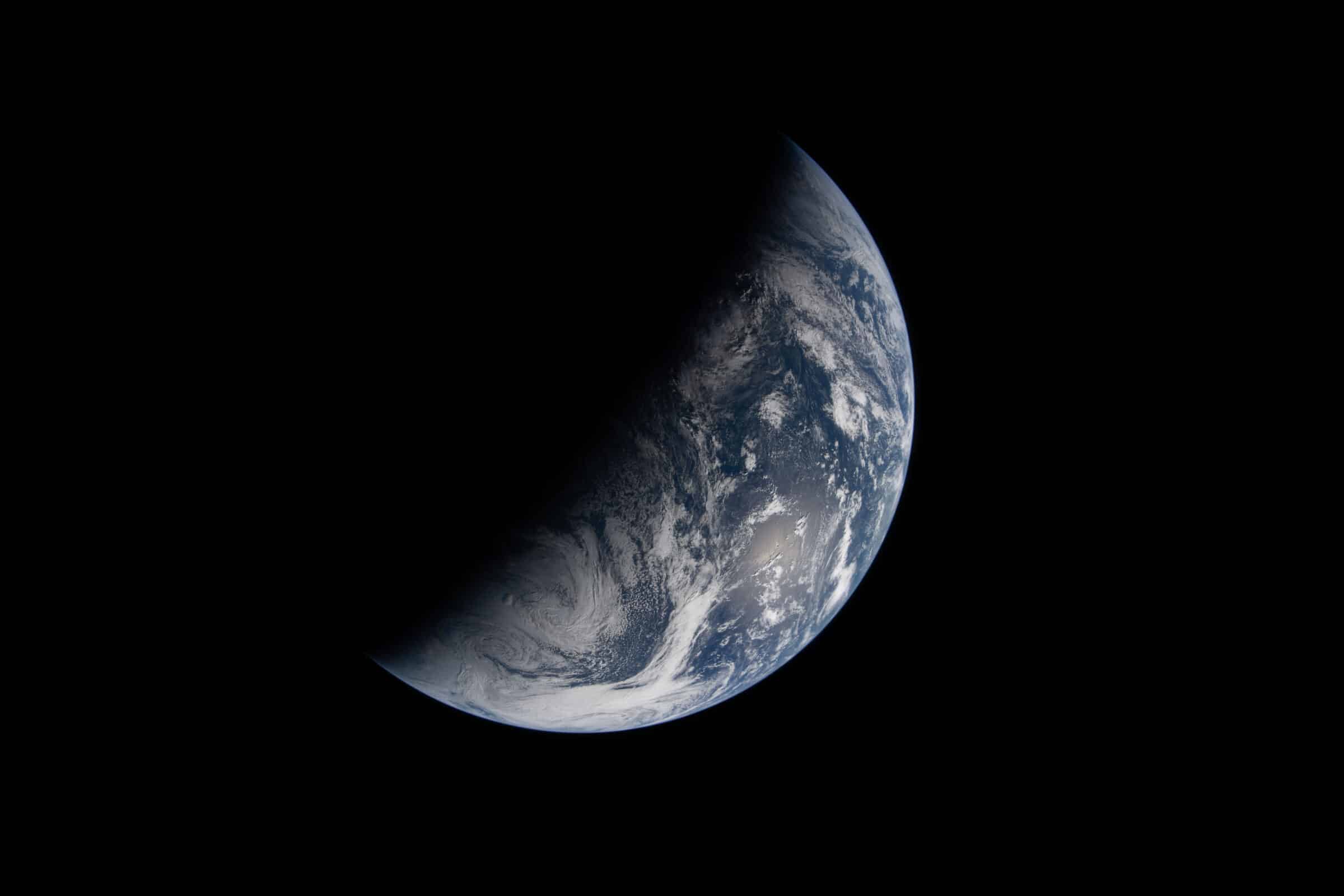
In reading David Klinghoffer’s recent comments on Bethel McGrew’s Wall Street Journal article, relevant to The Story of Everything, a single phrase of McGrew’s particularly arrested my attention: “Man isn’t a lonely cosmic accident, but beloved.”
To be “beloved” — isn’t that what we all long for at the deepest level of our being? Two stories, each garnering support from the universe and our existence in it, portray humans as either the beloved culmination of an intentionally designed cosmos, or less than a speck of dust, eking out a meaningless existence on a “pale blue dot” in space.
The biblical story of creation assures us that we are “fearfully and wonderfully made.” And although our free-will choices early on short-circuited our designed ability to transform nature into an extended paradise, the narrative carefully reveals humans as beloved. God’s love, far from intellectually detached, enters the story in the familiar plotline of a loving prince redeeming the captive princess at the cost of his own life.
Primeval Churnings of the Cosmos
In contrast, a materialistic narrative has crept into human culture, spinning its web of purposelessness, portraying humans as the mere froth on primeval churnings of the cosmos. Curiously, this storyline has gained such an ardent following that one could objectively wonder what the attraction could be. Who longs to be a “speck of dust?”
Borrowing from the overall scope of life on Earth, evolution’s allure likely comes from the notion that humans represent the “most highly evolved” species on the planet. So, if we’re at bottom a speck of dust, at least we’re on top of the other bits of dust. And as long as we’re top dog (or dust), we can tolerate our unglamorous ancestry.
For some, a desirable fringe benefit of evolution is an imagined justification for atheism and self-determination: “Darwin made it possible to be an intellectually fulfilled atheist.” Interestingly, the temptation to defy death, as long as we’re in charge also echoes the biblical story of the origin and fall of man. For humans who have embraced atheism, Darwinism has served to fill in the blank regarding the question of our origins.
But once scientists become committed to materialism, which is the most virulent form of atheism, Darwinism becomes the only game in town. In that case, when it comes to biological origins, something very close to Darwinism must be true.1
Significant “Darning”
The more pressing question, however, is whether Darwinism is true. Its proponents have long trumpeted Darwinian evolution as a scientific truth beyond refutation, sweeping along even those whose worldview should have prevented them from joining the ride.2 The actual evidence for evolution has always been sketchy, at best, requiring significant “darning” to try to patch the many holes through which the light reveals a different story.
The scientific argument against evolution has grown weightier with advancing knowledge of the inner biomolecular complexity of the cell.3 System-wide, the living creature reveals multiple layers of inter-dependent designs, and the macro-functionality of the body can only be described as “Ultimate Engineering.” The information content coded within the cell, particularly in DNA, provides strong evidence for authorship consistent with a God-breathed origin of life.
Unexpected Beauty
Further revealing “man as beloved,” we find countless examples of unexpected beauty in nature. From The Story of Everything, on the “beauty principle”:
It’s as if humans possess an unaccountable gift of perceiving and enjoying beauty across the natural spectrum. We delight in the beauty of flowers in a mountain meadow as well as the sight of a high mountain peak, snow-capped in brilliant white against a distant blue sky. Our senses are tuned to enjoy the music of a classical symphony and the simple caroling of birdsong in the morning. We are thrilled by the crashing of waves against a rocky coastline and moved to awe by the panoply of starry constellations on a cloudless night.
A few minor shifts in how light interacts with matter and our sense of sight would be dulled to most of the visual beauty that we most appreciate in nature. Abounding beauty in nature, and our unique ability to enjoy it, have been described as gratuitous — unnecessary from a utilitarian, survival-driven point of view. As noted by Ann Gauger,
Natural selection might account for some aspects of living things, but the beauty of the world is gratuitous, prodigal, indicating a designer who loves beauty for its own sake.
Further testimony to “man as beloved” comes from considering that humans may be the only species of life on Earth that can “see” and appreciate beauty in its myriads of forms. Bees seek out flowers, but not for their aesthetic qualities. Our pet cats seem indifferent to the color of the tulips gracing our backyard. Do animals thrill at the rosy glow of a western sunset? I don’t know, but I don’t think so.
Notes
- Dembski, W. A. “The Law of Conservation of Information: Search Processes Only Redistribute Existing Information,” BIO-Complexity, 2025 (2):1-58. doi:10.5048/BIO-C.2025.2
- See, for example, the recent book by John West: https://scienceandculture.com/2025/02/new-book-stockholm-syndrome-christianity/
- See, for example, Fazale Rana, The Cell’s Design: How Chemistry Reveals the Creator’s Artistry, (Grand Rapids: Baker Books, 2008).