






































Two stories compete in our culture. Each tells its version of the story of everything.
In one, which was the belief of the great scientists that gave us the Scientific Revolution — including Galileo, Kepler, Newton — an intelligent designer shaped both the cosmos and life from the beginning of space and time.
The other story, given to us by 19th century thinkers, proposes a purely material reality, with no designer, but instead only unguided, unintelligent forces, physical laws and chance.
April 30 Across the Nation
In a beautiful, exciting, and very deeply informed new documentary, The Story of Everything, a diverse range of scientists and scholars explain why the earlier story, of meaning and purpose in a created universe, has been vindicated by three scientific discoveries. The film will open nationally in theaters on April 30. Tickets are now on sale! Get them on the film’s website here.
The Story of Everything was directed by Eric Esau, based on the book Return of the God Hypothesis, by philosopher of science and New York Times bestselling author Stephen Meyer.
Meyer’s book has been praised by Jordan Peterson and by Nobel Prize-winning physicist Brian Josephson, cited by former atheists like Wikipedia co-founder Larry Sanger and social scientist Charles Murray as playing a role in their journeys to Christianity. On his podcast, Joe Rogan discussed the God Hypothesis with Meyer and subsequently began his own exploration of faith.
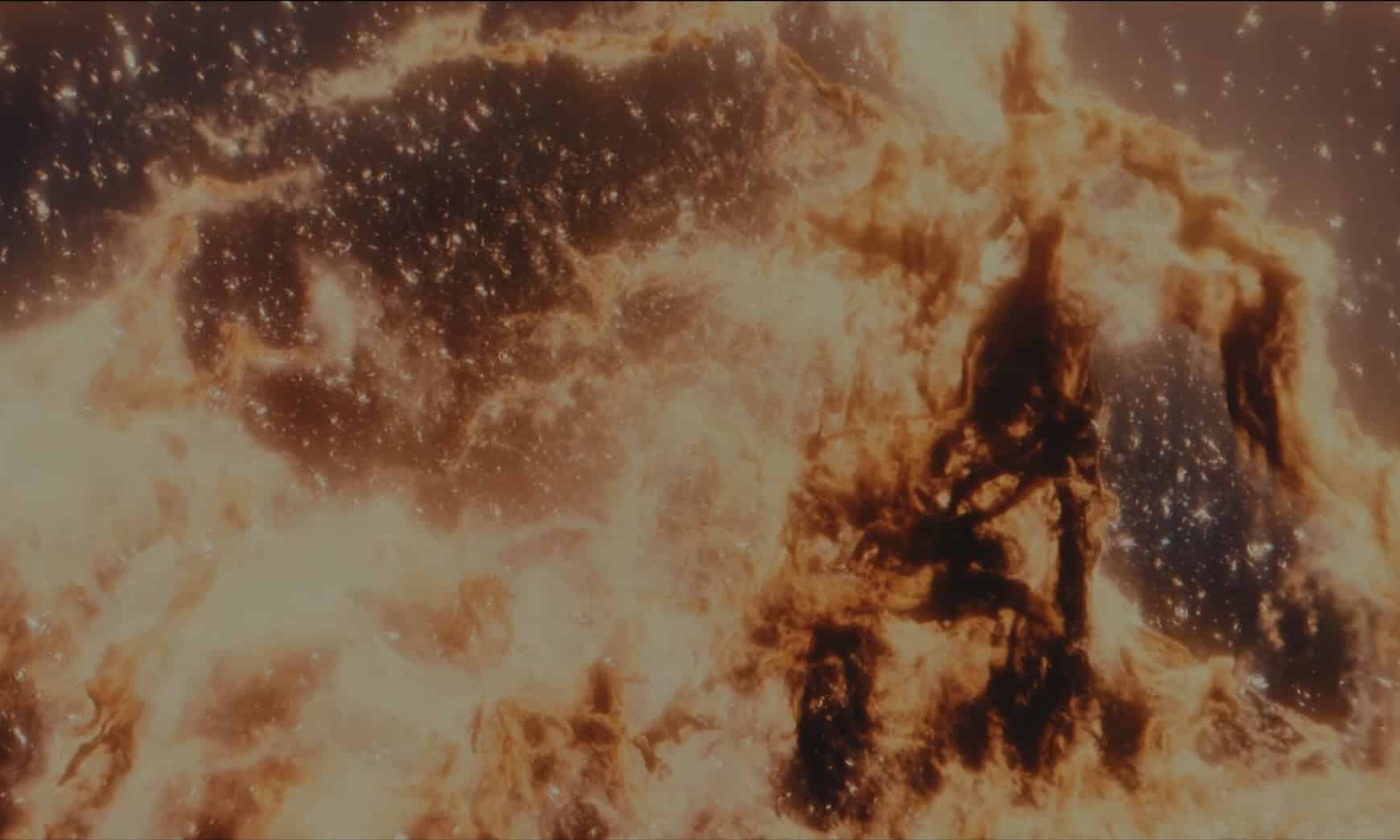
Central to the materialist story is the idea that the universe had no beginning but instead has always existed. The Story of Everything shows how science in the 20th and 21st centuries has revealed the opposite to be the case: The universe began at a finite point in the past, in a great burst. That has come to be known as the Big Bang.
Einstein’s “Greatest Blunder”
The cosmic beginning was resisted by some scientists at first because it sounded too much like the Scriptural phrase, “In the beginning.” Albert Einstein recognized his own resistance to it as his “greatest blunder.” The central insight that led to the Big Bang theory was that of Catholic Belgian priest Georges Lemaître, a theoretical physicist. But it came from science, not Scripture.
Atheist astronomer Allan Sandage reached an epochal conclusion, again from the scientific evidence, that the Big Bang was a “supernatural event.” Similarly, agnostic astronomer Robert Jastrow concluded his book God and the Astronomers with a striking image:
For the scientist who has lived by his faith in the power of reason, the story ends like a bad dream. He has scaled the mountains of ignorance; he is about to conquer the highest peak. As he pulls himself over the final rock, he is greeted by a band of theologians who have been sitting there for centuries.
For aggressive atheist scientists like Richard Dawkins and Lawrence Krauss, also featured in the film, that does sound like a nightmare. For many others, though, modern science offers an answer to a prayer. That is the story of The Story of Everything.