





































How is the job of a scientist similar to the job of an attorney? And how do you define evidence? On a new episode of ID the Future, host Casey Luskin continues his conversation with attorney and former Colorado House of Representatives member Barry Arrington about the arguments for intelligent design marshaled in Arrington’s book Unforgetting God. In this concluding segment, Arrington and Luskin review common objections to intelligent design and discuss the larger philosophical, cultural, and legal implications of the debate over intelligent design and materialism.
In Part 1, Arrington gave an attorney’s perspective on several classes of evidence for intelligent design, from the Big Bang to quantum mechanics and anthropic fine-tuning. In the second half of their conversation, Luskin and Arrington begin by discussing the importance of careful preparation and honesty when having conversations about intelligent design with journalists and members of the media. Arrington goes on to explain how the job of a scientist and the job of an attorney are similar: they both marshal the evidence and advance it towards proving a conclusion. And just what is evidence? “Evidence is anything that tends to make a proposition more probable,” says Arrington. “It doesn’t have to be a smoking gun, but if it advances the ball one iota, it is evidence.”
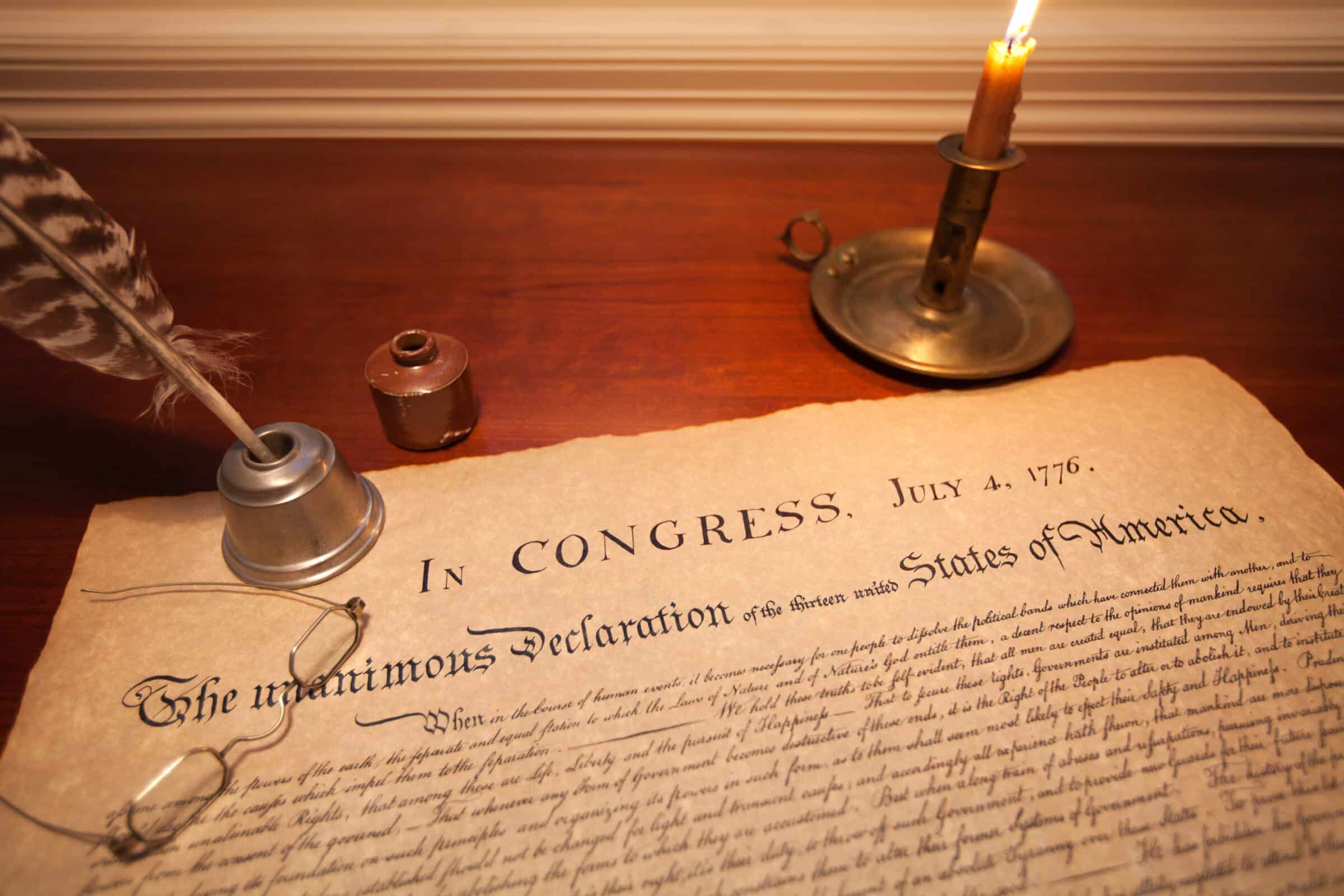
Arrington and Luskin also zoom into the consequences of adopting a materialist view of life. Arrington mentions in particular the Declaration of Independence and its assertion that “all men are created equal, endowed by their Creator with certain inalienable rights.” But if the source of those rights doesn’t exist, cautions Arrington, then neither does the basis for the inalienable rights. And if you follow materialist assumptions to their natural conclusions, there’s a danger that the freedoms of many will be in jeopardy.
Download the podcast or listen to it here. This is Part 2 of a two-part conversation. Listen to Part 1.
Dig Deeper
- Learn more about and get a copy of Barry Arrington’s book Unforgetting God.
- Watch this and other interviews on our new YouTube channel!