






































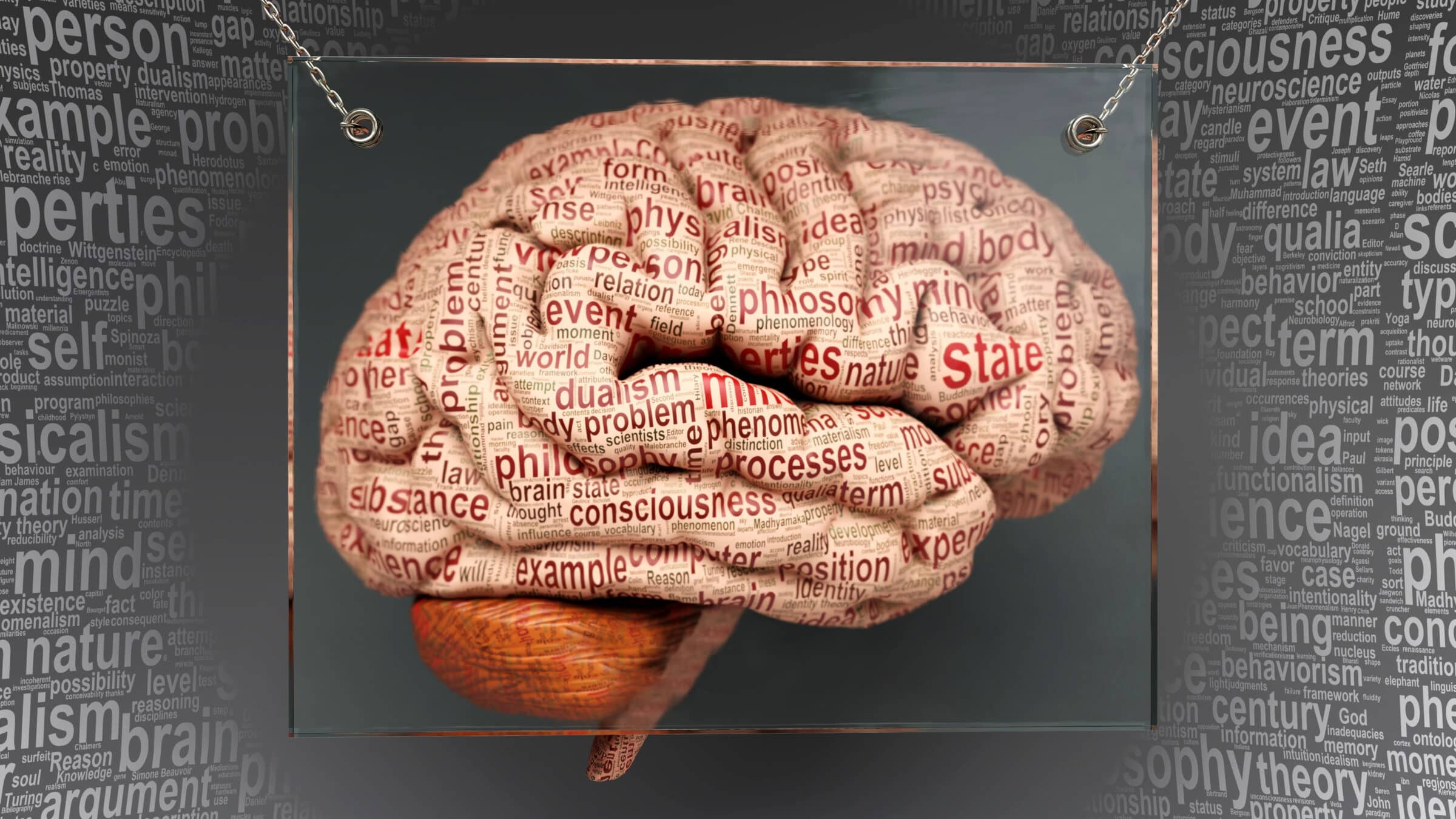
This week on YouTube, the Feed Your Head podcast published its interview with neurosurgeon Michael Egnor on a topic most people have at least some interest in (and the others are pretending not to): Is your mind immortal?
Dr. Egnor is the author, along with science writer Denyse O’Leary, of The Immortal Mind (Worthy, June 3, 2025). His host, Rabbi Adam Jacobs, writes on philosophical issues for a number of publications, including the Times of Israel, the Algemeiner Journal, and Aish.com.
In a transcript provided at the Feed Your Head blog, he commented,
Adam Jacobs: I have just completed your book, The Immortal Mind, and I mean this stuff is really right up my alley. I’ve read a lot of literature along these lines, but I will say that the way you have organized it and the argumentation that you’ve made, this structure is very compelling. And although I’ll play the part of the skeptic a little bit in our conversation, I’m certainly very open and very moved by the way you’ve presented this information. So, thank you for that to start off with.
“Is Your Mind Immortal? (Interview}”
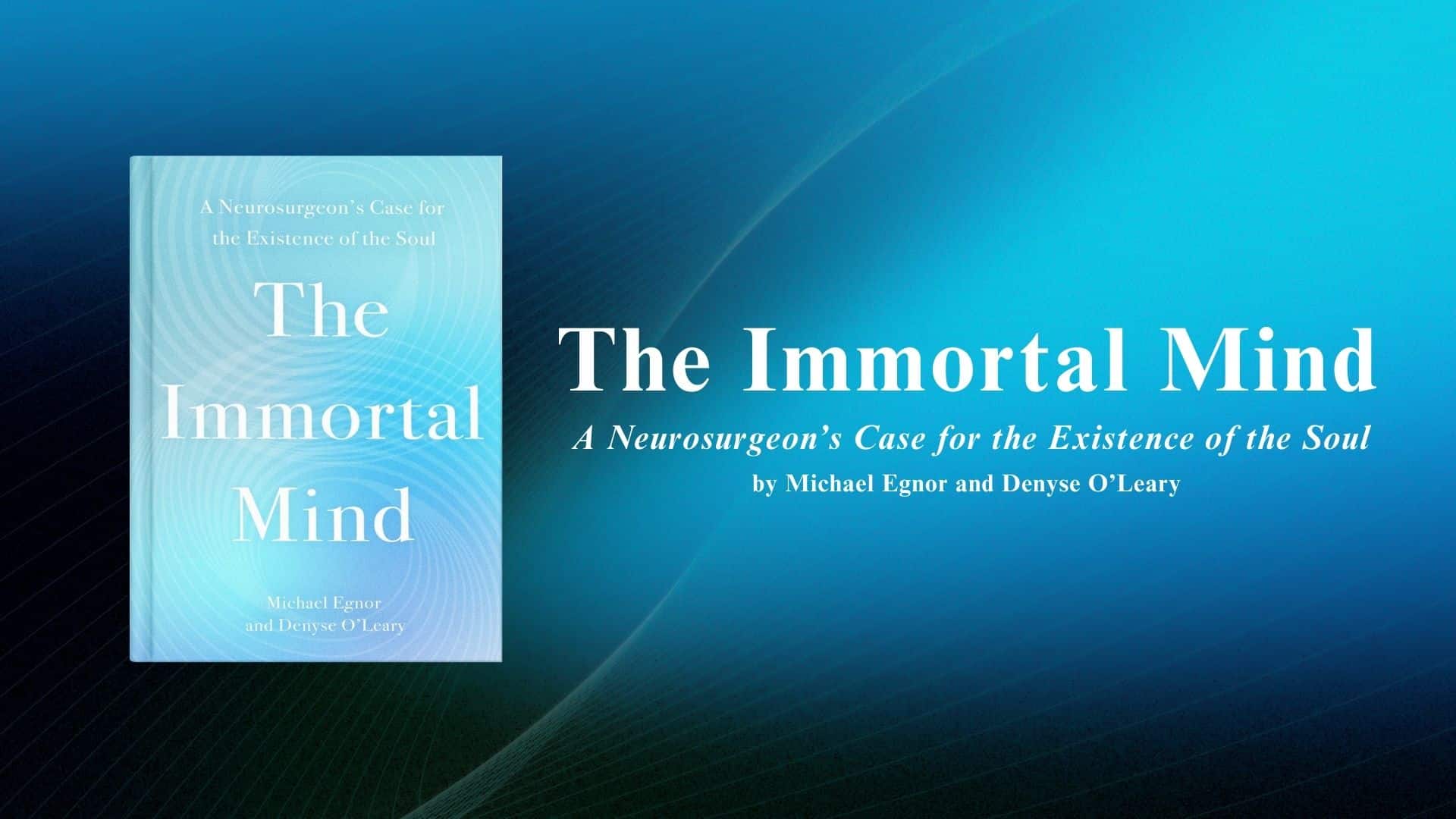 Image source: Discovery Institute.
A Specific Place?
He then asked Dr. Egnor a number of focused questions, including this one: Does the mind have a specific place in the brain?
Adam Jacobs: Getting back to some more of these examples, the question of “Does the mind have a specific place in the brain” — which I think we’ve already begun to answer but I wanted just to quote once again — you say, “when I write a mathematical equation on a piece of paper, the area of my brain that generates the movement of my right hand can be localized to a millimeter accuracy on the precentral gyrus of my left frontal lobe. But my understanding of the equation cannot be localized at all.”
And then a little bit later, you say, “there is no evidence that consciousness resides in any specific area of the brain.” Because consciousness is not something that it has location, it doesn’t make any sense to talk about it as having location…
Could you just explain how that is?
Michael Egnor: Yes. Consciousness, again, as the means by which we have experience, is not in itself a part of the material world. So it’s not something that can be located in the material world. For example, my consciousness right here (moves head) is not different than my consciousness right here. I’ve moved my head in the screen, but there’s no difference in my consciousness in those two locations.
It’s not that consciousness occupies that whole field; it’s that consciousness is not the kind of thing that can have a location. One can speak of consciousness as metaphorically having a location where it’s exercised. That is that if I am sitting at my desk and I have a thought, you might say, my thought is sort of where I am, but that’s just a metaphor. Consciousness is not the kind of thing that can have locations, but something I write on a piece of paper can have a location, and my brain has a location. But my consciousness is not the same thing.
Adam Jacobs: Then, going back again, I’ve had a lot of different kinds of conversations, thankfully over the last few years, with a lot of very accomplished thinkers. Many of them take it as an absolutely axiomatic and obvious point that, whether or not we fully understand it, consciousness must be produced by the brain. That brain states always correlate to feelings and thoughts and whatnot, and I find this kind of information to be laughable.
And when you bring it up, it’s difficult because you can cite examples like this, and they seem to find it almost comical, as if the very fact that you’re bringing it up means you don’t understand what you’re talking about. I presume you’ve experienced this yourself, or at least have observed it.
Egnor: That goes on, but that’s just because they have a materialist bias. I mean, if you have an ideological ax to grind on this, the way you’ll look at it, but if you look at the evidence, if you look at logic and evidence, I think it all forms a pretty clear picture that Denyse and I talk about in our book.
Jacobs: Okay. And what do they say? I mean, do you have debates with people? Do you discuss this with skeptics?
Egnor: In my professional life, I tend not to because most of my interactions don’t really involve this.
And a very good example of this was, I was at a lecture given by philosopher of neuroscience Patricia Churchland who’s a philosopher. And she believes in a philosophical perspective on the mind called eliminative materialism, that the mind doesn’t really exist, that we just use terms that refer to brain processes.
She gave a lecture at Stony Brook [Michael Egnor’s university] a number of years ago, and I went there with a neuroscientist who’s a friend of mine. We were in the audience listening to it, and then we walked out of the lecture hall, and we were both kind of chuckling: It’s kind of funny to say that I believe that there are no beliefs.
So I asked my friend, “So where do beliefs come from?” If they really exist, which any sane person agrees that there are such things as beliefs, then what are they? Where do they come from?
My friend said, well, they’re processes in the cerebral cortex.
And I said, well, how does that work? And he goes, “Ah, that’s a silly question. Silly question.”
And just went on there, walked down the hallway, and waved goodbye to me.
So when you ask them how it works, they get a little vague.
Theories of Consciousness
Dr. Egnor went on to say that there are many theories of the origin of consciousness, of which Integrated Information Theory (IIT) and Global Workspace Theory (GWT) are among the most prominent. But none offer a definitive explanation.
In short, the conventional assumption today is that consciousness has a material source. Yet no one has found a place where it lives in the brain. The materialist assumption is without evidence.
Be sure to watch the whole interview!
Cross-posted at Mind Matters News.