






































Science and Culture Today Discovering Design in Nature
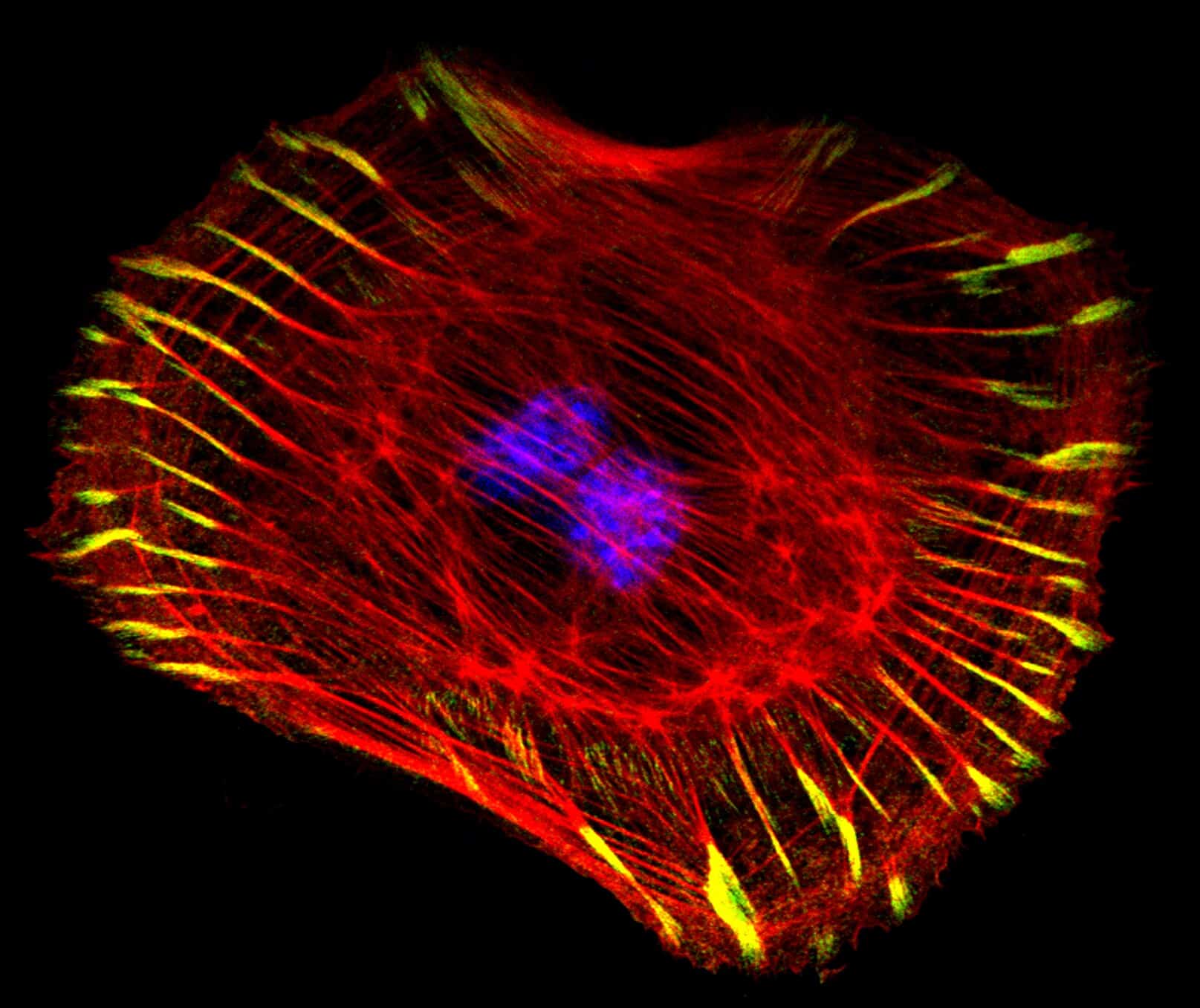
Cell_division.tif
Image: Cell division, via Wikimedia Commons.
Latest

Intelligent Design in the Eukaryotic Cell Cycle

Categories
Evolution
Intelligent Design
Share
Facebook
Twitter/X
LinkedIn
Flipboard
Print
Email

On a new episode of ID the Future, I begin a series with Dr. Jonathan McLatchie delving into the remarkable design and irreducible complexity of the eukaryotic cell cycle. We discuss the differences between prokaryotic and eukaryotic cells, the phases involved in eukaryotic cell division, and the concept of irreducible complexity. We explore how various components of the cell division process, such as kinetochores and microtubules, are essential for successful mitosis and why these systems are more likely the product of intelligent design than an unguided evolutionary process. 

Click here to display content from YouTube.
Learn more in YouTube’s privacy policy.

In his book On the Origin of Species, Charles Darwin uses the Latin expression “Natura non facit saltus,” which translates to “Nature does not make jumps.” That’s the built-in limitation of Darwinian processes: by default they are stepwise and gradual. And of course, Darwin acknowledged this himself as a test of evolution in the Origin: “If it could be demonstrated that any complex organ existed, which not possibly have been formed by numerous, successive, slight modifications, my theory would absolutely break down.” A close inspection of the components and processes involved in eukaryotic cell division demonstrates just one of many such systems that disqualify Mr. Darwin’s theory as an adequate explanation for their origin. Download the podcast or listen to it here.

Dig Deeper

  • This is Part 1 of a short series. Look for more on this topic soon!
  • Enjoy more from Dr. McLatchie on ID the Future.

Andrew McDiarmid

Director of Podcasting and Senior Fellow
Andrew McDiarmid is Director of Podcasting and a Senior Fellow at Discovery Institute. He is also a contributing writer to Mind Matters. He produces ID The Future, a podcast from the Center for Science & Culture that presents the case, research, and implications of intelligent design and explores the debate over evolution. He writes and speaks regularly on the impact of technology on human living. His work has appeared in numerous publications, including the New York Post, Houston Chronicle, The Daily Wire, San Francisco Chronicle, Real Clear Politics, Newsmax, The American Spectator, The Federalist, Technoskeptic Magazine, and elsewhere. In addition to his roles at Discovery Institute, he promotes his homeland as host of the Scottish culture and music podcast Simply Scottish. Andrew holds an MA in Teaching from Seattle Pacific University and a BA in English/Creative Writing from the University of Washington.
Benefiting from Science & Culture Today?
Support the Center for Science and Culture and ensure that we can continue to publish counter-cultural commentary and original reporting and analysis on scientific research, evolution, neuroscience, bioethics, and intelligent design.

© Discovery Institute