






































Science and Culture Today Discovering Design in Nature
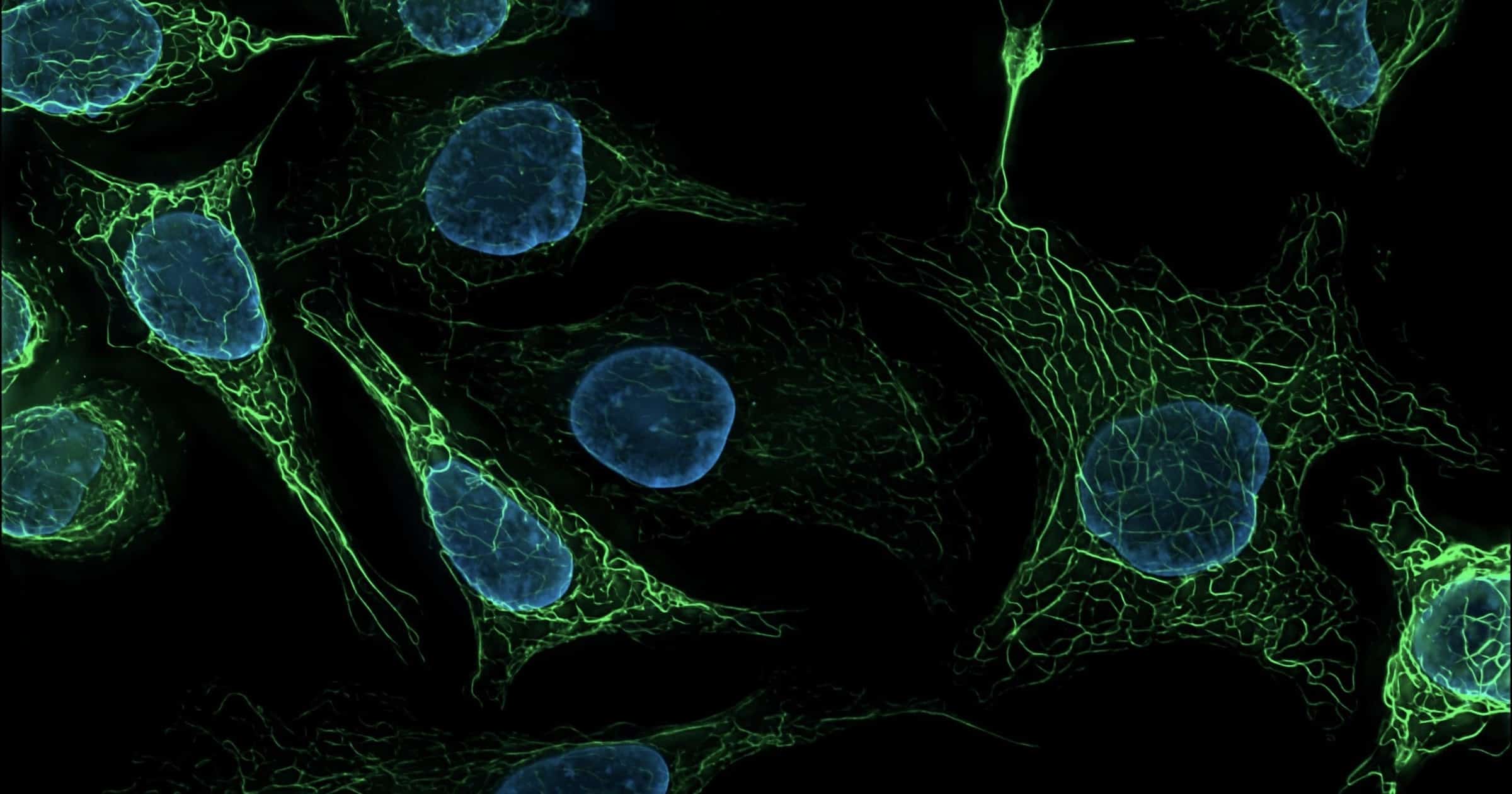
human cells
Image credit: ZEISS Microscopy from Germany, CC BY 2.0 <https://creativecommons.org/licenses/by/2.0>, via Wikimedia Commons.
Latest

Mapping the Pleiotropic Network of Human Cells

Categories
Biology
Intelligent Design
Life Sciences
Share
Facebook
Twitter/X
LinkedIn
Flipboard
Print
Email

If you think about how you use English words, you quickly realize that words are polyfunctional. “House,” for instance, can be a noun, a verb, or an adjective (“house music,” “house money,” etc.). 

Thus, if you imagine eliminating the word “house” from your daily-use lexicon, a wide range of different propositions would be affected, many having no apparent semantic relation to each other.

Genes and proteins are remarkably similar to natural-language words in this polyfunctional respect. For many decades, “pleiotropy” has been the term describing the multiple-system consequences of genetic mutations to a single locus, where the functional consequences can be wide-ranging, and often surprising in their diversity.

For more on the subject, here is an open access article at Nature Genetics: “Network expansion of genetic associations defines a pleiotropy map of human cell biology.” 

Paul Nelson

Senior Fellow, Center for Science and Culture
Paul A. Nelson is currently a Senior Fellow of Discovery Institute’s Center for Science and Culture and Adjunct Professor in the Master of Arts Program in Science & Religion at Biola University. He is a philosopher of biology who has been involved in the intelligent design debate internationally for three decades. His grandfather, Byron C. Nelson (1893-1972), a theologian and author, was an influential mid-20th century dissenter from Darwinian evolution. After Paul received his BA in philosophy with a minor in evolutionary biology from the University of Pittsburgh, he entered the University of Chicago, where he received his PhD (1998) in the philosophy of biology and evolutionary theory.
Benefiting from Science & Culture Today?
Support the Center for Science and Culture and ensure that we can continue to publish counter-cultural commentary and original reporting and analysis on scientific research, evolution, neuroscience, bioethics, and intelligent design.

© Discovery Institute