






































Dissenters from neo-Darwinian orthodoxy — such as many of the readers of Evolution News — often face the problem that their mainstream evolutionary interlocutors simply refuse to inter-locute: literally, to “speak with” them. Social exclusion via refusal to engage is probably the most powerful and effective means of controlling the debate about origins within science. If I never talk with you, I don’t have to think about the issues you raise. And if I don’t have to think about those issues, they might as well not exist.
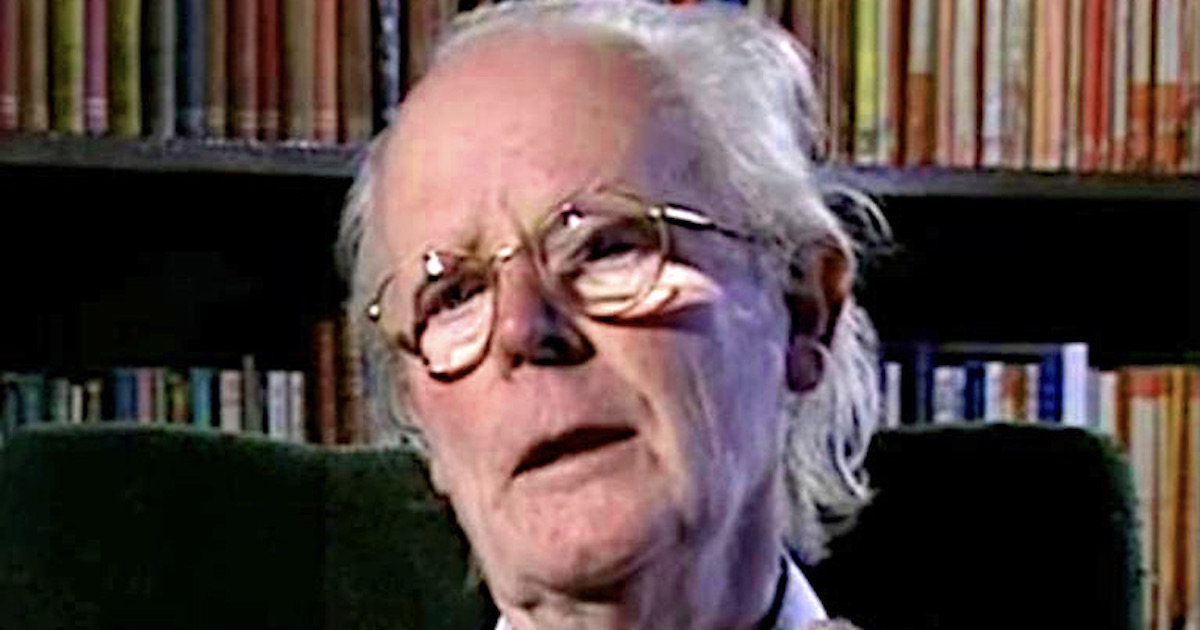
John Maynard Smith (1920-2004) was more courageous than that. His personal archive reveals that he kept “anti-evolutionary” tracts sent to him by Jehovah’s Witnesses and others, and he twice debated creationists publicly, as a fascinating open access article by C. B. Ogbunugafor (Evolutionary Biology, Yale University) explains.
The main thrust of the article, however, addresses Maynard Smith’s “protein space” analogy, published in Nature in 1970, in response to Frank Salisbury’s 1969 article challenging neo-Darwinism. The analogy will be familiar to many: Maynard Smith draws a parallel with the gradual modification of English words through a functional sequence space, where meaning is preserved at each novel spelling, but the end points of the transformed sequence end up strikingly different. A primary school-age child can play the game: start with a word like “tree,” and see where you can go by changing one letter at a time: “tred,” “trod,” “prod,” and so on.
Whether the analogy succeeds is a separate question from the practical matter that Maynard Smith took up Salisbury’s anti-Darwinian challenge. As Ogbunugafor concludes:
While the impact of Protein Space on various subdisciplines of biological science is easy to understand, part of its original intent — a device used in a rebuttal against creationist-adjacent arguments — remains a salient, if underappreciated, feature. This aspect of Protein Space is consistent with John Maynard Smith’s persona, as he willingly participated in debates against creationists, and was generally consumed by social and scientific questions about the validity of Darwinian evolution.
Definitely worth a download.