






































Science and Culture Today Discovering Design in Nature
Stephen Meyer
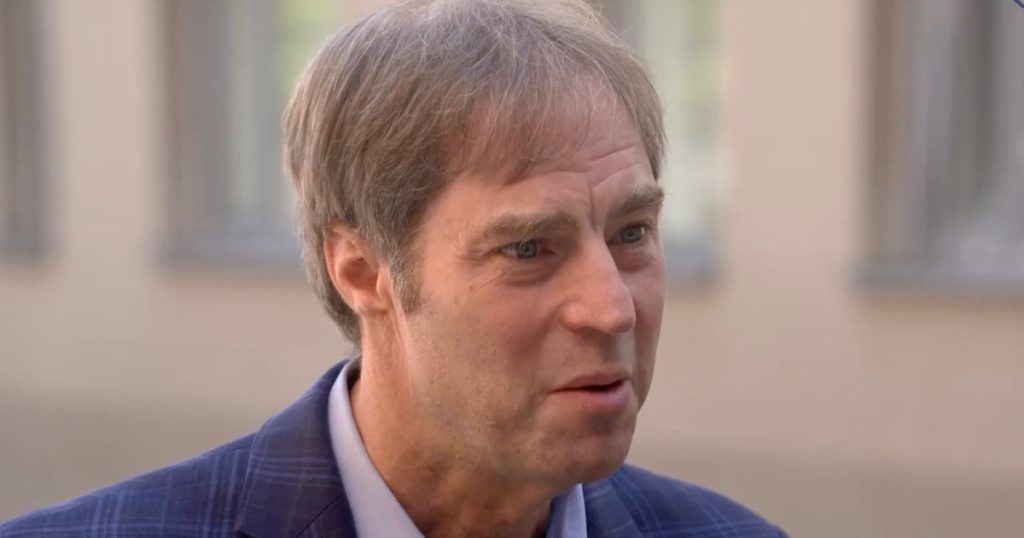
Photo: Stephen Meyer, via En Arche Foundation.
Latest

Meyer: When Stephen Hawking Spoke “From Beyond the Grave”

Categories
Physical Sciences
Psychology
Share
Facebook
Twitter/X
LinkedIn
Flipboard
Print
Email

Stephen Meyer’s new book, Return of the God Hypothesis: Three Scientific Discoveries That Reveal the Mind Behind the Universe, is not only of scientific and theological but emotional interest. One of its themes is an engagement with the ideas of physicist Stephen Hawking. In turn, what makes Hawking so fascinating is the poignancy of his life: the heroic, uncomplaining years under the power of a crippling disease, and the increasingly frank avowal that the God Hypothesis was unneeded to explain the cosmos. As Meyer recounts, Hawking came to be seen as in a league with the New Atheists. He also grew apocalyptic in his forecasts about humanity’s future. It’s not hard to imagine the psychological portrait that future science historians will draw.

After Hawking died, a posthumous book was released, Brief Answers to the Big Questions. As Meyer says, it was as if the great man “spoke from beyond the grave,” confirming directly his view that quantum gravity could substitute for the work of a creator. Yet he failed to see that his own work showed otherwise, which may be the saddest thing of all. Meyer comments:

Click here to display content from YouTube.
Learn more in YouTube’s privacy policy.

David Klinghoffer

Senior Fellow and Editor, Science and Culture Today
David Klinghoffer is a Senior Fellow with Discovery Institute’s Center for Science and Culture. He is the author of seven books including Plato’s Revenge: The New Science of the Immaterial Genome and The Lord Will Gather Me In: My Journey to Jewish Orthodoxy. A former senior editor at National Review, he has contributed to the New York Times, Wall Street Journal, and other publications. He received an A.B. magna cum laude from Brown University in 1987. Born in Santa Monica, CA, he lives on Mercer Island, WA.
Benefiting from Science & Culture Today?
Support the Center for Science and Culture and ensure that we can continue to publish counter-cultural commentary and original reporting and analysis on scientific research, evolution, neuroscience, bioethics, and intelligent design.

© Discovery Institute