




































The historical core of downtown Seattle where we work is awash with mentally ill homeless people. It’s both heartbreaking to see and, often, pretty scary. These are people who are obviously, sometimes floridly not in control of themselves.
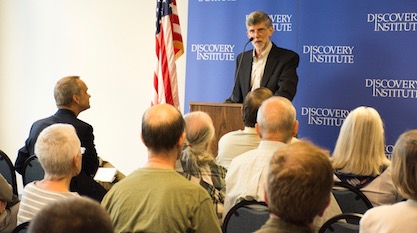
Marvin Olasky, editor of World Magazine, spoke at Discovery Institute the other day and offered what I thought was a very meaningful take on the situation here. He told a story about encountering, not in Seattle, a grizzled homeless man sleeping on a children’s slide in a park. Turning to a companion with a progressive outlook, Olasky lamented that the man was doing this, preventing kids from playing there. The companion piped up that the man had every right to sleep on a slide if he wanted to.
Intelligent Design
Olasky pointed out that our responses to the homeless have a lot to do with how we see human beings and how we see the world — designed, not designed. If designed, then a person is not meant to sleep in a place like that, and a slide is not designed as a place to sleep. The park is “intelligently designed” for play, for children not indigent adults. It’s the kids who have a “right” to play there, not the man to use the place as an impromptu camping ground. There’s a proper, intended order to things.
The Poor as Mascots
From a progressive perspective, the homeless, like others in poverty, aren’t even fully people per se — as the economist Thomas Sowell has said, they are “mascots,” that is, objects that serve a role for others in virtue signaling. It’s good to have them around, to be used as recipients of our pitying gaze. That makes us feel good. The idea of placing demands on them so that they can get well is not, in this view, a sensible proposal. Olasky pointed out that the root meaning of “welfare” — to “fare well” — has become detached from our conceptions of what it means to help the poor.
I often wonder why different people come down on different positions on a range issues, including what to do about homelessness and much else. What’s the pivot that turns us toward more traditional solutions, versus the wrongly named “progressive” ones? Part of the answer surely has to do with this question of anthropology — What is a human being?