






































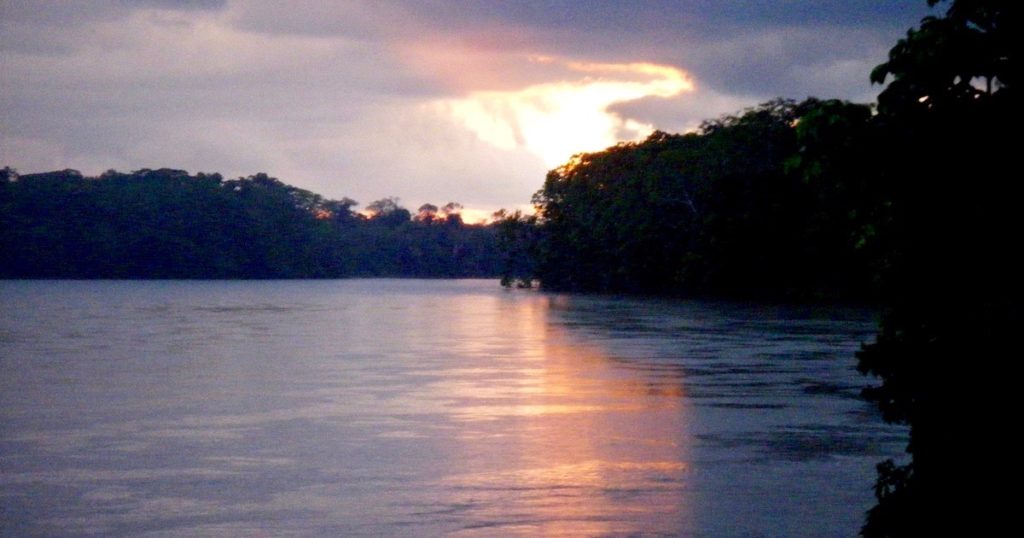
The Supreme Court of Colombia has added tremendous heft to the “nature rights” movement by elevating the Amazon River into a rights-bearing entity. Yes, the world’s greatest river can now be added to the growing list of local environments, glaciers, and waterways — including the Ganges — granted legally enforceable rights by courts or statutes.
This is a ludicrous development. The Amazon River is a geological feature! Sure, it is magnificent and necessary to life in the region. But, good grief, it has no volition. It is a body of water.
“Nature rights” actually empowers environmental radicals to thwart development and the proper use of natural resources. From the Community Environmental Legal Defense Fund (CELDF) triumphant announcement:
Transforming nature from being treated as property under the law, to be considered as rights-bearing — and thus in possession of legally enforceable rights — is the focus of the growing Rights of Nature movement.
Throughout history, women, indigenous peoples, and slaves have been treated as property under the law, without legal rights. Legal systems around the world today treat nature as property, and thus right-less. Under these systems, environmental laws regulate human use of nature, resulting in the decline of species and ecosystems worldwide, and the acceleration of climate change.
Slavery is evil because treating fellow humans as property is to treat inherent equals as unequal, subjects as mere objects, “us” as “them.” Ditto the oppression of indigenous people.
That is not true of nature. Animals are not our equals. Pond scum — which is part of nature — is not “us.” Mosquito “communities” should not have enforceable rights, which is where the logic of this line of thinking would take us.
Moreover, the rights of nature would destroy private property. Instead of being owners, we would be mere trustees owing fiduciary duties to “nature.” Remember, a fiduciary must put the interests of the ward or conservatee above his own.
“Nature rights” activists seek to impede our reaping the bounties of the Earth — except in the most minimal manner — by allowing radicals to obtain court orders to shut down timber harvests, fishing projects, fossil-fuel extraction (global warming, don’t you know), large-scale agriculture, mining, housing developments, GMO experimentation, etc., as violating nature’s “right” to “exist, persist, maintain and regenerate its vital cycles, structure, functions and its processes in evolution.”
At the very least, any major human endeavor that uses natural resources or land will be subjected to lawsuits and “settlement extortion” schemes.
Beyond even all of that, “nature rights” seeks to obliterate human exceptionalism. Environmentalists today argue that we should perceive ourselves as just another animal in the forest, of no greater value than any other species — or heck, a swamp or granite outcropping — in the belief that our self-downgrading will somehow make us tread more gently on the Earth. In actuality, if we cease to see ourselves as bearing unique and special duties, the opposite would be true.
Of course, the Amazon and the rain forest it helps nurture should be managed in a proper and responsible manner. Indeed, the decision seeks to prevent deforestation.
But proper environmental policies can be effectively implemented without resorting to the insanity of granting “rights” to nature generally, or ecosystems and geological features, specifically. Look at how splendidly we have protected Yellowstone — as just one example — without pretending that Old Faithful geyser is a rights-bearing being.
The potential deleterious consequences to humankind from “nature rights” are beyond measuring — except to trial lawyers. We ignore the threat at our great peril.
Cross-posted at The Corner.