






































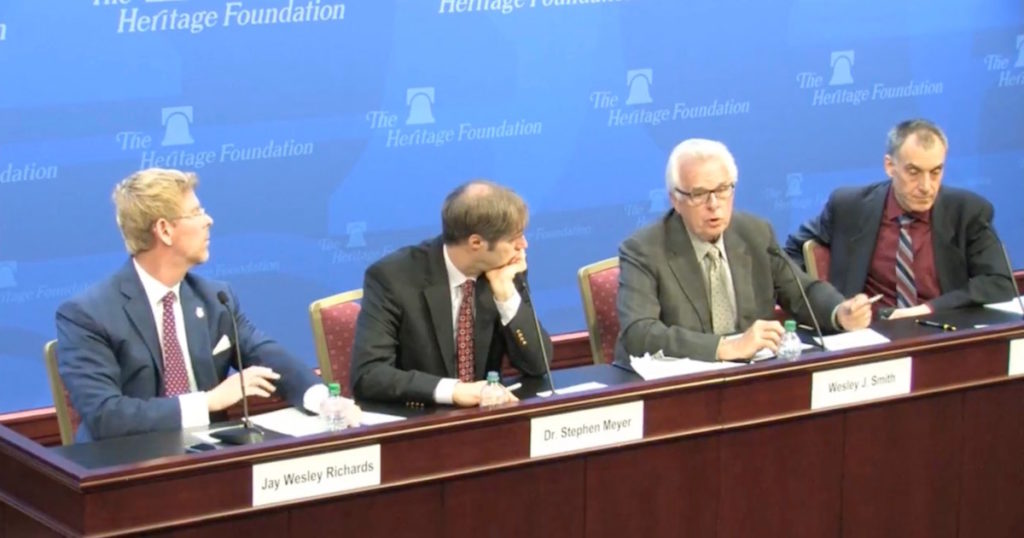
On a new episode of ID the Future, Wesley Smith discusses the “anti-science” label and identifies some trends in the academy and the media that truly are inimical to science. He notes the tendency to confuse science with ethics, and to use the idea of science itself as a weapon to silence debate.
Download the episode here, or listen to it here. Wesley spoke at the Heritage Foundation in Washington, DC, along with other Discovery Institute colleagues ahead of last month’s March for Science.
Meanwhile, this is sure refreshing. Nature, the world’s foremost science journal, urges readers to cool it with the “anti-science” slur. They do so in an editorial, “Beware the anti-science label,” that is uncompromising in its common sense:
Antimatter annihilates matter. Anti-science, it is said, destroys what matters. And fears are increasing that anti-science forces are on the march. Indeed, on last month’s March for Science, a ‘war on science’ was frequently invoked as a reason for researchers to mobilize. Signs held aloft warned of a conflict.
True anti-science policies — the early Soviet Union’s suppression of genetics research, for example, and its imprisonment of biologists while trying to revamp agriculture — can wreck lives and threaten progress. But it’s important not to cheapen the term by overusing it. And it’s wrong for researchers and others to smear all political decisions they disagree with as being anti-science.
Well, what do you know? Sure, they throw in the expected criticisms directed at “climate denial” (strange expression — who denies that there’s a climate? — but you know what they mean). Otherwise, they are singing our tune. Just as Wesley says, disagreements about policy or ethics should not be translated into “science” versus “anti-science.”
Science is only one of many factors and interests that a thoughtful politician needs to weigh when choosing a position on a complex topic. If science sometimes loses out to concerns about employment or economics, scientists should not immediately take it as a personal slight. Rather, it is a reason to look for common ground on which to discuss the concerns and work out how science can help: creating jobs in green energy, for instance, or revamping wasteful grant programmes.
Of course, corruption and conflicts of interest can frequently motivate political decisions as well, and researchers and others should not hesitate to highlight them. But name-calling and portraying the current political climate as a war between facts and ignorance simply sows division.
Yes! As a bonus, they note the obvious that is nevertheless habitually denied, that scientists don’t agree on everything, and that’s OK:
Science does not speak with a single voice. Sit at a hotel bar during any conference and you will hear impassioned debate over what the data have to say about a certain question. Equally credentialled researchers fall out on whether carbon dioxide levels in the atmosphere have passed a tipping point, or on the health risks of sugar.
Good for you, Nature editors. When establishment pillars like yourselves finally get fed up and speak out against the weaponizing of science rhetoric to political and ideological ends, that’s a welcome and very healthy sign.