






































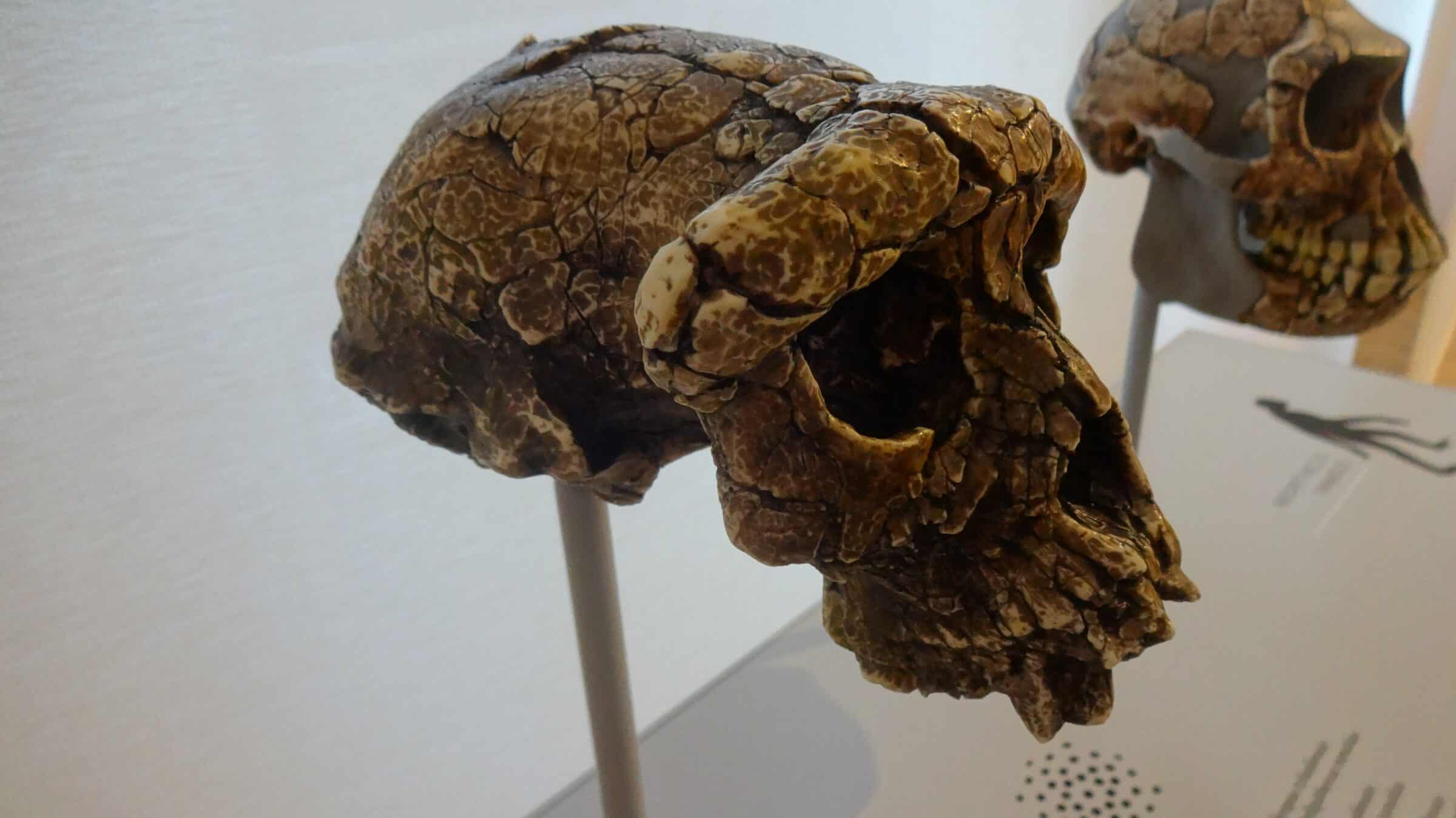
Science is a very human enterprise, and very human problems can color scientific research as well as the narratives cast around findings and results. On a new episode of ID the Future, we’re bringing you the first half of a conversation with Dr. Casey Luskin that originally aired on the Come Let Us Reason Together podcast hosted by Lenny Esposito. Luskin discusses the growing controversy surrounding Sahelanthropus tchadensis, a fossil often described as one of the earliest human ancestors. But what began as a celebrated evolutionary discovery has now sparked open disagreement among evolutionary scientists themselves. In this segment, Casey reviews the history of paleoanthropology, what the field is trying to prove about human origins, and how language, bias, politics, prestige, and funding pressure all play a part in how discoveries are framed and evidence is weighed.
Luskin describes a culture of silence in paleoanthropology driven by competition, prestige, and political pressure. He notes that this atmosphere often leads researchers to frame discoveries according to favored evolutionary narratives. A primary example is the alleged suppression of a femur associated with the Sahelanthropus tchadensis fossil. While the skull was celebrated as an upright-walking human ancestor, rumors of the femur — which could clarify its locomotion — persisted for nearly twenty years without official publication. When a graduate student discovered the bone and sought identification help, her advisors reportedly told her to forget she ever saw it and closed ranks against her, eventually forcing her out of the lab. Luskin argues that this unethical behavior is intended to silence dissenting viewpoints and protect findings and narratives that might otherwise be challenged by the available evidence.
We’re grateful to Lenny Esposito for permission to share this exchange here.
Download the podcast or listen to it here. This is Part 1 of a two-part conversation.
Dig Deeper
- Watch the full interview on the Come Let Us Reason Together podcast channel at YouTube.
- More on paleoanthropology with Dr. Luskin: