






































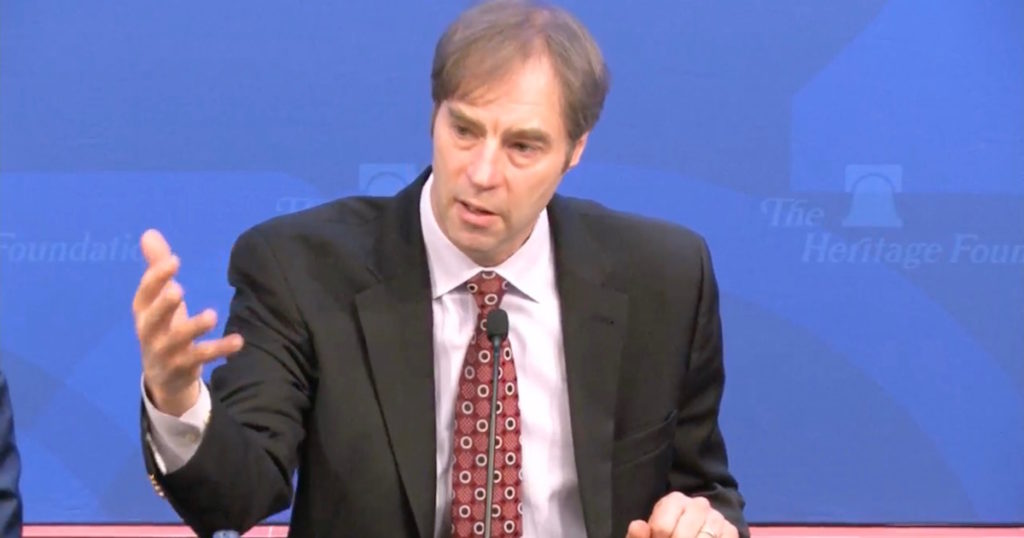
Our colleagues Steve Meyer, Jay Richards, and Wesley Smith had a great conversation at the Heritage Foundation today, joining up with Marlo Lewis of the Competitive Enterprise Institute. Their subject was “March for Science or March for Scientism? Understanding the Real Threats to Science in America.”
If you missed it you can see it now on YouTube.
With the March for Science coming up this Saturday on the National Mall in Washington, D.C., the panel pointed to how the “anti-science” label is wielded to shut down challenges to the “consensus” and to advance, as Wesley Smith put it, “anti-human” advocacy.
Stephen Meyer described how “Darwin’s public defenders” promote evolution “not only as settled science but as the basis for a fully materialistic ideology.” The so-called consensus pushes “textbook orthodoxy,” while “not acknowledging that problems exist” with it, meanwhile directing at opponents “the same epithets in all the [relevant] debates,” whether on evolution, fossil fuels, climate change — “anti-science,” “pseudo-science,” “science denial.”
 Wesley Smith, second from the right, courtesy of Heritage Foundation.
In the current “battle of ideas,” said Dr. Meyer, it’s vital to “unmask the source of these ideas” we critique, revealing the “deeper view that there is no qualitative difference between animals and humans because both were produced by the same mechanism of unguided, materialistic evolution.”
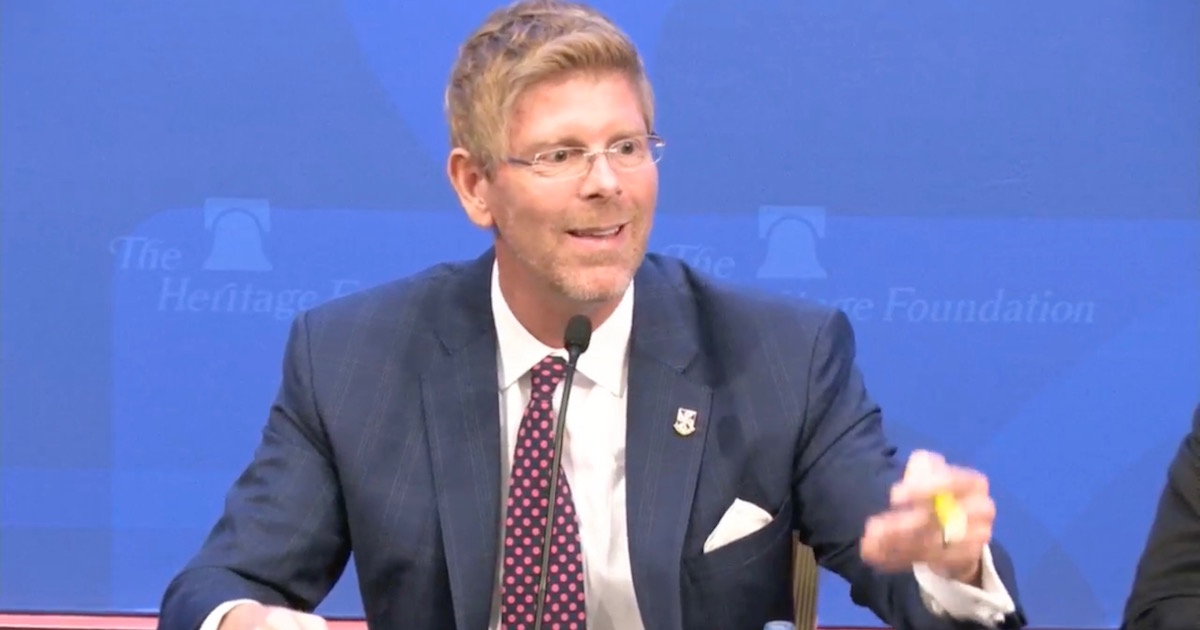
Dr. Richards focused on the “rhetorical function” of this often-heard word, “consensus,” which is used “to silence skeptical doubt” from the public. Because “there’s always a crank available immediately online” on any subject, scientific or otherwise, we need to distinguish needed skepticism from time-wasting crankery. How do you do that? Jay talked about some of the “reasons you might want to doubt a so-called scientific consensus.” He’s got 12 in all.
One of those reasons is when you see “different claims getting bundled together,” on all of which the orthodox party demands that you either “sign on or sign off.”
The panel included some sharp disagreement. Yes, it’s OK to disagree about matters pertaining to science!