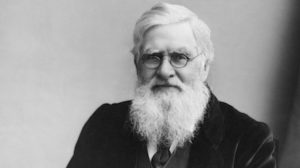
Wallace-2 Type post Author Michael Flannery Date November 19, 2019 CategoriesEvolutionFaith & Science Tagged , __edited, Alfred Russel Wallace, Andrew Berry, Arthur Conan Doyle, C.S. Lewis, Christianity, demons, Duke of Argyll, Ernst Mayr, First Cause, Freeman Dyson, Harvard University, Jonathan Wells, materialists, Nature's Prophet, spiritualism, Summa Theologica, T.H. Huxley, The World of Life, Thomas Aquinas Why Nature’s Prophet Had to be Written Michael Flannery November 19, 2019 Evolution, Faith & Science 11 Wallace’s greatest “heresy” was to become, after his co-discovery of natural selection, “godfather” of the modern theory of intelligent design. Read More ›
mirror 2 Type post Author Michael Egnor Date October 17, 2019 CategoriesFaith & Science Tagged , __edited, act, Aristotle, clouds, contingency, Five Ways, goodness, grass, images, light, mirror, nobility, ontology, Plato, potency, sky, Summa Contra Gentiles, Summa Theologica, Thomas Aquinas, trees, truth Aquinas’ Fourth Way: Light in a Mirror Michael Egnor October 17, 2019 Faith & Science 7 It’s helpful, as with his Third Way, to begin with a metaphor, in order to get an intuitive feel for the proof. Read More ›
St-thomas-aquinas Type post Author Michael Egnor Date October 16, 2019 CategoriesFaith & ScienceMetaphysicsPhilosophy Tagged , __edited, Aristotle, Edward Feser, Etienne Gilson, Five Ways, Jacques Maritain, Summa Contra Gentiles, Summa Theologica, Thomas Aquinas, Thomistic philosophy Reading Suggestions for Aquinas’ Five Ways Michael Egnor October 16, 2019 Faith & Science, Metaphysics, Philosophy 10 Our perspective is supported by a rigorous and elegant metaphysical framework, which began with Plato and particularly Aristotle. Read More ›
Jerry-Coyne-1 Type post Author Michael Egnor Date September 30, 2019 CategoriesFaith & ScienceMetaphysicsScientific Reasoning Tagged , __edited, Aristotle, atheism, Bertrand Russell, Christianity, Daniel Dennett, Darwinists, evolution, inference, Islam, Jerry Coyne, Plato, Richard Dawkins, Saint Augustine, Siberia, Sir David Attenborough, Stephen Hawking, Summa Theologica, theism, Thomas Aquinas, Timaeus, totalitarianism Evolution Has Not Been Kind to Jerry Coyne Michael Egnor September 30, 2019 Faith & Science, Metaphysics, Scientific Reasoning 6 The design we infer in nature is an insight we abstract from our senses, but the inference itself is acquired by our reason. Read More ›
Summa_Theologica Type post Author Michael Chaberek Date May 14, 2018 CategoriesBiologyFaith & Science Tagged , __cedited, Aquinas and Evolution, Aristotle, Bible, causation, creation, devolution, evolution, faith and science, form, macroevolution, Public Discourse, revelation, species, Stephen Jay Gould, Summa Theologica, theistic evolution, theology, Thomas Aquinas The Five Arguments Stand: Response to a Critic on Aquinas and Evolution Michael Chaberek, O.P. May 14, 2018 Biology, Faith & Science 12 In my book, I argue that Thomas Aquinas’ teaching cannot be reconciled with theistic evolution. Read More ›
sunflower Type post Author Michael Egnor Date August 9, 2017 CategoriesFaith & ScienceLife SciencesNeuroscience & MindPhilosophy Tagged , __cedited, bacteria, Fifth Way, Homo habilis, intentionality, Joseph Carter, mind, myths, nature, New York Times, purpose, Sean Carroll, Summa Theologica, teleology, Thomas Aquinas How Is Purpose Related to Teleology in Nature? Michael Egnor August 9, 2017 Faith & Science, Life Sciences, Neuroscience & Mind, Philosophy 5 Materialist philosopher Joseph Carter denies the existence of teleology in nature, but he is mistaken. Read More ›