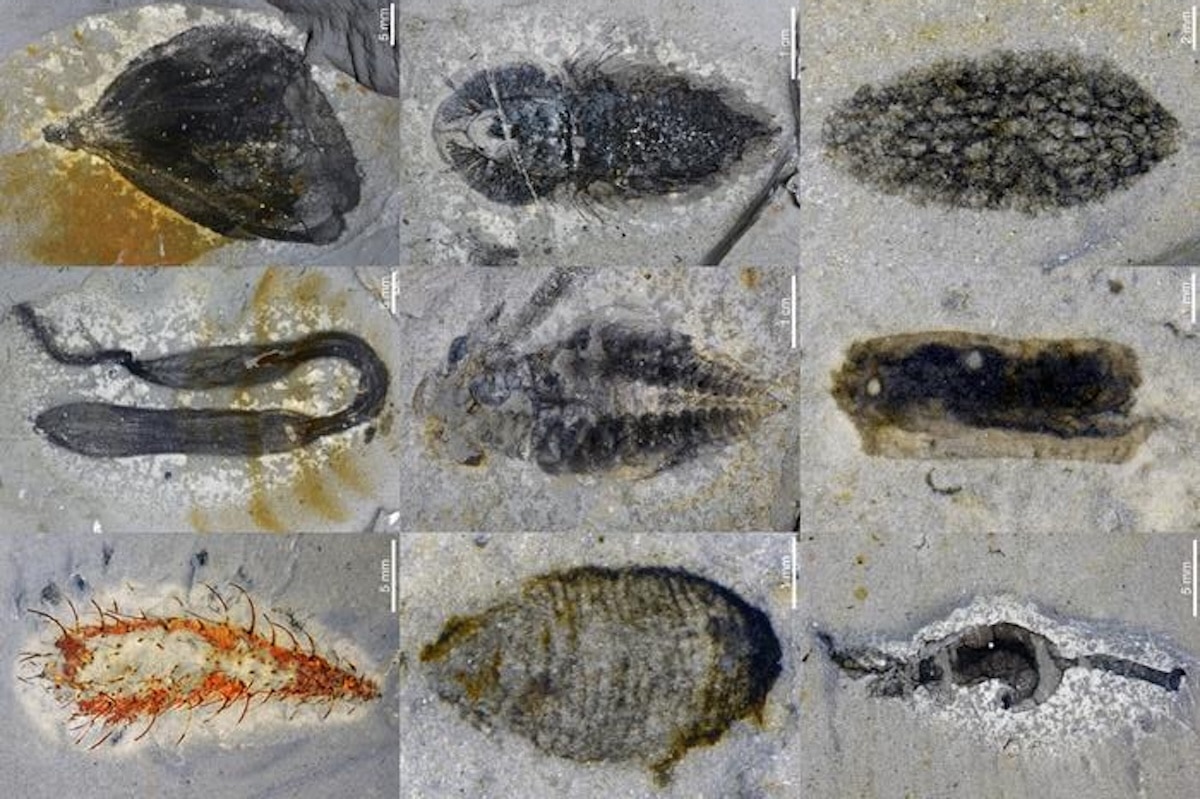
Low-ResSoft-bodied-fossils-from-the-Huayuan-biota Type post Author David Coppedge Date February 9, 2026 CategoriesEvolutionIntelligent DesignPaleontology Tagged , Anomalocaris, arthropods, body plans, British Columbia, Burgess Shale, Burgess Shale Type, Cambrian Explosion, Canada, Chengjiang, Chinese Academy of Sciences, chordates, cnidarians, comb jellies, complex body plans, ctenophores, Darwin's Doubt, fossils, gills, guts, Han Zeng, Huayuan, Huayuan County, Huayuan site, James Woodford, jellyfish, Lagerstätte, lobopodians, magical thinking, Marble Canyon, molluscs, mutation/selection mechanism, Nature (journal), nerves, New Scientist, oxygen molecules, oxygen theory, poriferans, priapulids, Sinsk Event, soft tissues, transitional forms, worms Get to Know the Name: Huayuan Is a Major New Cambrian Fossil Site Found in China David Coppedge February 9, 2026 Evolution, Intelligent Design, Paleontology 9 Another Cambrian fossil site that rivals the original Burgess Shale has been announced to the world. Read More ›
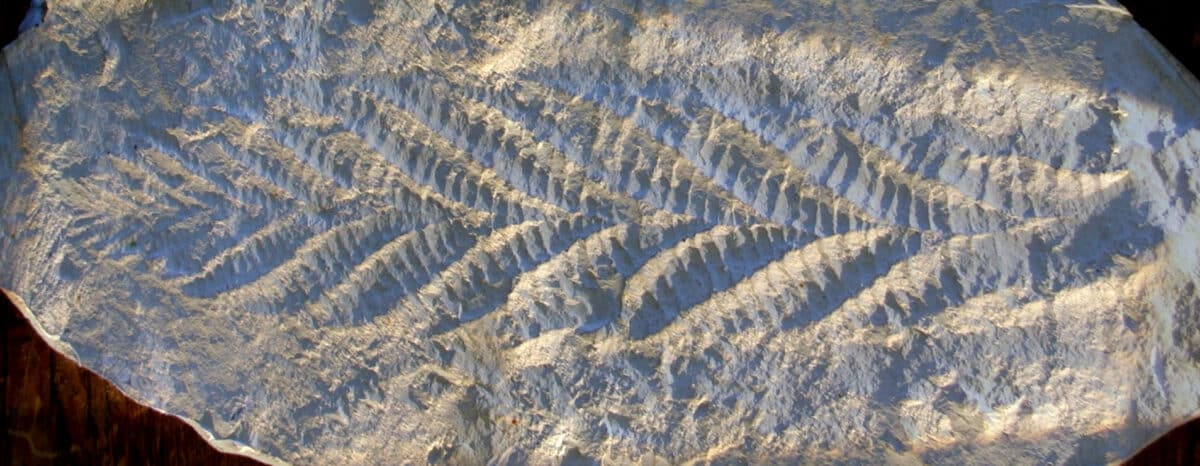
Charnia_Spun Type post Author Günter Bechly Date October 11, 2024 CategoriesGeneticsPaleontology Tagged , Avalon explosion, biodiversity, biologists, body plans, Cambrian Explosion, Charnia, Ediacaran biota, evolution, Fossil Friday (series), fossil record, genetic information, intelligent design, interpretation, magical thinking, paleontologists, Precambrian, radiations, radiometric dating, Science Advances, University of Edinburgh Fossil Friday: The Avalon Explosion and the Power of Maybe Günter Bechly October 11, 2024 Genetics, Paleontology 5 While evolutionary biology has no explanation even according to the authors themselves, intelligent design theory does. Read More ›
DNA Type post Author David Klinghoffer Date August 21, 2024 CategoriesBiologyEvolutionFine-tuningIntelligent Design Tagged , Aaron Zimmer, cosmic fine-tuning, Elie Feder, evolution, Evolution News, intelligent design, magical thinking, podcast, The Design Inference, William A. Dembski, Winston Ewert William Dembski: What’s the Best Evidence for Intelligent Design? David Klinghoffer August 21, 2024 Biology, Evolution, Fine-tuning, Intelligent Design 2 What exactly is the very best evidence for a designing agent behind nature? There are a number of contenders and, interestingly, not all ID proponents agree. Read More ›
Inchneumonidae Type post Author Neil Thomas Date March 6, 2022 CategoriesEvolutionFaith & ScienceLife Sciences Tagged , ancient Greeks, atomists, Baruch Spinoza, Charles Darwin, Christian de Duve, Christianity, Darwin and the Victorian Crisis of Faith (series), Erasmus Darwin, logos, magical thinking, philosophers, supernatural, Thomas Malthus Evolutionary Theory as Magical Thinking Neil Thomas March 6, 2022 Evolution, Faith & Science, Life Sciences 4 Charles Darwin himself exemplified the Argument from Pique, alluded to in past entries in this series, to a tee. Read More ›
Taking Leave of Darwin Type post Author Jonathan Witt Date August 2, 2021 CategoriesEvolution Tagged , agnostics, British Rationalist Association, Darwinism, Darwinists, Discovery Institute Press, England, evolutionary theory, German, magical thinking, Nazis, Neil Thomas, Oxford University, propaganda, Richard Dawkins, skepticism, Taking Leave of Darwin, University of Durham In a New Book, Longtime Agnostic Dumps Darwin Jonathan Witt August 2, 2021 Evolution 3 Critics of intelligent design will have a hard time maligning Neil Thomas as a “creationist in a cheap tuxedo.” Read More ›
Information Enigma Type post Date November 16, 2017 CategoriesEvolutionIntelligent Design Tagged , __nedited, Brownian motion, Darwin's Dilemma, Darwinists, defining terms, Dickinsonia, fossil record, magical thinking, Nature Ecology & Evolution, Neil Shubin, Niles Eldredge, Paul Chien, PNAS, punctuated equilibria, punctuated equilibrium, Stephen Jay Gould, University of Vienna, Yale University Punctuated Equilibria Is Back, but Still Magical Science & Culture November 16, 2017 Evolution, Intelligent Design 8 Calling it by a new name doesn’t change the essence of a theory relying on chance. Read More ›