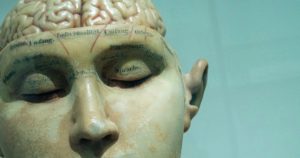
brain Type post Date June 13, 2022 CategoriesEvolutionNeuroscience & Mind Tagged , artificial intelligence, Bobby Azarian, brain, Carnegie Mellon University, consciousness, feedback loops, information, machines, materialism, mind, neurons, neuroscientists, Santa Fe Institute, self, self-organization theory, self-reference, split brain Can Self-Organization Theory Account for Consciousness? Science and Culture June 13, 2022 Evolution, Neuroscience & Mind 3 One difficulty is that many humans produce a “self” with split brains, a brain missing key components, or half a brain. That’s not consistent with materialism. Read More ›
Adolf Grünbaum 2 Type post Author Paul Nelson Date April 6, 2020 CategoriesFaith & ScienceIntelligent DesignPhilosophy of ScienceScience Education Tagged , __k-review, Adolf Grünbaum, Arthur Schopenhauer, atheism, Bertrand Russell, Carnegie Mellon University, Cologne, depression, German, Germany, intelligent design, Jews, Joseph Stalin, Kristallnacht, National Academy of Sciences, Nazis, Protestants, Richard Feynman, Roman Catholic, Sigmund Freud, Thomas Kuhn, U.S. Army, University of Pittsburgh, Vishnu, Wesleyan University, Yale University Opposition Is True Friendship: A Remembrance of Adolf Grünbaum (1923-2018) Paul Nelson April 6, 2020 Faith & Science, Intelligent Design, Philosophy of Science, Science Education 12 How an atheist philosopher of science mentored an intelligent design theorist. Read More ›
kinesin 2 Type post Date March 16, 2020 CategoriesIntelligent Design Tagged , __k-review, Apollo 14, ATP synthase, California, Carnegie Mellon University, Cassini mission, Cryo-EM microscopy, Curiosity rover, Dean Kenyon, flagellum, John West, kinesin, Leonardo da Vinci, Living Waters, Michael Behe, miniature designs, Mount Everest, Museum of the Bible, NASA, National Geographic, Norway, Saturn V, Secrets of the Cell, seeds, The Last Supper, The Magician's Twin, World Magazine Designs in Miniature — Some Are the Most Wonderful of All Science and Culture March 16, 2020 Intelligent Design 10 The smaller a design, the harder it may be to detect. But miniature designs can inspire awe more than large ones. Read More ›
ashkan-forouzani-DPEPYPBZpB8-unsplash Type post Author Michael Egnor Date March 5, 2020 CategoriesBiologyIntelligent DesignMedicine Tagged , __edited, Carnegie Mellon University, coronavirus, Darwinian evolution, epidemic, fake news, infectious disease, information, intelligent design, mathematical models, medical research, medicine, misinformation, National Academy of Sciences, pandemic, Proceedings of the National Academy of Sciences Intelligent Design and the Study of Epidemics Michael Egnor March 5, 2020 Biology, Intelligent Design, Medicine 4 The reality to which these scientists are “one step closer” is the fact that ID research is indispensable to medicine and biology. Read More ›