Should We Fear the Rise of ‘Intelligent’ Computers?
Philosopher Jay Richards has published an interesting piece about IBM’s Watson computer trouncing Jeopardy champs looking at the consternation this caused for some people.
Read More ›Authors







































Philosopher Jay Richards has published an interesting piece about IBM’s Watson computer trouncing Jeopardy champs looking at the consternation this caused for some people.
Read More ›Tantalus Prime and I have had a discussion about the moral status of abortion and the scientific status of the human embryo (shorthand for human zygote/embryo/fetus).
Read More ›Tantalus Prime and I have been discussing abortion. Tantalus takes exception to my observation that human life begins at conception. He believes that the humanity of a human zygote/embryo/fetus isn’t a scientific fact, but merely a matter of linguistics:
The exact moment at which a fertilizing egg becomes human… is a horrible scientific question! Is asking the exact size beyond which a stream becomes a river a good scientific question? Of course not, because this is not an empirical problem but one of definition. Define the term human however you want, but don’t pretend it is an empirical question to be solved. Scientists can’t even agree on what constitutes a living organism, so what makes you think pinpointing the demarcation between human being and not human being is easily solved in a testable and falsifiable manner….
Tantalus doesn’t like to mix definitions with his science. Especially definitions that aren’t congenial to his ideology.
Yet a human embryo is surely something. But I’m not going to ask Tantalus that nasty beginning of life question. I’ll ask Tantalus a different question, hopefully one that he finds less irritating:
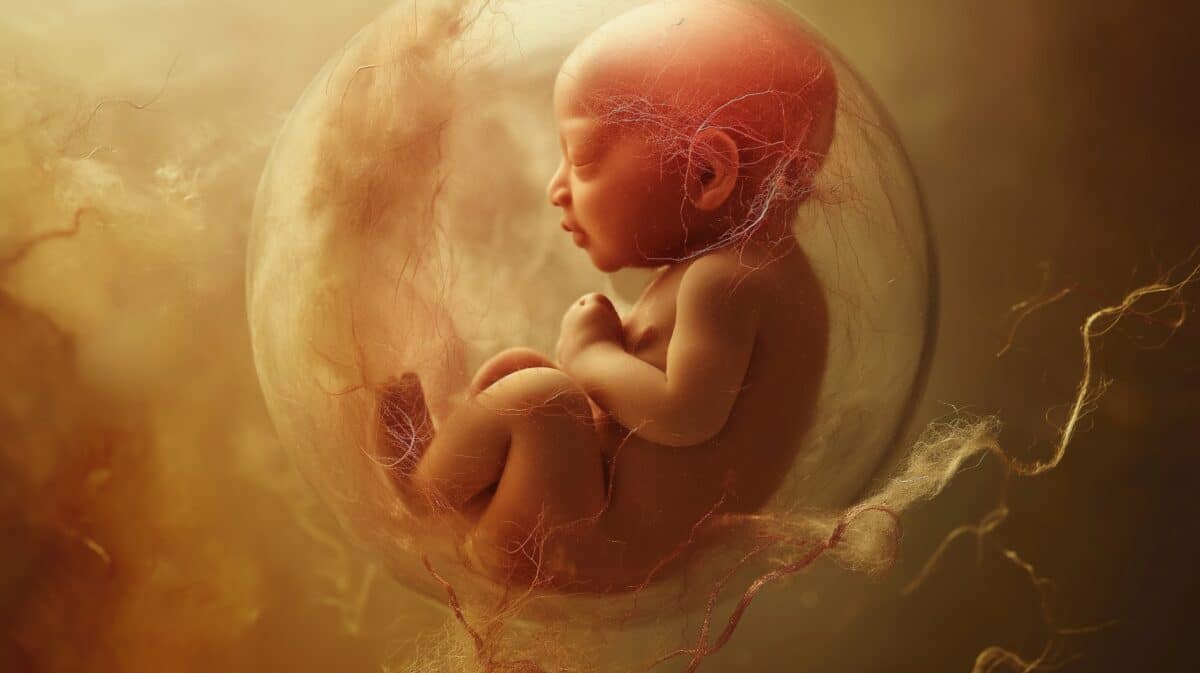
What is a human embryo?
There would seem to be 5 different things that a human embryo in the womb could be:
Let’s explore Tantalus’ dilemma:
Read More ›This morning Discovery Senior Fellow David Klinghoffer has a piece up in Human Events detailing the problem with the oft-heard claim, “Science says . . .“ President Obama echoed an often-heard lament when he complained recently that, among Americans, “facts and science and argument do not seem to be winning the day.” According to distressed cultural observers, public ignorance about science is evidenced by failure to accept global warming, “animal rights,” euthanasia and Darwinian evolution.The assumption is that doubting scientists’ claims means you have divorced yourself from reality. Yet steadily accumulating stories from the scientific community itself suggest grounds for doubting that scientists all pursue truth without fear or favor. Last year’s “Climategate” email leak from the University of East Read More ›
Tantalus Prime is a graduate student in neuroscience. He’s been following my debate about abortion with Joshua Rosenau of the NCSE. He asks some questions about my views on the right to life that are worth answering. Tantulus: Egnor asserts that humanity is a discrete, not a continuous variable. If so, then would he kindly point to the exact point at which the human begins? After all, fertilization itself is a multi-step process. So, where is it? When the sperm breaches the oocyte membrane? Formation of the pro-nuclei? Initial DNA replication? Degeneration of the pro-nuclei membrane? Formation of the mitotic spindle? Fusion of the chromosomes? Division of the chromosomes and formation of the first daughter cells? This really should be Read More ›
Gallup has just released its most recent poll (conducted annually I believe) describing Americans’ views on the origin of humanity. This year, according to Gallup, the numbers have changed slightly:
PRINCETON, NJ — Four in 10 Americans, slightly fewer today than in years past, believe God created humans in their present form about 10,000 years ago. Thirty-eight percent believe God guided a process by which humans developed over millions of years from less advanced life forms, while 16%, up slightly from years past, believe humans developed over millions of years, without God’s involvement.
So what question did they ask to get these results? Here it is:
Which of the following statements comes closest to your of the development of human beings?
1) Human beings have developed over millions of years from less advanced forms of life, but God guided this process, 2) Human beings have developed over millions of years from less advanced forms of life, but God had no part in this process, 3) God created human beings pretty much in their present form at one time within the last 10,000 years or so.
Since they’ve asked the question this way for years, it makes sense, for statistical accuracy, that they stick with the original wording. But the wording is still problematic, and for an obvious reason–the three options are not jointly exhaustive. Millions of people hold views that are not captured by the three options.
Read More ›Consider this from John Lukacs At the End of An Age (2002):
In Chapter 1 of this book I suggested another fundamental limitation of Darwinism, which is the application of Evolution ever further and further backward, claiming that humans may have existed as early as one million years ago. That is a prime example of how unreason lies buried at the bottom of any and every materialist interpretation of mankind, because of its thesis of matter preceding human mind, with mind gradually appearing: when? perhaps in dribs and drabs, much later. (I happen to believe that there is no such thing as ‘pre-historic’ man, historicity being the fourth dimension of human existence from the beginning.) But perhaps the essential fault of Darwinism is its implicit denial that there is any fundamental difference, no matter how physically slight, between human beings and all other living beings. One need not be a religious believer to struggle against this notion: for if there is really no essential difference between human beings and all other living creatures, then there is no reason to have laws and institutions and mores prohibiting certain human acts and protecting human dignity, indeed, human lives. (pp. 120-121)
Lukacs, of course, is saying that Darwinists completely misconstrue humanness, both in the context of what it means to be human in time (historicity) and in the unique qualities of what humanness is (the mind). Because Darwinists are infatuated with morphological affinities, ape-like “ancestors” become “prehistoric man.” But (whatever else we may say of primordial hominid forms millions of years ago), is this “man”? Without the unique attributes of empathy, love, reasoning, a sense of the numinous, etc., can there be a “man” before there is a history of mankind? It seems doubtful. In short, is “prehistoric man” an oxymoron? Lukacs is correct in suggesting that it is. At best, the alternative is to see the grunts and groans of ape-like creatures as a largely seamless continuum to Plato’s dialogues, Aristotle’s Nicomachean Ethics, and onward. Darwin tried to make his case for it and it has been problematic ever since, sometimes with tragic consequences.
Read More ›National Center for Selling Evolution Science Education’ s Program and Policy Director Josh Rosenau has made disturbing arguments in favor of abortion. On his personal blog Thoughts from Kansas, Rosenau, who has been a doctoral candidate in evolutionary biology at the University of Kansas, asserted that children in the womb were nearly indistinguishable from… cancer.
Later in his post, Rosenau defends abortion by asserting:
Is an embryo a discrete human being? I think not. An embryo is dependent on its living host…
An old-fashioned term for the “living host” of an embryo is… mother. Rosneau frames the mother-child relationship charmingly: he compares the relationship between a mother and her unborn child to the relationship between a host and a parasite.
Rosneau:
An embryo is dependent on… a woman whose nutrients it relies upon, whose immune system protects it, whose lungs provide it with oxygen, and whose body carries out every other essential function. If the woman dies, an embryo cannot survive (medical intervention alters this case somewhat, but a reliance on medical life support hardly vitiates questions about the embryo’s discreteness).
Actually, we have entire institutions devoted to children who rely on others to provide support for their vital functions. They’re called hospitals. I work in several of them. Many of the children for whom I provide care (I’m a pediatric neurosurgeon) need artificial feeding, antibiotics to augment their immune systems and protect them from infection, and need respirators to help them breathe. I assure Mr. Rosenau: hospitalized children are quite discrete human beings, tubes and machines notwithstanding. I do not consider their condition of dependence on vital support a basis for denying them the right to life. In fact, their condition of dependence is in my view justification for protecting their lives with increased vigor.
Read More ›