






































Secretary of Health and Human Services Robert F. Kennedy Jr. made big news recently when he declared that he wanted to eliminate federal funding for research on primates and eventually end all government support for animal experimentation. RFK Jr. says he’ll work with federal agencies to wind down animal testing. One can certainly understand his reasons. Animal suffering makes anyone with a conscience flinch in empathetic revulsion.
But scientists do not engage these methodologies out of sadistic purpose. Rather, their goals are to find new medical treatments, cure diseases, and generally reduce human (and animal) suffering. Indeed, without animal research, the many medical and veterinary advances achieved since World War II would have been impossible. That is why we must think about this important moral issue and not just “feel.”
How Bodily Systems Function
Most animal work involves basic research — investigations about how bodily systems function. Here’s the story of just one such use that resulted in tremendous reduction in human suffering.
Years ago, Dr. Edward Taub hypothesized that brain function could exhibit greater plasticity than it was believed at the time. To determine whether he was right, the nerves in monkeys’ forelimbs were severed surgically. Taub’s purpose was to train the animals to reuse their numb forelimbs. He hoped the research would prove valuable in ultimately rehabilitating human stroke patients.
Because of what he learned from these primates, Taub developed an important rehabilitation technique for people with brain injuries known as Constraint-Induced Movement Therapy (CI Therapy) — by which the brain is induced to “rewire itself,” allowing formerly paralyzed people to perform the normal tasks of living. CI Therapy is so successful that it has spread around the world.
And Here’s the Reality
Had there been no monkey research, tens of thousands of patients would not be benefiting from CI therapy. So, which option would we prefer? Medical advances or no animal research?
Cutting funding for animal studies would also thwart applied research — meaning experiments that look for solutions to identified problems. We can see this in cutting edge experiments in organ transplant medicine.
Currently, there is a terrible shortage of transplant organs, resulting in long queues and years of waiting, time in which many patients die. What to do?
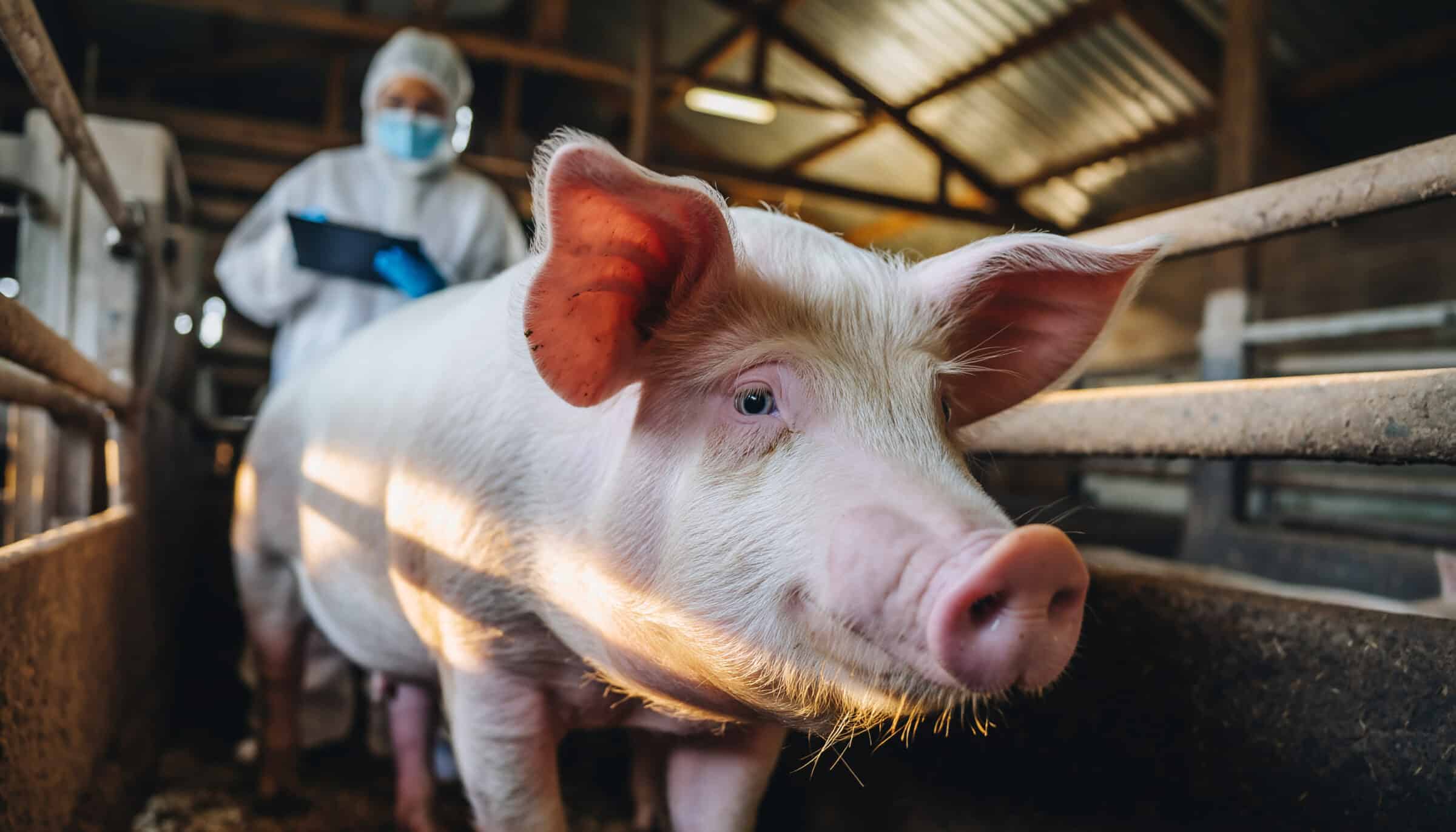
Xenotransplantation offers an answer. It turns out that pig organs are very much like those of humans and could be suitable for transplantation — if a way can be found to prevent our bodies from rejecting them. Toward that end, pigs are being genetically engineered so that their organs become more compatible with ours.
The field has now advanced to the point that early experiments with human patients have commenced. In 2024, a woman named Towana Looney received a genetically altered pig kidney. Lo and behold, it worked for more than four months before her body rejected the tissue. The organ was removed and she’s back on dialysis. But she issued a statement saying, “I’m so grateful to have been given the opportunity to be part of this incredible research. Though the outcome is not what anyone wanted, I know a lot was learned from my 130 days with a pig kidney — and that this can help and inspire many others in their journey to overcome kidney disease.”
Now There Is Hope
Hopefully, the next test will be even more successful. But this much is clear: Without the pig experiments, there would have been no big advance toward alleviating the human organ shortage. Now — because of the pigs — there is hope.
Which brings up another issue. Animal activists rightly say that what we learn from animals is not directly applicable in humans. But that’s only part of the story. You see, new therapies do not go directly from animal studies into clinical application. Rather, once animal studies succeed, human research comes next. Only after these experiments demonstrate safety and efficacy can new treatments be approved for use by the public.
Animal studies unquestionably protect the lives of these human research subjects. For example, during the worst of the AIDS epidemic, researchers thought they had developed an effective life-saving treatment. As required by law, they tried it first in animals, eight of which died. Because of those deaths, the drug was pulled from consideration for use in humans and further research was conducted. Later, the revised medicine was tested in animals again. This time, they survived allowing human studies. Soon thereafter, the drug came into clinical use, saving countless lives.
When deleterious results in animal experiments are ignored, human tragedy follows. When 18-year-old Jesse Gelsinger consented to be part of a gene therapy experiment, he wasn’t told that monkey studies had proved fatal. As a result, Gelsinger died too, setting the field back for years.
The Fewer Animals, the Better
Does this mean that animal research can’t be reduced? Absolutely not! The good news from an animal welfare perspective is that researchers have developed methods that permit far fewer animals to be used in experiments. Sophisticated computer modelling, the development of AI, and the like now permit much theoretical research to be done in cyberspace rather than on laboratory operating tables. Similarly, using human cell lines often provides researchers with valuable information once only obtainable from living subjects. These methods should be vigorously pursued whenever they are appropriate and practical. After all, the fewer animals we use in research, the better.
But animal research cannot be eliminated. Because at some point, new therapies, surgical techniques, and medicines require testing in a living organism. If we really want to Make America Healthy Again, that means using animals first. It would be nice if it were otherwise, but I don’t see that changing any time soon.
Cross-posted at The Epoch Times.