






































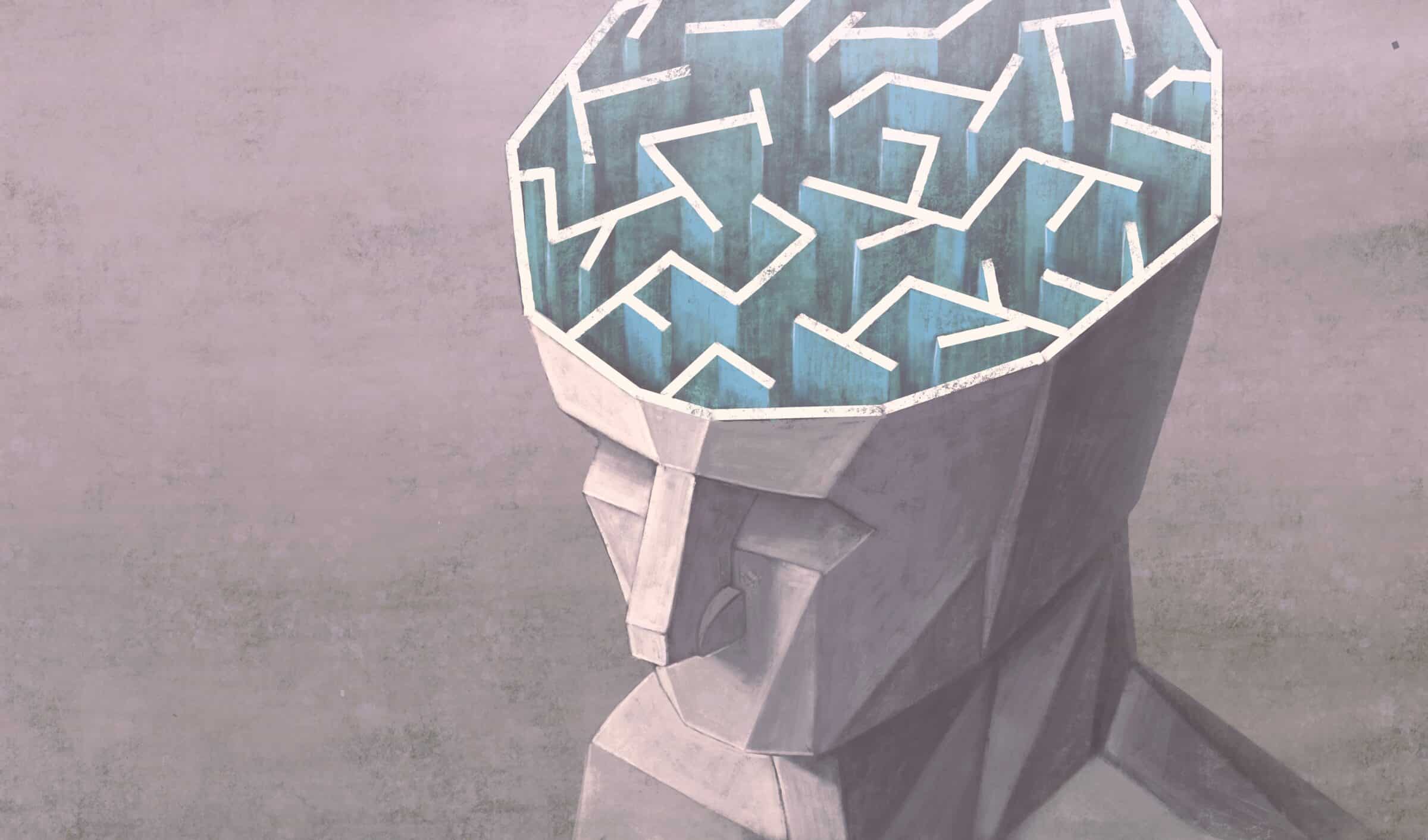
Back in 2007, a curious report hit the science media: A 44-year-old French man was found to be missing 90 percent of his brain. At Science Daily, medical journal The Lancet duly reported,
The unusual case of a man with a tiny brain caused by massive ventricular enlargement, who has led a normal life, is studied in a clinical update in The Lancet. The man was 44-years-old at the time, married with two children, and worked as a civil servant. He went to hospital after suffering mild left leg weakness. Neuropsychological testing revealed the man had an intelligence quotient (IQ) of 75, his verbal IQ was 84 and his performance IQ was 70.
“Tiny Brain, Normal Life,” July 24, 2027. Here’s the paper.
Burying the Point
The way the science media release is worded buries the point of the story. Let Reuters explain:
A man with an unusually tiny brain managed to live an entirely normal life despite his condition, caused by a fluid buildup in his skull, French researchers reported on Thursday. Scans of the 44-year-old man’s brain showed that a huge fluid-filled chamber called a ventricle took up most of the room in his skull, leaving little more than a thin sheet of actual brain tissue.
“Tiny brain no obstacle to French civil servant,” August 9, 2007
Apparently, the man had had a shunt put in as an infant to drain away water buildup in the brain (hydrocephalus) but it was removed when he was 14. After that, no one knew what was happening inside his brain until he started complaining about troubles in his left leg at 44. Dr. Lionel Feuillet and colleagues at the Université de la Mediterranée in Marseille did some imaging tests to see what was happening in there:
So the researchers did a computed tomography (CT) scan and another type of scan called magnetic resonance imaging (MRI). They were astonished to see “massive enlargement” of the lateral ventricles — usually tiny chambers that hold the cerebrospinal fluid that cushions the brain.
“No obstacle“
These enlarged ventricles were, essentially, taking up most of the space where his brain should have been. And despite that,
Neuropsychological testing revealed the man had an intelligence quotient (IQ) of 75, his verbal IQ was 84 and his performance IQ was 70.
“Tiny Brain, Normal Life,”
Reuters sought guidance in understanding this situation:
“What I find amazing to this day is how the brain can deal with something which you think should not be compatible with life,” commented Dr. Max Muenke, a paediatric brain defect specialist at the National Human Genome Research Institute.
“If something happens very slowly over quite some time, maybe over decades, the different parts of the brain take up functions that would normally be done by the part that is pushed to the side,” added Muenke, who was not involved in the case.
“No obstacle“
Maybe. But a slow process is hardly a complete explanation under the circumstances. If the mind is simply what the brain does — the current neuroscience mantra — he shouldn’t be able to function as he did.
So the story was let to gather dust until it could be explained away.
New Theories
In 2016, Fiona MacDonald revisited the story at Science Alert. She begins by acknowledging,
Despite decades of research, our understanding of consciousness — being aware of one’s existence — is still pretty thin. Many scientists think that the physical source of consciousness is based in the brain, but then how can someone lose the majority of their neurons and still be aware of themselves and their surroundings?
“Meet The Man Who Lives Normally With Damage to 90% of His Brain,” July 13, 2016.
MacDonald tries to answer the question by citing researcher Axel Cleeremans, who believes that the brain learns consciousness repeatedly: “According to Cleeremans, even though his remaining brain was only tiny, the neurons left over were able to still generate a theory about themselves, which means the man remained conscious of his actions.”
She later provided an update:
Update 3 Jan 2017: This man has a specific type of hydrocephalus known as chronic non-communicating hydrocephalus, which is where fluid slowly builds up in the brain. Rather than 90 percent of this man’s brain being missing, it’s more likely that it’s simply been compressed into the thin layer you can see in the images above. We’ve corrected the story to reflect this.
“Damage to 90% of His Brain”
Well, if most of the brain can be compressed into a thin layer without affecting consciousness, the mind cannot simply be what the brain does. Anything that is simply “what the brain does” must be more constrained by material facts than that.
So, predictably, the story just dropped out of sight again.
 Image source: Discovery Institute.
Why We Wrote The Immortal Mind
That’s an important part of why Michael Egnor and I wrote The Immortal Mind (Worthy, June 3, 2025).
To judge from the book’s reception, one would think we wrote it in order to talk about near-death experiences. But, while NDEs are an important topic for us, we deal with them in the context of the many brain anomalies and other evidence that the mind is not merely what the brain does. If the mind is not simply what the brain does, NDEs should not be surprising.
It’s hard to discuss these issues honestly because anomalies like the story of the French man above tend to get buried or explained away, not examined for what they can tell us. We need to remember what philosopher of science Thomas Kuhn (1922–1996) said: “Discovery begins with the awareness of anomaly — the recognition that nature has violated the paradigm-induced expectations that govern normal science.”
Cross-posted at Mind Matters News.