






































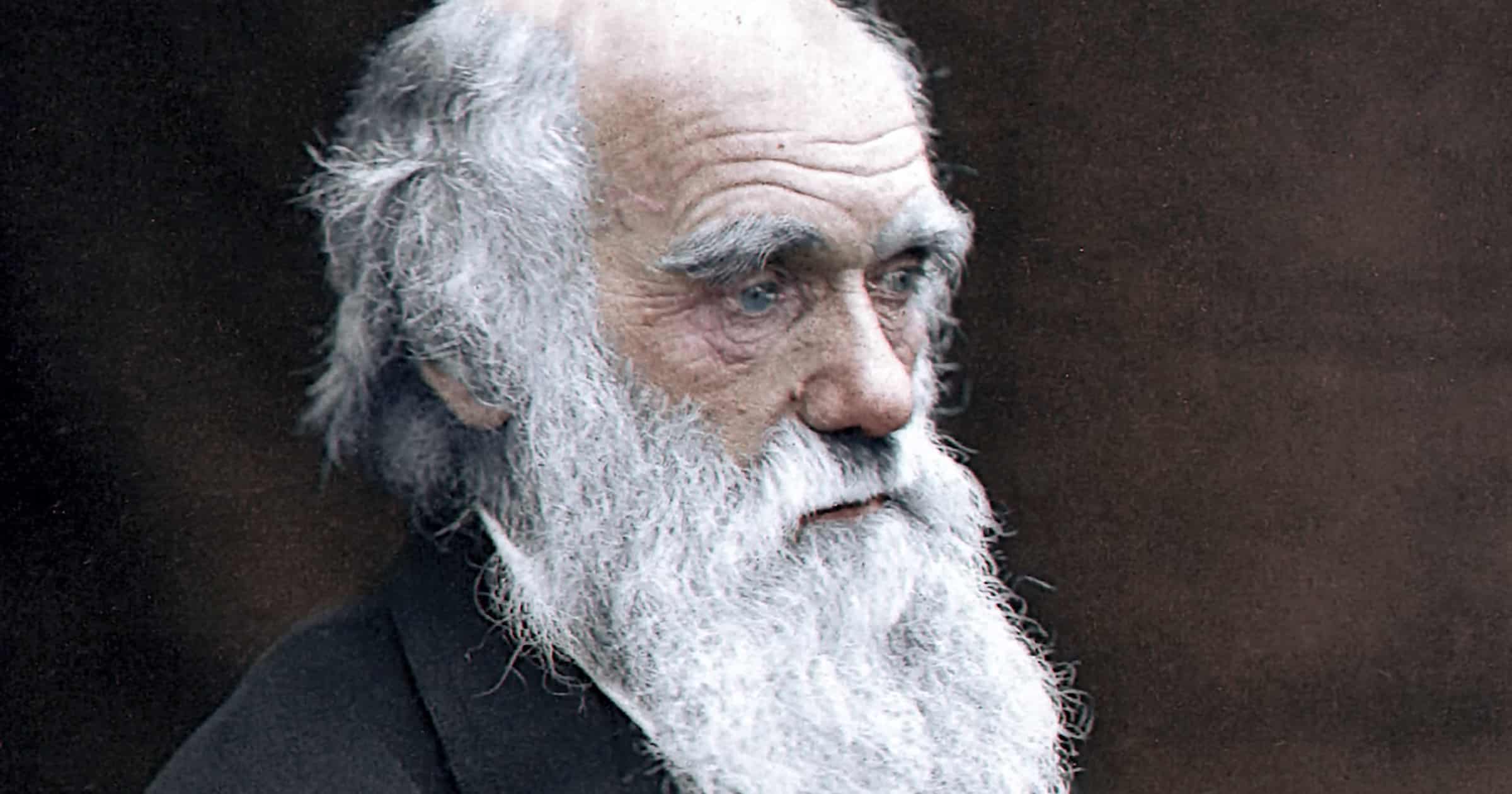
On a classic episode of ID the Future, historian of science Michael Keas concludes a two-part conversation with science-and-religion scholar Robert Shedinger about his research into the writing and work of Charles Darwin.
In this segment, Professor Shedinger makes the case that a well-known biography of Charles Darwin, Darwin’s Sacred Cause, is deeply misleading. Specifically, the book by Adrian Desmond and James Moore holds that Darwin was significantly motivated in his scientific work by abolitionist sentiments. Shedinger says not so fast. He saw no evidence of this thesis in Darwin’s correspondence. Shedinger reports on the pattern that emerged when he tracked down the key citations and re-read the book. The sources the authors cite didn’t actually support their thesis. Some were totally irrelevant. Some were cited completely out of context. In other cases, the authors stitched together multiple correspondences to give the illusion Darwin was saying something he wasn’t. This popular biography of Darwin was trying to make Darwin seem like a saintly abolitionist. Instead, argues Shedinger, it’s closer to historical fiction than the truth.
While Darwin did have anti-slavery sentiments, it didn’t drive his science and he himself was anything but free from racism. In fact, his case for human evolution partly rested on deeply demeaning racist attitudes toward indigenous peoples. For more on this, see historian Richard Weikart’s book Darwinian Racism.
Also in this episode, Shedinger tells host Michael Keas about how he went from a scholar fully persuaded of Darwinian theory to a skeptic of modern evolutionary theory and attracted to the theory of intelligent design. Shedinger lays out his case against Darwinism in his book The Mystery of Evolutionary Mechanisms.
Download the podcast or listen to it here. This is Part 2 of a two-part conversation. Listen to Part 1.
Dig Deeper
- Shedinger separates Darwin the man from Darwin the myth in his latest book, Darwin’s Bluff. Get your copy today!
- Listen to a reading from Darwin’s Bluff on this episode of ID the Future.