






































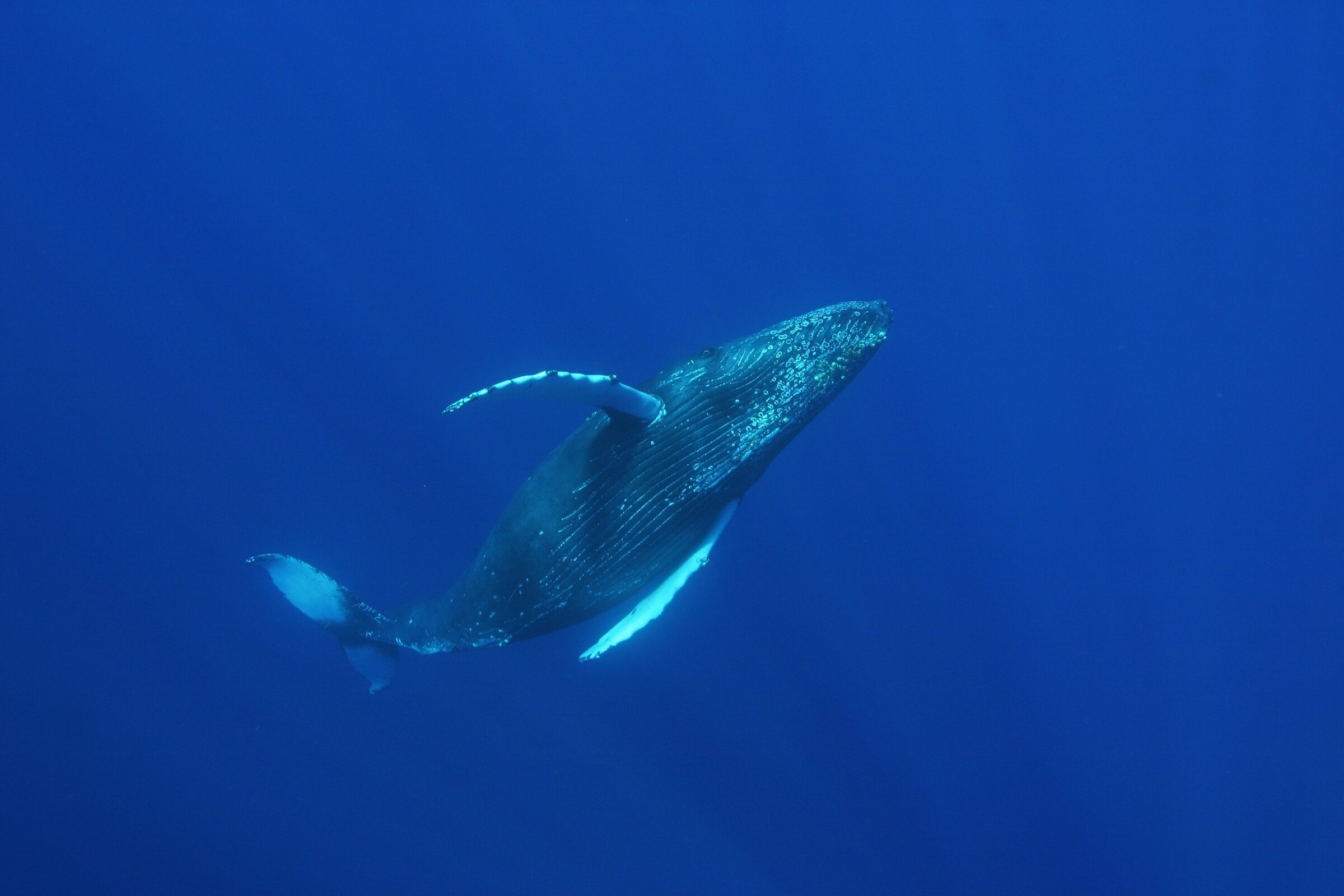
When we look at feats of human engineering, like vehicles, skyscrapers, and computers, we don’t doubt our intuition that they’re intelligently designed. But when it comes to marvels of the natural world, like bird wings, whale flippers, and our own arms and legs, we’re expected to suspend that design intuition and credit a gradual, undirected evolutionary process. Bio-engineer Dr. Stuart Burgess has been studying vertebrate limbs for over thirty years. On a new episode of ID the Future, Burgess shares his cutting-edge insights on the universal optimal design of vertebrate limb patterns and the implications for fields like robotics.
When he formulated his theory of natural selection in the 19th century, Charles Darwin considered the whale flipper a “stiff paddle” and an instance of sub-optimal design. This starting assumption required his theory of unguided evolution to explain its origin. But Darwin’s stance on the whale flipper and other vertebrate limbs betrayed a lack of understanding of the basic principles of engineering. It was an argument from ignorance. Today, we know what Darwin didn’t know, that even the simplest living cells exhibit vast amounts of complexity. And a close inspection of vertebrate limbs reveals astounding evidence of engineering prowess. Inside that whale flipper, finely tuned processes, numerous sensors, and hidden muscles work together to produce optimal movement for the largest animals on Earth. And as Dr. Burgess reports, the same optimal design is found universally in nature, from frog legs to human limbs, revealing powerful evidence of a common designer that used optimal design motifs across a wide spectrum of life. Download the podcast or listen to it here.
Dig Deeper
- Read and share Dr. Burgess’s exciting new paper for free!
- Listen to Dr. Burgess discuss how animal joints challenge evolutionary assumptions.