






































Now is the time to put laws in effect at the federal and state levels prohibiting non-human animals, flora, and geological features from being treated as “persons” in courts, or accorded “rights” of any kind.
Why the alarm? We have seen rivers and glaciers declared persons. An orangutan in Argentina was granted a writ of habeas corpus. Ordinances in more than 30 U.S. cities — and laws in two countries — grant “rights” to nature.
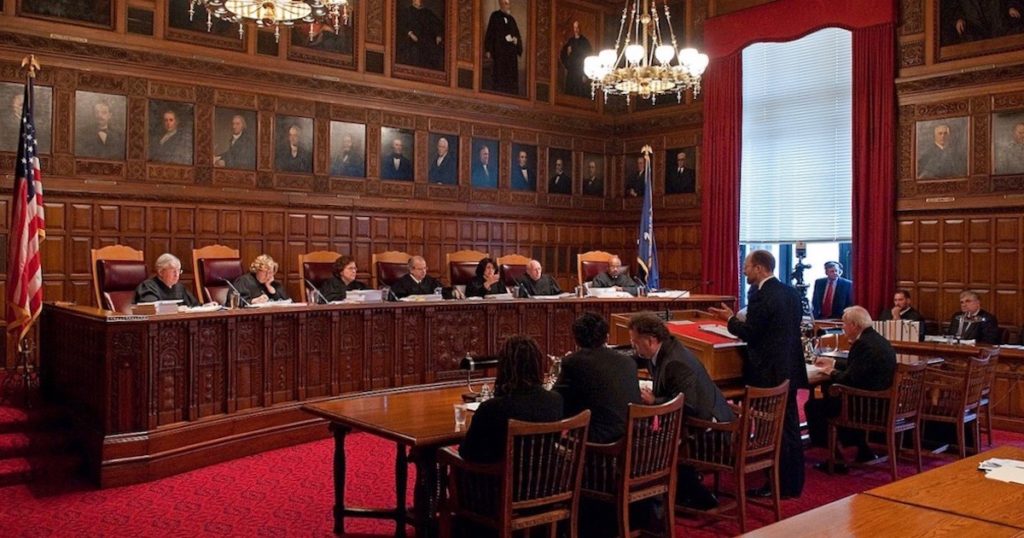
Now, in the lawsuit in New York to declare chimpanzees to be deemed “persons,” a Court of Appeals (the state’s supreme court) judge clearly wanted to go there in a concurring opinion refusing to grant a motion to permit an appeal. From the opinion by Associate Judge Eugene M. Fahey.
The better approach in my view is to ask not whether a chimpanzee fits the definition of a person or whether a chimpanzee has the same rights and duties as a human being, but instead whether he or she has the right to liberty protected by habeas corpus. That question, one of precise moral and legal status, is the one that matters here. Moreover, the answer to that question will depend on our assessment of the intrinsic nature of chimpanzees as a species.
More:
Does an intelligent nonhuman animal who thinks and plans and appreciates life as human beings do have the right to the protection of the law against arbitrary cruelties and enforced detentions visited on him or her? This is not merely a definitional question, but a deep dilemma of ethics and policy that demands our attention.
To treat a chimpanzee as if he or she had no right to liberty protected by habeas corpus is to regard the chimpanzee as entirely lacking independent worth, as a mere resource for human use, a thing the value of which consists exclusively in its usefulness to others.
Instead, we should consider whether a chimpanzee is an individual with inherent value who has the right to be treated with respect (see generally Regan, The Case for Animal Rights 248-250).
We don’t need to give rights to animals to treat them with respect. That’s what animal welfare and anti-abuse laws are all about. Indeed, welfare laws come to the subject based on the capacities of the animal under consideration. In any event, if particular laws need strengthening, by all means, let’s debate the issue from that perspective — welfare, not rights.
Granting rights to animals is deeply subversive of human exceptionalism. It elevates animals to an equivalent moral status to us; or perhaps equally subversive, it reduces humans to the status of some animals — which could also impact the equality of human beings deemed by “the philosophers” to be non-persons, e.g., the unborn, newborns, and the cognitively disabled.
Also, notice that the jurist quoted an animal-rights zealot, Tom Regan, as his source. As I wrote in A Man Is a Pig Is a Dog Is a Boy:
Tom Regan, a philosopher at North Carolina State University, has long exerted substantial influence over the animal rights movement. Like Singer, Francione, Newkirk, and Friedrich, Regan denies that human lives have greater value than those of animals, a belief he opposes as “arbitrary” and “speciesism.” Unlike Singer’s utilitarian thinking, but in accord with most other animal rights advocates, Regan accepts the existence of inherent “rights” to the extent that he makes the dubious claim that “the animal rights movement is part of, not opposed to, the human rights movement.”
It is very alarming that the New York Court of Appeals would cite a radical such as Regan as a basis for his clear desire to grant personhood and legal rights to chimpanzees.
Here’s my concern. As we have with other radical agendas pushed successfully in the courts, we will sit around doing nothing while thinking “it can’t happen here,” — until it does, and it is too late. The time to act is now while the profound subversion of “non-human rights” is still gestating.
Remember, it only takes one judge. If Judge Fahey had not been in the minority in this case, I am convinced he would, with deeply furrowed brow, have enthusiastically volunteered.
Cross-posted at The Corner.