






































Cloning research continues apace. Human embryos have been manufactured via somatic cell nuclear transfer (SCNT) — the same process that created Dolly the sheep — and allowed to develop to the blastocyst stage, the point that an embryo can be implanted into a uterus.
Those embryos were then destroyed for stem cell research. But they could just as readily have been implanted in an attempt at bringing the embryo to birth.
In other words, contrary to some accounts, human cloning has been and is being done, since the act of cloning is SCNT — not implantation, gestation, or birth.
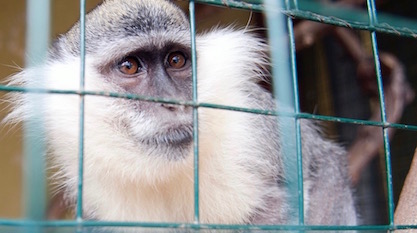
And now, the first cloned primates have been born. From the Wall Street Journal story:
In a world-wide first, Chinese scientists cloned two monkeys by transplanting donor cells into eggs, they said on Wednesday, a feat that could lead to genetically engineered primates for drug testing, gene editing and brain research.
The cloned macaque monkeys are the latest application of a test-tube technique called somatic cell nuclear transfer pioneered 20 years ago with the creation of the cloned sheep named Dolly. It has been used to clone 23 species from rodeo bulls to polo ponies and pet cats. But the ability to clone primates eluded scientists until the project made public Wednesday in the journal Cell.
The successful births came from DNA taken from fetal, not adult, cells. That is the usual course in this research. Eventually — probably sooner rather than later — scientists will successfully create monkey clones from adult cells and bring them to birth successfully.
At that point, there won’t be much — other than some further technique refinement and self-restraint — to prevent scientists from taking the knowledge garnered in those experiments and moving on to bringing cloned human babies to birth.
In the United States, that would be perfectly legal (except in a few states). There is no federal legal prohibition — although it can’t be funded by the government. Nor are there any international protocols preventing such a use of human cloned embryos.
I think there should be. I also think human SCNT should be legally prohibited. People can disagree with that, but good grief, we aren’t even talking about it.
Cross-posted at The Corner.