






































The Food and Drug Administration has approved the first GM animal for human consumption. What could possibly go wrong with the AquAdvantage Salmon? Our Ann Gauger explained in comments to World Magazine:
AquaBounty engineered the fish by adding a growth-hormone gene from the Chinook salmon and a gene from the eel-like ocean pout. In natural circumstances, salmon produce growth hormone only during the spring and summer. The modified salmon produce growth hormone all year.
Ann Gauger, molecular biologist and director of science communication at Discovery Institute, said the excess growth hormone could pose the same problem encountered with cows that were genetically modified to produce more milk. The cows produced more growth hormone, which was expressed in their milk and passed on to the consumer. It is possible there will also be excess growth hormone present in the salmon’s meat, she said.
A perspective informed by recognizing intelligent design in nature offers further insight:
Gauger is concerned about possible unintended consequences such as the loss of genetic diversity. If the sterile, genetically engineered salmon become the main version of salmon, they will all be of one genotype, leaving them particularly vulnerable to disease. Our knowledge of the way things are designed is very limited, she said: “We don’t know what a particular change will do downstream.”
On the other hand, genetic modification of organisms has its place, Gauger said. For example, engineers have created wheat that is more drought and disease resistant, enabling farmers in Africa to produce higher yields to feed a starving population. In such a case, the benefits to the recipients outweigh any potential harm. But, genetically engineered salmon offer no benefit to the consumer, only to the commercial breeder, Gauger said.
In other words, acknowledging design should occasion a degree of humility that may or may not be evident in the marketing of Frankenfish. Bon appétit!
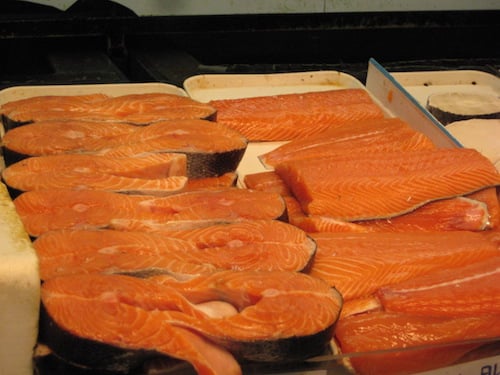
Image credit: Marlith (Own work) [CC BY-SA 3.0 or GFDL], via Wikimedia Commons.
