






































Our colleague Michael Flannery, on a research trip to Edinburgh, Scotland, sent back these cool samples of the sights to be seen:
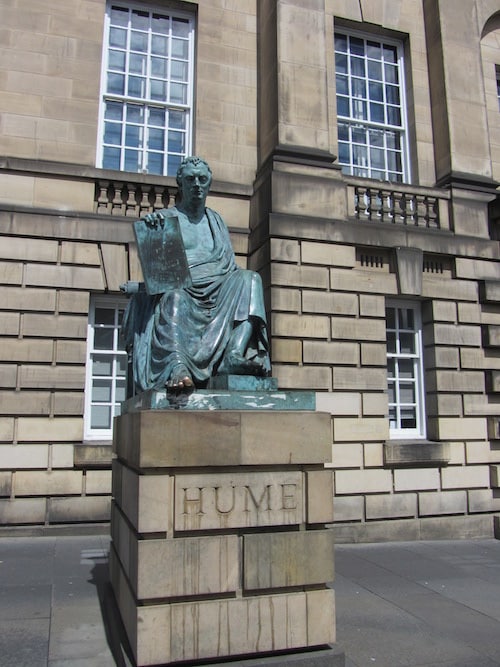
The skeptic David Hume (1711-1776) is prominently acknowledged on the streets of Edinburgh in this highly stylized statue on High Street in Old Town. Despite his honorific status, Hume’s argument against miracles was convincingly dismantled in a critique by Alfred Russel Wallace in his book On Miracles and Spiritualism: Three Essays (1875), which anticipated C.S. Lewis’s equally devastating treatment 72 years later. Darwin was significantly influenced by Hume, as amply demonstrated in his private notebooks.
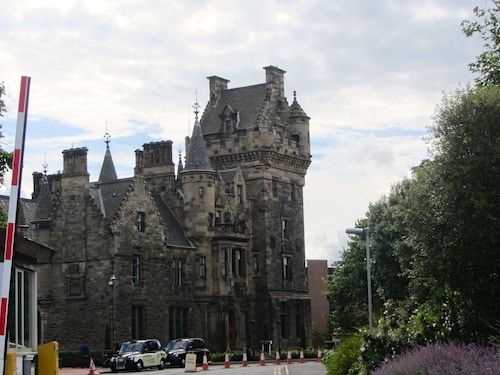
Today called St. Leonard’s Hall, this impressive mansion serves a number of purposes for the University of Edinburgh, including meetings and other social functions. Historically it is a striking example of the Scottish Baronial architecture of its day. Designed by John Lessels for the publisher Thomas Nelson around 1870, it sits alongside the picturesque Holyrood Park.

The sun setting on Edinburgh. This is near Arthur’s Seat, an 822-foot majestic extinct volcanic hill that dominates Holyrood Park.