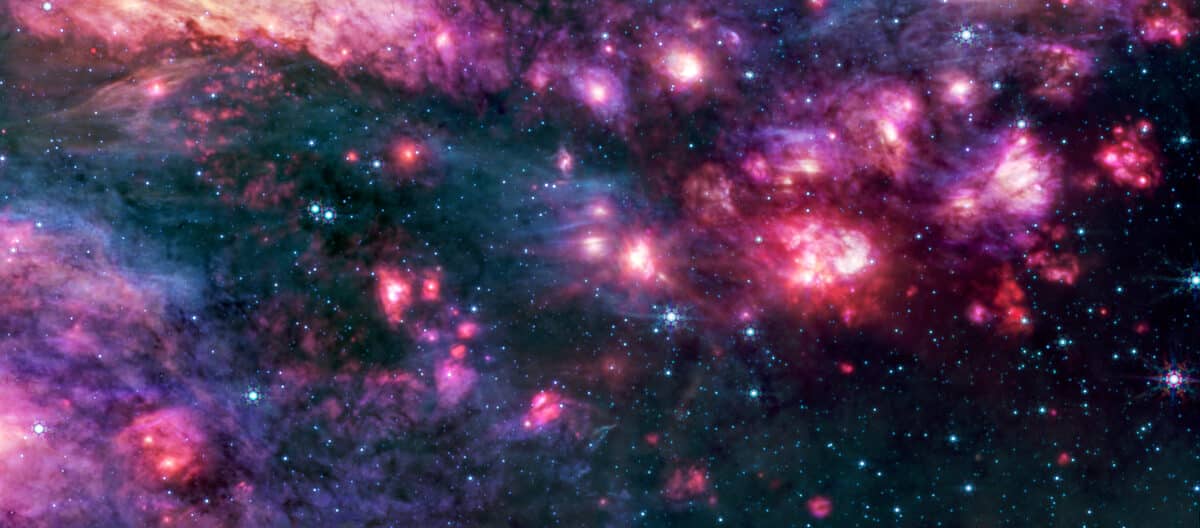
Sagittarius-B2 Type post Date December 1, 2025 CategoriesMetaphysicsNeuroscience & MindPhysics Tagged , Carl Sagan, consciousness, Daily Mail, David Klinghoffer, life after death, near-death experiences, panpsychism, physicists, Plato, Plato's Revenge, quantum mechanics, Richard Sternberg, Stephen Hawking, telepathy, terminal lucidity, Thomas Henry Huxley, universe, Uppsala University According to New Physics Model, Consciousness Underlies the Universe Science and Culture December 1, 2025 Metaphysics, Neuroscience & Mind, Physics 2 We live in a universe closer to the vision of Plato (c. 427 – 348 BC) than of Thomas Henry Huxley (1825–1895). Read More ›
cash-register-drawer-close-up-stockpack-adobe-stock-200949119-stockpack-adobestock Type post Author Denyse O’Leary Date September 18, 2025 CategoriesNeuroscience & MindScientific Reasoning Tagged , Àlex Gómez-Marín, Chronicle of Higher Education, consciousness, hostility, human mind, Mario Beauregard, materialism, Michael Egnor, Nature (journal), neuroscience, physics, Roger Penrose, Sabine Hossenfelder, Sam Harris, telepathy, The Immortal Mind, The Spiritual Brain In Science, the Cost of Defending Materialism Is Rising Denyse O’Leary September 18, 2025 Neuroscience & Mind, Scientific Reasoning 6 Neuroscientist Àlex Gómez-Marín raises — in the very venue that hosts, say, Roger Penrose and Sabine Hossenfelder — the validity of telepathy research. Read More ›
Dune Type post Author Gary Varner Date December 21, 2021 CategoriesBioethicsEvolutionPhilosophy Tagged , animals, Christmas, entertainment, eugenics, Evolution News, humans, movies, Star Wars, telepathy, YouTubers Dune Finds Entertainment in Eugenics Gary Varner December 21, 2021 Bioethics, Evolution, Philosophy 4 The world-building is fantastic, but the historical background to the novels is also instructive. Read More ›
Freeman_Dyson_at_Harvard-1 Type post Author Michael Flannery Date March 3, 2020 CategoriesEthicsMathematicsPhilosophyPhysical Sciences Tagged , __edited, aesthetics, Cambridge University, Duke University, E.O. Wilson, Freeman Dyson, intelligent design, miracles, New York Times, pseudoscience, scientists, Signature in the Cell, telepathy, The New York Review of Books, Wendell Berry Remembering Freeman Dyson and the Enduring Lesson of “Dyson’s Hypothesis” Michael Flannery March 3, 2020 Ethics, Mathematics, Philosophy, Physical Sciences 6 Dyson points out that the highly improbable is actually quite probable by invoking “Littlewood’s law of miracles.” Read More ›