






































Science and Culture Today Discovering Design in Nature
Author

Casey Luskin

Peppered Moth Now Reverts Back to Gray: Evidence of Oscillating Selection?

In the world of peppered moths, gray is the new black. The “peppered moth” became famous after textbooks started using it as an iconic example of evolution. It’s still employed in some current textbooks: Douglas Futuyma’s 2005 edition of Evolution states, “By the 1930s, however, examples of very strong selection came to light. One of the first examples was Industrial Melanism in the peppered moth (Biston betularia). … There is considerable evidence, obtained by several independent researchers, that birds attack a greater proportion of gray than black moths where tree trunks, due to air pollution, lack the pale lichens that would otherwise cover them.” (p. 393) While Futuyma is right to further note that “other factors also appear to affect Read More ›
Ken Miller’s Only a Theory Attacks Straw Man Version of Intelligent Design on Common Descent

A friend recently wrote me an e-mail asking if I had any critiques of Ken Miller’s 2009 book Only a Theory. Writing back to him, I observed that the book has many problems, but that I would offer a few quick responses to two or three of its most egregious errors. This serious of three posts (or three topics, really) will look at three errors and mischaracterizations of intelligent design (ID) in Only a Theory, starting with Miller’s mischaracterization of ID and common descent. On page 51, Miller states: What does design theory tell us about the details of the horse family over the past 55 million years? First, it would not consider it a family at all. From the Read More ›

New Law Review Article Surveys Case Law on Teaching Evolution

In May, pro-Darwin-only education advocates issued a press release lamenting that “25 percent of biology teachers do not know it is unconstitutional to teach creationism.” Then last month the National Center for Science Education (NCSE) publicized its new “Creationism and the Law” web page, which states that “Since 1968…, U.S. courts have consistently held that ‘creationism’ is a particular religious viewpoint and that teaching it in public schools would violate the First Amendment of the Constitution.” While these statements are legally correct, they leave out a crucial point of law that the NCSE may not wish to publicize: “scientific critiques of prevailing scientific theories [may] be taught provided that such curricula are enacted with the clear secular intent of enhancing Read More ›

Scientists Say Intelligent Designer Needed for Origin of Life Chemistry

In a recent ENV post, Stephen Meyer critiqued a May 2009 Nature paper co-authored by John D. Sutherland titled, “Synthesis of activated pyrimidine ribonucleotides in prebiotically plausible conditions.” The paper claimed to have produced RNA nucleobases under prebiotic conditions, but Meyer observed that it utterly failed to address the most crucial question in the origin of life (OOL): the origin of information, a topic Meyer addresses extensively in his new book Signature in the Cell. Other scientists agree with Meyer. Organic chemist Dr. Charles Garner recently noted in private correspondence that “while this work helps one imagine how RNA might form, it does nothing to address the information content of RNA. So, yes, there was a lot of guidance by Read More ›

“Expelled Exposed” Is Wrong: Materialists Allowed to Challenge Neo-Darwinian Orthodoxy, Intelligent Design Proponents Are Not

[Note: For a more comprehensive rebuttal to “Expelled Exposed,” please see: NCSE Exposed at NCSEExposed.org] We’re often told that the evidence for neo-Darwinian evolution — where unguided natural selection acting on random mutations is the driving force generating the complexity and diversity of life — is “overwhelming.” But hints of dissent from this position can be found throughout the mainstream scientific literature. One article in Trends in Ecology and Evolution last year acknowledged that there exists a “healthy debate concerning the sufficiency of neo-Darwinian theory to explain macroevolution”.[1] Likewise, Günter Theißen of the Department of Genetics at Friedrich Schiller University in Jena, Germany recently wrote earlier this year in the journal Theory in Biosciences: while we already have a quite Read More ›

Materialist Science Fiction on Human Evolution Promoted to Kids at Local Public Libraries

Last December, I wrote a post about a book titled Life on Other Planets, aimed at junior-high-aged kids. I found it at a local library. The book promoted materialist science fiction about the origin of life on earth. More recently, the Seattle Public Library system had its annual booksale, and I loaded up. One now-former library book I bought was Journey from the Dawn: Life with the World’s First Family, by Donald Johansen and Kevin O’Farrell (Villard, 1990). I liked this book far better than Life on Other Planets, but instead of promoting materialist science fiction to kids on the origin of life, this one promoted science fiction to kids regarding paleoanthropology and the origin of humans. The book starts Read More ›

Eugenie Scott Claims Evolution Is Threatening to Certain Christian Traditions

In March, I blogged about how the National Center for Science Education (NCSE) usually tries to project a religion-friendly image, but somehow their “talking points” they released for Texas State Board of Education meeting in January advocated that activists press the SBOE to adopt scientism as the state’s official ideology and expressly deny the existence of the supernatural as a matter of state education policy. As the NCSE’s talking points argued: “Science posits that there are no forces outside of nature. Science cannot be neutral on this issue…. All educated people understand there are no forces outside of nature.” Yet in a recent radio interview with the Minnesota Atheists, Eugenie Scott claims that the NCSE “doesn’t take a stand on Read More ›

Biomimicry and Intelligent Design Seeing Increased Media Coverage

Last year I wrote a series of posts about biomimetics (also called “biomimicry”), a term used to describe the way human engineers mimic nature in order to improve human technology. In fact, I recently blogged about how biomimicry of cuttlefish luminescence in new television technology further strengthens the case for intelligent design (ID) in biology. Even some members of the media cannot deny the relevance of biomimicry to the ID debate. A recent article in the London Telegraph was titled “Biomimicry: Why the World is Full of Intelligent Design.” It reported, “Forget human ingenuity — the best source of ideas for cutting-edge technology might be in nature, according to experts in ‘biomimicry’.” Of course the writer felt compelled to deny Read More ›

BioEssays Article Admits “Materialistic Basis of the Cambrian Explosion” is “Elusive”

A recent paper in BioEssays, “MicroRNAs and metazoan macroevolution: insights into canalization, complexity, and the Cambrian explosion,” admits the lack of a “materialistic basis” — that is, a plausible materialistic explanation — of the Cambrian explosion. As the article states: Thus, elucidating the materialistic basis of the Cambrian explosion has become more elusive, not less, the more we know about the event itself, and cannot be explained away by coupling extinction of intermediates with long stretches of geologic time, despite the contrary claims of some modern neo-Darwinists. (Kevin J. Peterson, Michael R. Dietrich and Mark A. McPeek, “MicroRNAs and metazoan macroevolution: insights into canalization, complexity, and the Cambrian explosion,” BioEssays, Vol. 31 (7):736 – 747 (2009).) The authors give no Read More ›

archaeopteryx-bird-like-dinosaur-from-the-late-jurassic-peri-414893934-stockpack-adobestock
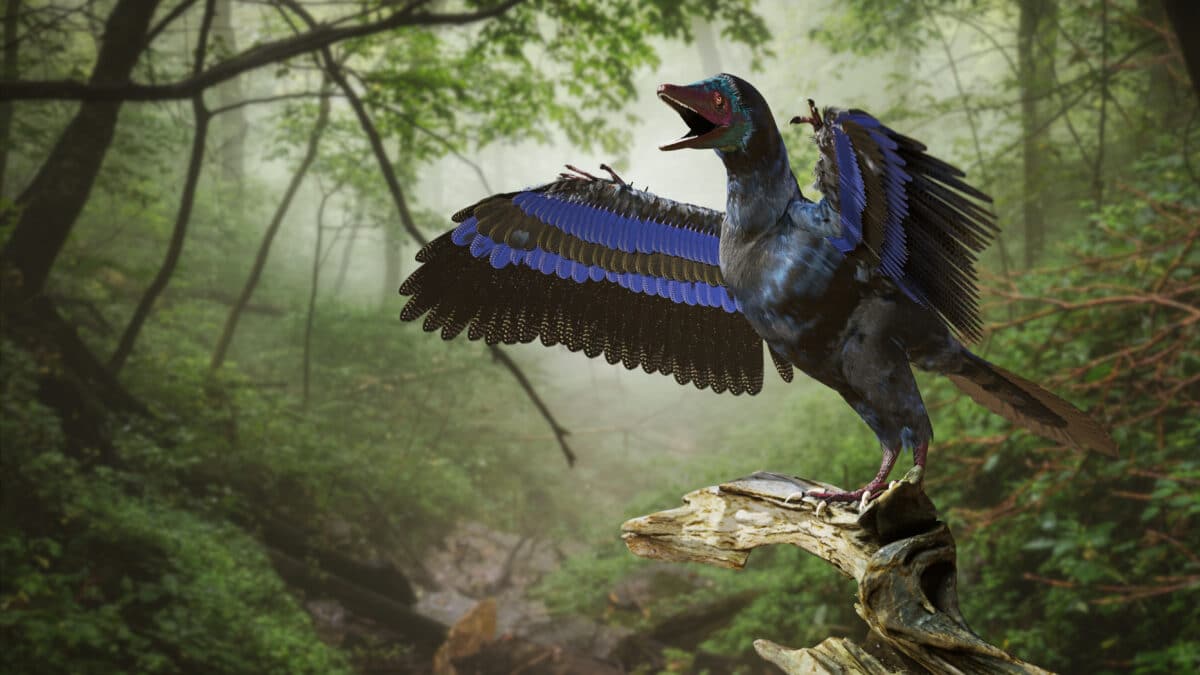
Archaeopteryx, bird-like dinosaur from the Late Jurassic period around 150 million years ago
Image Credit: dottedyeti - Adobe Stock

“Old Theories Die Hard”: Birds-Evolved-From-Dinosaurs Hypothesis Takes Big Hits With Two Recent Papers

Two recent papers, one in the Journal of Morphology and another in Ornithological Monographs, as well as a ScienceDaily news release titled “Discovery Raises New Doubts About Dinosaur-bird Links,” contain criticisms by evolutionists of the dino-to-bird hypothesis that you would normally expect to hear only from skeptics of neo-Darwinism. Their remarks not only cover problems facing the dino-to-birds hypothesis, but also lament the politically motivated drive to push that hypothesis and ignore scientific dissent. The ScienceDaily article observes that some aspects of bird morphology are simply incompatible with the standard hypothesis that birds evolved from maniraptoran theropod dinosaurs: It’s been known for decades that the femur, or thigh bone in birds is largely fixed and makes birds into “knee runners,” Read More ›

© Discovery Institute