






































Author’s note: This is Part Six of a series of conversations with J. Budziszewski, a Fellow with the Center for Science and Culture and author most recently of Pandemic of Lunacy: How to Think Clearly When Everyone Around You Seems Crazy. See Parts One through Five here, here, here, here, and here, and my review of the book here.
Questions and Answers
When it comes to contentious subjects, what are some ways that ordinary people who are reasonably intelligent though not specialists in the subject can sort through conflicting truth claims?
One thing to recognize is that although experts are very useful, and we certainly do need to have experts who know more about their field than outsiders, experts are not simply neutral authorities, so that you can trust everything they say. Experts have biases, experts make mistakes, and experts disagree with each other. These facts are often suppressed when experts speak to people outside their own expert group. They may act as though they all agree even though they don’t. Or, perhaps, it isn’t the experts themselves who make this pretense, but rather journalists pumping a certain narrative, or people of a certain school of thought, who want to suppress views other than their own. Even if the experts don’t pretend that they all agree, or that they never make mistakes and have no biases, these other people may pretend that this is so.
Science ought to be following the evidence where it leads. This requires debate. If someone says to the scientist, “No, the evidence doesn’t lead where you say it does, so your explanation of the facts falls short,” then the scientist ought to reply, “Tell me why you think it doesn’t work.” The scientist and the critic can go back and forth, making arguments and counterarguments, and eventually, maybe, get somewhere.
When I was in elementary school, my teachers all said that the earth is cooling. They said, “All the scientists say so.” They treated it as fact. Now it’s treated as fact that the earth is warming. Well, maybe it is. Fine. But even if it is, we can ask, “Is there anyone who disagrees about warming?” Or, “What is your evidence for warming?” Now, in some fields, like quantum mechanics, I concede that it’s very difficult for nonspecialists to evaluate the evidence. But a great deal of the evidence in the debate over origins does not require a PhD to understand. Consider the ID argument about irreducibly complex processes and functions. It’s at least as easy to understand as the doctrine of natural selection, which everyone is expected to understand today (though as I’ve found speaking with students, even today not everyone does).
Or take the COVID epidemic. Sure, there were experts, but some of the experts were very busy suppressing other experts. They didn’t engage with the more than eight hundred thousand people — epidemiologists, medical professionals, and other scientists, as well as members of the public — who signed the Great Barington Declaration, proposing a different method for controlling the spread of the disease, which they called “focused protection.” The former group of scientists didn’t respond properly to the latter group. Instead they libeled them and tried to get people to despise them.
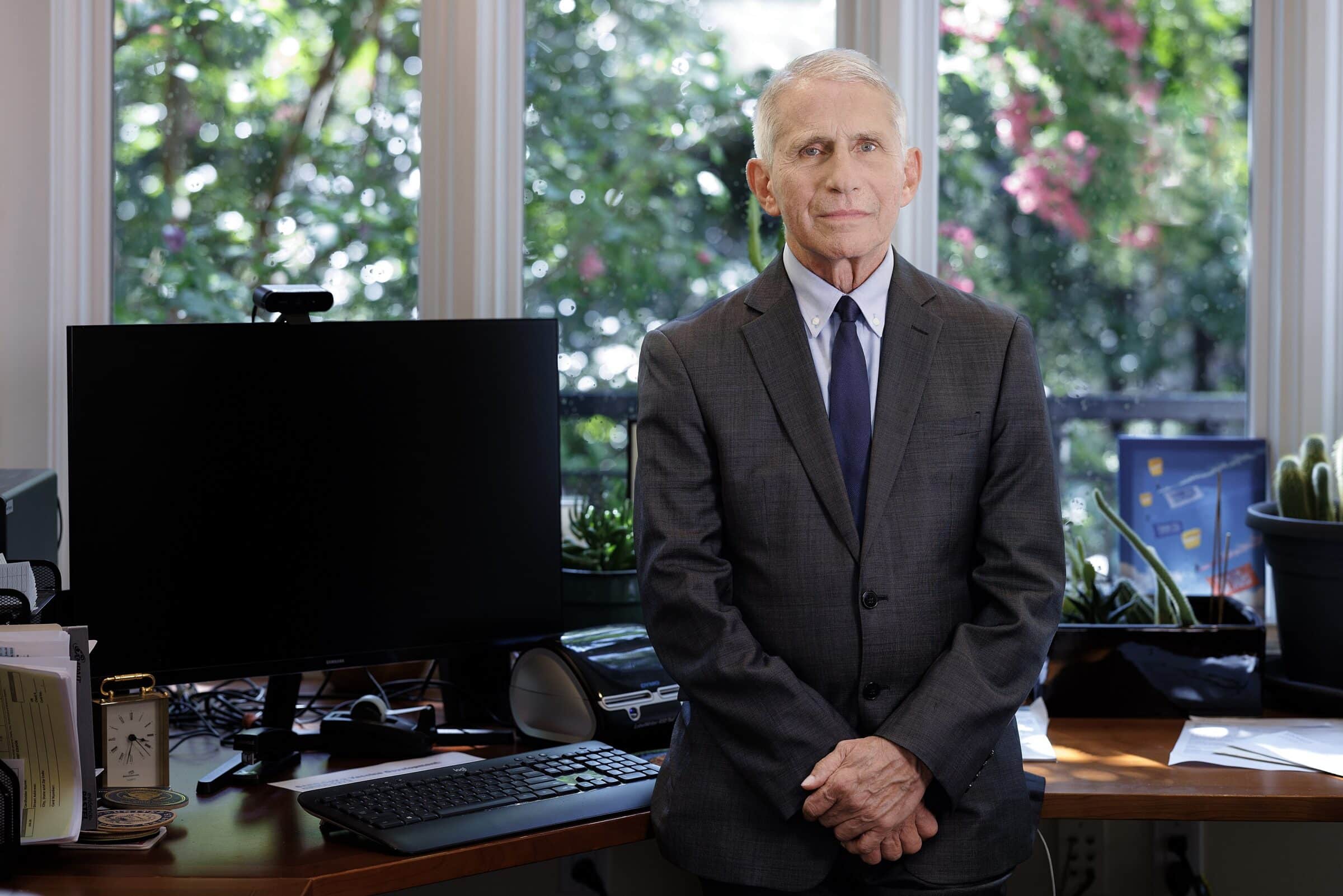
It’s very strange. And this, too, goes back to the point we were making about status signaling. Anthony Fauci said that his critics were “really criticizing science because I represent science.” That wasn’t just a boast about how smart he was or what a good scientist he was. It was also a status claim: “I’m really very important. Don’t listen to those other people. Pay no attention to that man behind the curtain. Just listen to me.” And then, as we found out later, when he gave testimony before the House Select Committee on the Coronavirus Pandemic, he admitted that all the masking and distancing guidelines didn’t emerge from science; they “sort of just appeared.”
When experts say that something is true, we need to think a little further. In most fields I don’t think this is completely beyond the ability of the ordinary person who’s not an expert. We can respond, “How do you know that the Earth is warming?” We can go on to ask, “Suppose it’s warming. Is that necessarily all bad? Is there anything good about it?” “Suppose it’s warming. Is human activity the cause?” “Suppose human activity is the cause. Could we do anything about it?” “Suppose we could do something about it. Could our efforts possibly do more damage than the warming itself?”
We’re used to asking these further questions about non-scientific things, aren’t we? “Suppose you do like the young man. Can you trust him?” “Suppose you can trust him. Can he hold down a job?” You don’t have to be an expert to raise questions like that. The same thing is true of the origins debate.
Finally, even if an expert is qualified to pronounce on certain matters of fact, we should distinguish claims about what is the case from the evaluative conclusions drawn from what is the case. He may be mistaken about any of them. Suppose we could reduce the incidence of disease by closing all the schools and workplaces. There are other things to consider. Even if he’s an expert on disease transmission, he’s not an expert on unemployment or on how much children depend on school. Those are not expert questions. They are policy questions, prudential questions. How do we balance the various considerations? The reason we have a republic is that these are questions for ordinary people.
I don’t think this kind of honesty and thoughtfulness is such a difficult thing to demand in matters of origins. We don’t have to agree. What’s so hard about teaching the controversy?
When I first began teaching at the University of Texas, a representative from People for the American Way visited my office, hoping to get me to sign his petition opposing the teaching of ID in public schools. He presented ID as a form of very naïve biblical literalism and young-earth creationism.
I said to him, “You obviously haven’t read the material, because that’s not what the ID people say.” He said, “But science has proven that Darwinism is true and ID is false.” I tried to explain that although a scientist can sometimes say, “the evidence as it appears to me supports P more than it supports Q,” science isn’t a finished product. That’s not how it works. Not only was the fellow completely naïve about the nature of the science enterprise, he was naïve about the theory that he was defending.
And why? Because his and his partners’ activism was a form of collective status signaling: “I’m one of the right people. We know that those other people are bad. We don’t want to allow them to teach in public schools. You don’t want your children to end up being like them, do you?”
The Advantage of Being in the Out Group
There’s that status signaling thing again. All this makes me think of Pascal’s observation that, “Unless we love the truth, we shall be unable to know it.”
Yes. There are a lot of people today, so-called postmodernists, anti-realists of one sort or another, who really don’t believe that there is a truth, who believe we are locked into just our own worldview.
But even many of us who want to believe in truth may find it threatening. We have to examine ourselves carefully in case that is the case with us. There is a universal human impulse to know the truth of things, but there are also in us universal temptations to hide from some of that truth when it’s very uncomfortable. That’s what makes it so difficult.
If you’re trying to do intelligent design science, it’s a little bit easier to be intellectually honest, because you have to work harder to make the case for your claim. You have to work three times as hard to collect the evidence, to put it out there, to present the arguments, and to get a hearing for them, because so many people are trying to chop you in half. Whereas, if you’re on the side that’s being supported by the status signaling, the consensus view in some groups of scientists, you can be lazy.
That happens in politics too. You may notice in some of our political debates, one side is sharper than the other. That’s because it has been detested for so many years. The other side has become so lazy that it thinks all it has to do is point and scream a name. The psychologist Jonathan Haidt found that that in politics, people of one side — let’s call them sides A and B — people on side A understand pretty well what side B believes. But people on side B tend to get side A wrong. They don’t have much of a clue about what side A believes because they themselves have held the dominant view in their circles for so long that they haven’t had to find out. They haven’t had to defend themselves, or to even find out what the other side believes.
This happens in science, too. In a way, this is good for intelligent design. It forces the intelligent design folks to do better science. Good for them.
Pandemic of Lunacy is an excellent resource for helping workaday thinking people realize that they aren’t crazy. It’s the convoluted world that is crazy. You can read the Table of Contents and Introduction here, and Creed & Culture is offering a 15 percent discount through the end of April. Use discount code PANDEMIC15.