





































As we enter the new year, it’s a common practice to resolve to try something new. Making new year’s resolutions, however, is easier than keeping them. We often procrastinate and put off expending the effort. I want to focus here on the process of beginning a new creative endeavor and what it takes to succeed. Does our creativity reveal another fascinating facet of intelligent design within our lives?
Suppose we want to create something, maybe small, like a short essay, or grand, like a new house. What’s needed to begin such a project? First, if we want to create something truly original, we must use our imagination. If I want to write an original story, I have to imagine the characters and how they might interact with each other in the circumstances that I will weave into the story. In other words, I must imagine the plot.
Likewise, if I want to build a house, and I decide not to just hire an architect to devise a plan, I’ll have to consider the practical features and dream about the aesthetic ones that I would like to incorporate into the finished home.
Belief That It Can Be Done
The second aspect required to begin a new project is faith that it can be done and that the expended effort and resources will be worthwhile. If I don’t believe that I can write a story, I will find it hard to begin. And even though I can imagine a nice house that I would like to live in, I personally have a hard time believing that I could successfully design and build such a house, so I’ve never given serious thought to attempting it.
Now, both imagination and faith, or belief, are qualities of humans, but most definitely not of inanimate objects, and are perhaps also lacking among non-human animals. A bird can build a nest, but it’s doubtful if it operates from anything but instinct. What about AI? Is AI creative? Perhaps, but only in a derivative sense. AI exists as a tool for people to use that is designed, built, and programmed by other creative and intelligent humans. AI might be able to generate code that results in another AI system, but the ultimate origin of the whole thing is the creative genius of humans.
Humans have the ability to imagine novel outcomes and to produce things that have never existed before. Human creativity appears to be a gift that enables us to design and fashion the pre-existing material of this universe into myriads of useful forms that supersede the natural workings of the forces of nature. In the coffee shop where I’m writing this article, almost everything I see around me is composed of material fashioned into forms that would never arise naturally in our physical universe.1 Our creativity also extends to immaterial outcomes.
Einstein’s Imagination, and Beethoven’s
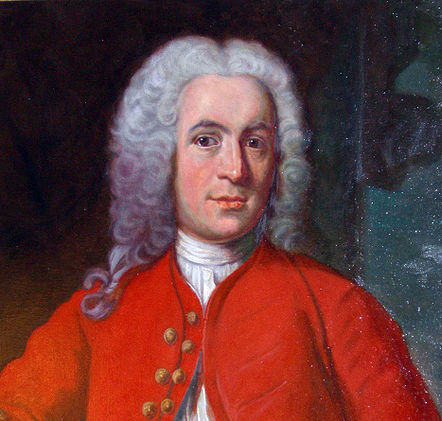
In the realm of science, for example, Einstein imagined what it would be like to ride on a beam of light. From this he derived the special theory of relativity that predicted unheard-of consequences, such as time dilation and length contraction, depending upon the relative velocity of observers.
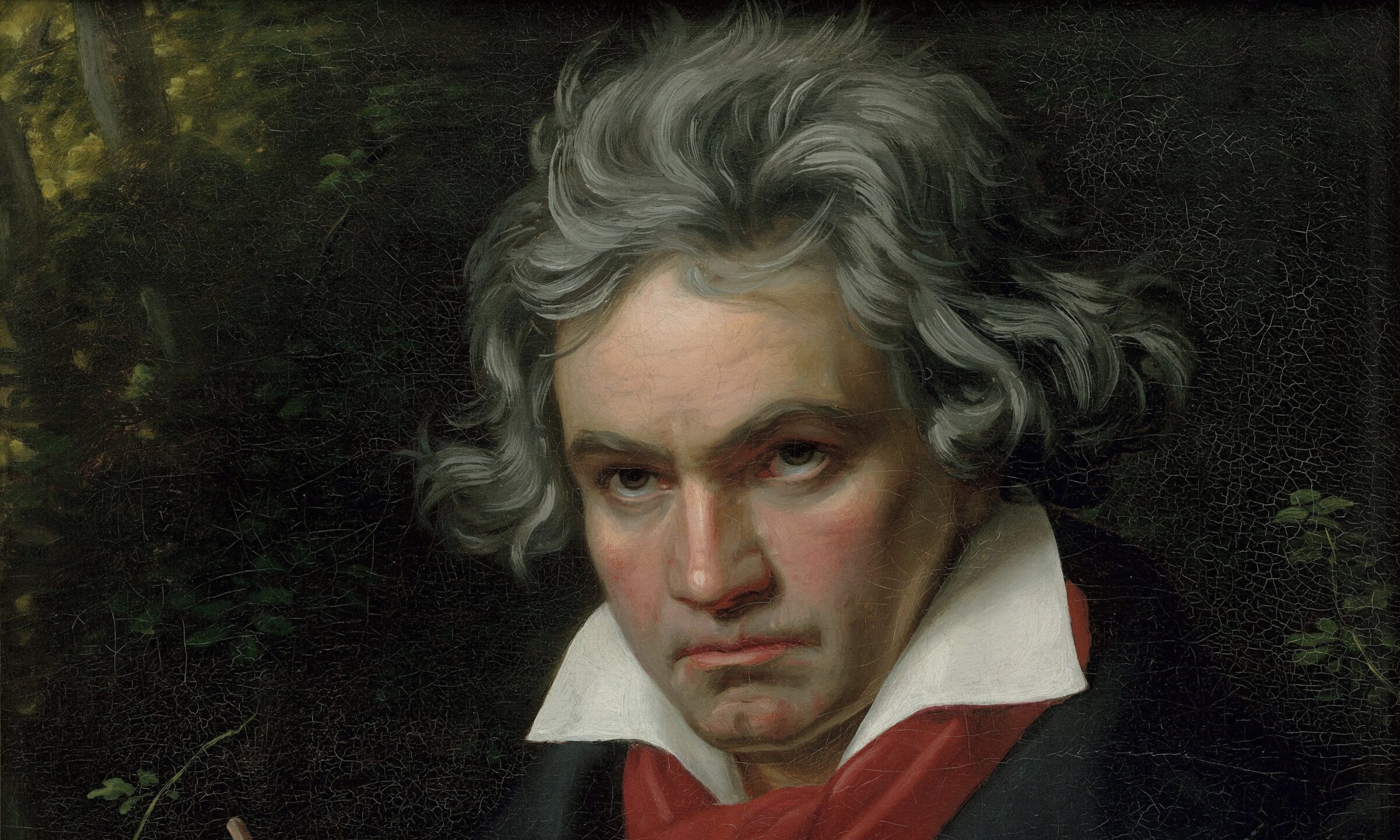
Within the field of music, Beethoven’s compositions stand out not least because of his progressive loss of hearing.
In his final years [after becoming completely deaf], Beethoven composed works of startling originality….The Ninth Symphony (1824) is perhaps the most iconic example. Completely deaf, Beethoven composed a choral symphony — the first of its kind. Its finale, featuring Schiller’s “Ode to Joy,” was revolutionary in content and execution….The silence that surrounded him did not crush his creativity — it freed it.
As remarkable as human creativity is, an important qualification is that our creative imagination doesn’t give us the ability to create physical reality from nothing. We can imagine a better mousetrap, but no amount of visualization on our part will, by thought alone, produce the thing we imagine. We require the prior existence of material components and a means of coupling our thoughts to physical mechanisms — whether our own hands or machines that we operate — to instantiate our creative ideas.
Everything Out of Nothing
We could imagine a mechanism or entity that could make something out of nothing, but we couldn’t produce it, because the laws of our physical universe prohibit it. But it is possible that such a thing, such an entity, already exists. In fact, the existence of this universe logically requires that its ultimate source is something that has the ability not only to imagine what doesn’t exist, but to bring into existence, out of nothing, our universe and everything in it.
What gives us the ability to imagine and to believe? It couldn’t be just our mature intelligence. On the contrary, toddlers are endlessly creative, more freewheelingly so than most adults. It seems to follow that our creative attributes arise from a source outside ourselves. That would have to be an immaterial source: not just an intelligent designer, but a creative one.
The ability to do creative work, to successfully initiate a creative endeavor, requires such a creative designer. Creativity places us in dependence upon a resource available to us, but not altogether within our control — a place that children may more freely explore than adults typically do. As Madeleine L’ Engle writes:
Creativity opens us to revelation….In the act of creativity, the artist lets go the self-control which he normally clings to….
Walking on Water: Reflections on Faith and Art (Colorado Springs: WaterBrook Press, 2001), p. 81
What is the source of our creativity? Is the notion of our brains as a complex computer made of organic material a sufficient explanation? In an earlier article, I suggested that our lives require “something more” — an ongoing connection with an external guiding source of life — in order for us to fully function as human beings. Our best examples of creativity appear to testify to this inspired partnership.
Notes
- See also, Granville Sewell’s recent essay, “The Strongest Argument for Intelligent Design Is Also the Simplest.”