



















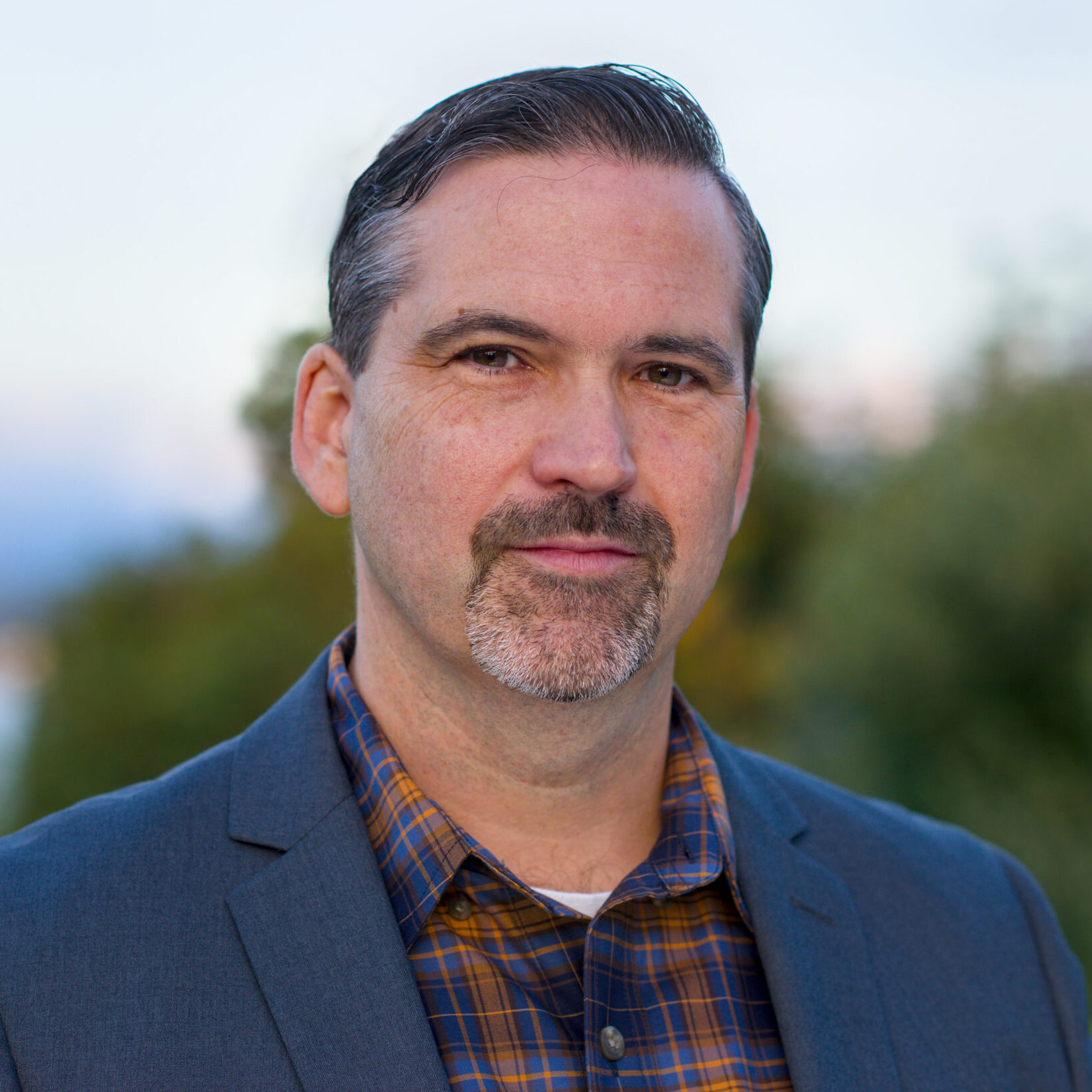


















Editor’s note: Jefrey Breshears, PhD, is a historian, former university professor, and founder and president of The Areopagus in the Atlanta area. This year Dr. Breshears has developed a special presentation that explores the significance and legacy of the famous Scopes “Monkey Trial,” which took place in Dayton, Tennessee, 100 years ago this summer. His books include Introduction to Bibliology; Francis Schaeffer: A Retrospective on His Life and Legacy; C. S. Lewis on Politics, Government, and the Good Society; The Case for Christian Apologetics; and American Crisis: Cultural Marxism and the Culture War. Dr. Breshears kindly agreed to an interview with Evolution News about his exploration of the Scopes trial.
This month marks the 100th anniversary of the Scopes “Monkey Trial.” What inspired you to create a presentation to explore its legacy?
As an historical event, the Scopes trial of 1925 was little more than a blip on the radar screen and a momentary distraction amid the Roaring Twenties. But in terms of what it signified and its impact on subsequent American culture, the trial was one of the most consequential events of the 20th century. It rightly deserves the title, “The Trial of the Century.”
Promoted as a battle royale between science and religion — evolutionary theory versus biblical creation — in its actual content the trial was underwhelming. Nonetheless, its legacy was substantial. In the popular media of the time, the trial reputedly confirmed the Darwinian theory of naturalistic evolution as indisputable scientific fact while relegating the biblical account of creation to superstition and mythology.
However, the facts belie this interpretation. In reality, the trial did not establish a credible scientific basis for evolutionary theory, nor did it discredit special creation as a rational alternative. In that respect, this was one of those landmark historical events that all thoughtful Americans should know about.
My presentation on “The Scopes Trial Revisited” incorporates three sections:
- a preface that focuses on the philosophical and worldview implications of the controversy;
- a retrospective on the Scopes trial, its legacy, and the importance of Christian apologetics; and
- “Scopes 2.0: The Sepocs Trial of 2025” in which I envision a contemporary version of the Scopes trial in which the scenario has flipped. As in Tennessee in 1925, only one version of origins is allowed to be taught in public schools, but now it is exclusively naturalistic neo-Darwinian evolutionary theory. The rational (and factual) alternative would be intelligent design. As Discovery Institute has often advocated, “Teach the controversy,” and otherwise guide students in the spirit of Socratic inquiry to “Follow the evidence wherever it leads.”
Why is the Scopes trial so significant?
The historical revisionism that from the outset misrepresented the issues and distorted the facts about what transpired before, during, and after the Scopes trial had a considerable impact on public opinion in America and abroad. Since the late 19th century, the scientific community had attained the status of the premier authority not only on matters related to nature, but even to social and cultural issues — a troubling trend that C. S. Lewis would later describe as the cult of scientism. For many, “religion” was being consigned to the status of subjectivized personal preference — a debasing stereotype that still often prevails.
Why did the Scopes trial become such a prominent part of American pop culture?
In all likelihood the trial in small-town Dayton would have come and gone virtually unnoticed had it not featured two nationally known celebrities, William Jennings Bryan and Clarence Darrow. At the time, Bryan was one of America’s most celebrated — and most controversial — figures. As a politician, he was a former three-time candidate for President who had also served as Secretary of State under Woodrow Wilson. Following World War I, he devoted much of his efforts to political reforms and social and religious concerns, focusing on the increasing secularization of American culture. He targeted Darwinian evolution as a driving force in many of the disturbing trends of the day, warning that if naturalistic evolution were generally accepted it would erode belief in God and traditional morality.
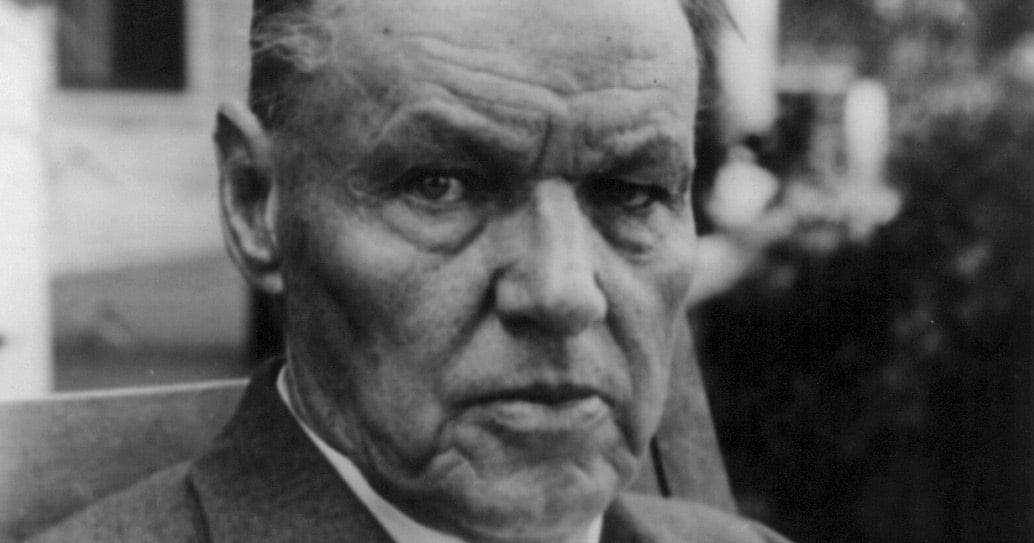
Clarence Darrow (pictured at the top) was probably the most famous — or infamous — trial lawyer in America and the nation’s premier legal defender of high-profile leftists such as the five-time Socialist Party presidential candidate Eugene Debs and “Big Bill” Haywood of the radical IWW (Industrial Workers of the World). Darrow’s reputation was that of a flamboyant self-promoter whose abrasive personality was so toxic that even the ACLU regarded him as unduly radical. Nonetheless, he used his notoriety to force his way onto the defense team.
With Bryan and Darrow representing the two sides in the trial, it was guaranteed to generate publicity. When the trial commenced on July 10, 1925, several thousand outsiders converged on Dayton to witness the spectacle, including an estimated two hundred reporters from across America and beyond. One of the most prominent was H. L. Mencken of the Baltimore Sun, an ardent secularist who characterized Bible-believing Christians as bigoted “morons,” and who was the first to term the proceedings a Monkey Trial. The trial was also the first public event in America to be broadcast live on radio.
Due especially to the long-anticipated courtroom showdown between Darrow and Bryan, and the way the encounter was represented (or misrepresented) in the media, the Scopes trial succeeded brilliantly as a nationwide media event — far exceeding the actual content of the exchange itself. In addition, the subsequent “historical” accounts of the trial, such as in Frederick Lewis Allen’s 1931 bestseller, Only Yesterday: An Informal History of the 1920s, and the infamous Hollywood film Inherit the Wind (released in 1960), further fed to pop culture a distorted version of the event.
Why is it important for Americans to know about the Scopes trial?
Although usually presented as an epic debate between two sources of authority — science against religion — the Scopes trial dramatized a classic culture clash between fundamentally contradictory worldviews: naturalism and theism. The particular issues related to Darwinian evolutionary theory aside, the trial represented in microcosm a philosophical, moral, and religious clash that has existed in American history from the beginning. As I emphasized in my book, American Crisis: Cultural Marxism and the Culture War, this has been a perennial issue in our history since the days of colonization, although it accelerated after the publication of Darwin’s On the Origin of Species (1859) and The Descent of Man (1871), and then again in the Roaring Twenties, and, most consequentially, in the 1960s to the present.
What are some of the biggest misunderstandings people have about the Scopes trial?
Many people assume that the trial decisively confirmed Darwinian evolutionary theory while relegating the biblical account of creation to the status of myth. Nothing could be more inaccurate, but that was the standard view of many of the journalists who covered the trial and the earliest historical retrospectives on it.
Similarly, many have argued that Clarence Darrow exposed William Jennings Bryan’s ignorance of modern science and made a proverbial monkey out of him. In fact, Bryan was far from an authority on either the Bible or modern science, but he upheld his belief in the divine inspiration of Scripture while conceding two controversial positions that characterized fundamentalist Christianity at the time: (1) He conceded that the earth (and the universe) could be far older than the 6,000 years that Young Earth Creationists claimed; and (2) he challenged the literalistic interpretation of early Genesis that many fundamentalists propagated by pointing out that much of the Genesis creation account incorporates symbolic, metaphorical, and perhaps even hyperbolic language.
What is social Darwinism, and how was it connected to the Scopes trial?
Darwinian evolutionary theory impacted not only biological science but also some of the most insidious social and cultural trends of the past century and a half. In the 1860s Francis Galton, a cousin of Charles Darwin, first proposed the new “science” of eugenics, including selective breeding, so as to promote a survival-of-the-fittest agenda and thereby accelerate human evolution. According to Galton and his successors, “defective” humans should be sterilized so as to reduce the possibility of producing “inferior” offspring.
Darwin was an avid proponent of eugenics, and his son Leonard would later become president of the national Eugenics Education Society in England. It should be noted that the subtitle of Darwin’s first book, On the Origin of Species by Means of Natural Selection, was The Preservation of Favoured Races in the Struggle for Life. (!)
Beginning in the 1920s, with the founding of the American Birth Control League (predecessor to Planned Parenthood), the eugenics movement sought to provide scientific and philosophical cover for the emerging abortion movement. Within the next twenty years, the eugenics agenda would culminate in Adolf Hitler and the Nazi regime’s mass extermination of “undesirables” — the “mentally retarded,” the physically handicapped, and “inferior” racial and ethnic groups such as Jews and Gypsies. For his part, Hitler credited Darwin and his endorsement of “scientific racism” as justifying the Nazi Party’s reversal of “centuries of mistaken humanitarianism” based on biblical moral principles.
Is there anything else you’d like people to know about the Scopes trial?
It is important to keep in mind that the trial of 1925 was not about biblical authority or whether the theory of evolution is true, but simply whether the defendant, John Scopes, had broken the Tennessee law that prohibited teaching “any theory that denies the story of the Divine creation of man as taught in the Bible.”
Furthermore, the Scopes trial preceded by more than sixty years the emergence of contemporary intelligent design theory that has informed, inspired, and provided substantive resources for many people who sensed, often intuitively, that neo-Darwinian evolutionary theory is seriously flawed. For example, C. S. Lewis realized this several years prior to his conversion to Christianity. (See John G. West, ed., The Magician’s Twin,Discovery Institute Press, 2012.)
Tell us about your work at The Areopagus.
In Atlanta, I founded The Areopagus in 2003 to provide high-level Christian education in churches, universities, and other venues on topics related to bibliology, Christian history, classical Christian apologetics, contemporary culture, Christian spiritual formation, and literature and the arts.
Over the past twenty years we have sponsored hundreds of seminars and forums in addition to offering Christian history tours in Israel and Europe. Our mission is to educate and equip Christians to understand their faith in more depth so as to engage others more effectively with the life-transforming truth and love of Jesus Christ. Our courses and other presentations are designed to broaden and deepen their knowledge base, stimulate critical thinking, and challenge them to live faithfully and consistently in accord with a wholistic biblical Christian worldview. We seek to provide a unique opportunity for Christians to come together in an interdenominational learning environment that is intellectually stimulating, socially engaging, and spiritually edifying.
If a church or other group would like you to give a presentation on the Scopes trial, how can they contact you?
Inquirers can check out our Areopagus website, including our Seminar Catalogue, at TheAreopagus.org. Our major focus for this summer and fall is our presentation on “The Scopes Trial Revisited,” and next year (2026) our primary focus will be on the Christian influences in the founding of America — an subject often misunderstood and misrepresented both by anti-Christian secularists and Christian nationalists.
For those who are interested in possibly scheduling a presentation, please contact us at Info@TheAreopagus.org.