






































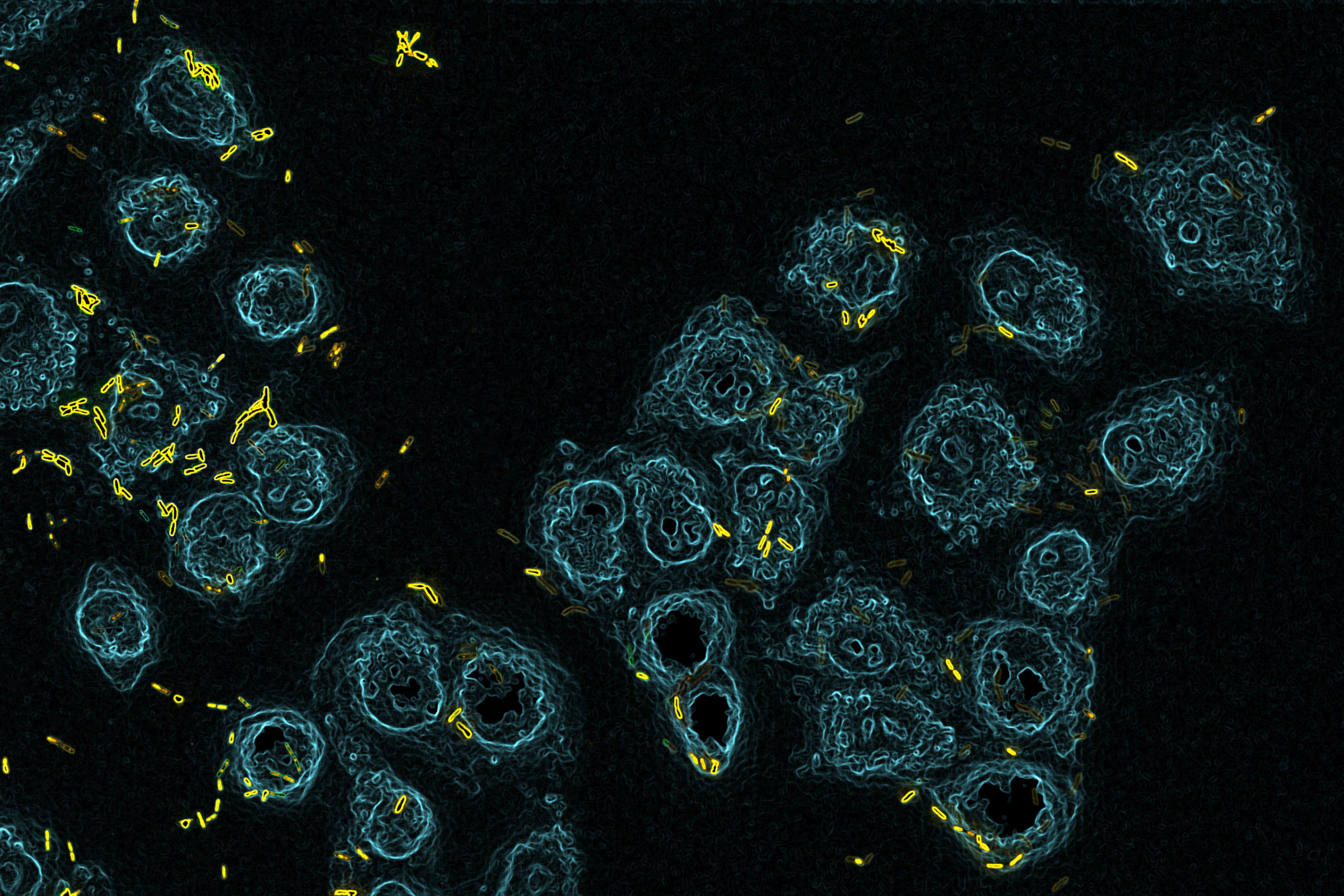
Ready to dip a toe in the ocean of biological ingenuity? Dr. Jonathan McLatchie is back, this time to discuss with me the engineering elegance and irreducible complexity of the process of bacterial cell division. You may wonder why we should care about something so miniscule as bacterial cells. After all, something so insignificant and unseen has little bearing on our daily lives. But if we’ve learned anything in the biological revolution of the 20th century, it’s that consequential things often come in very small packages. And if even the simplest forms of life exhibit stunning complexity and engineering prowess, all the more do we! And that complexity and design demands an adequate explanation.
Dr. McLatchie starts by reminding us what the term irreducible complexity means. It actually goes right back to a criterion of failure that Charles Darwin himself offered up regarding his theory of evolution: “If it could be demonstrated that any complex organ existed which could not possibly have been formed by numerous, successive, slight modifications, my theory would absolutely break down.”
Then McLatchie describes the remarkable process of cell wall breakage and re-synthesis that allows cell division to take place. He explains why it’s a challenge for evolution: “Evolutionary processes cannot select for some future utility that is only realized after passing through a maladaptive intermediate,” says McLatchie. He also refutes the co-option argument, the claim that one part of the process might have been borrowed from one system and co-opted into another through evolution. Evolutionary processes don’t have the ability to look forward. For that, you need foresight, a power that our universal experience shows to be unique to intelligent agents. Find and listen to the podcast here.
Dig Deeper
- Read the article that inspired this conversation: “Irreducibly Complex, Bacterial Cell Wall Manufacture Is an Evolutionary Enigma”