






































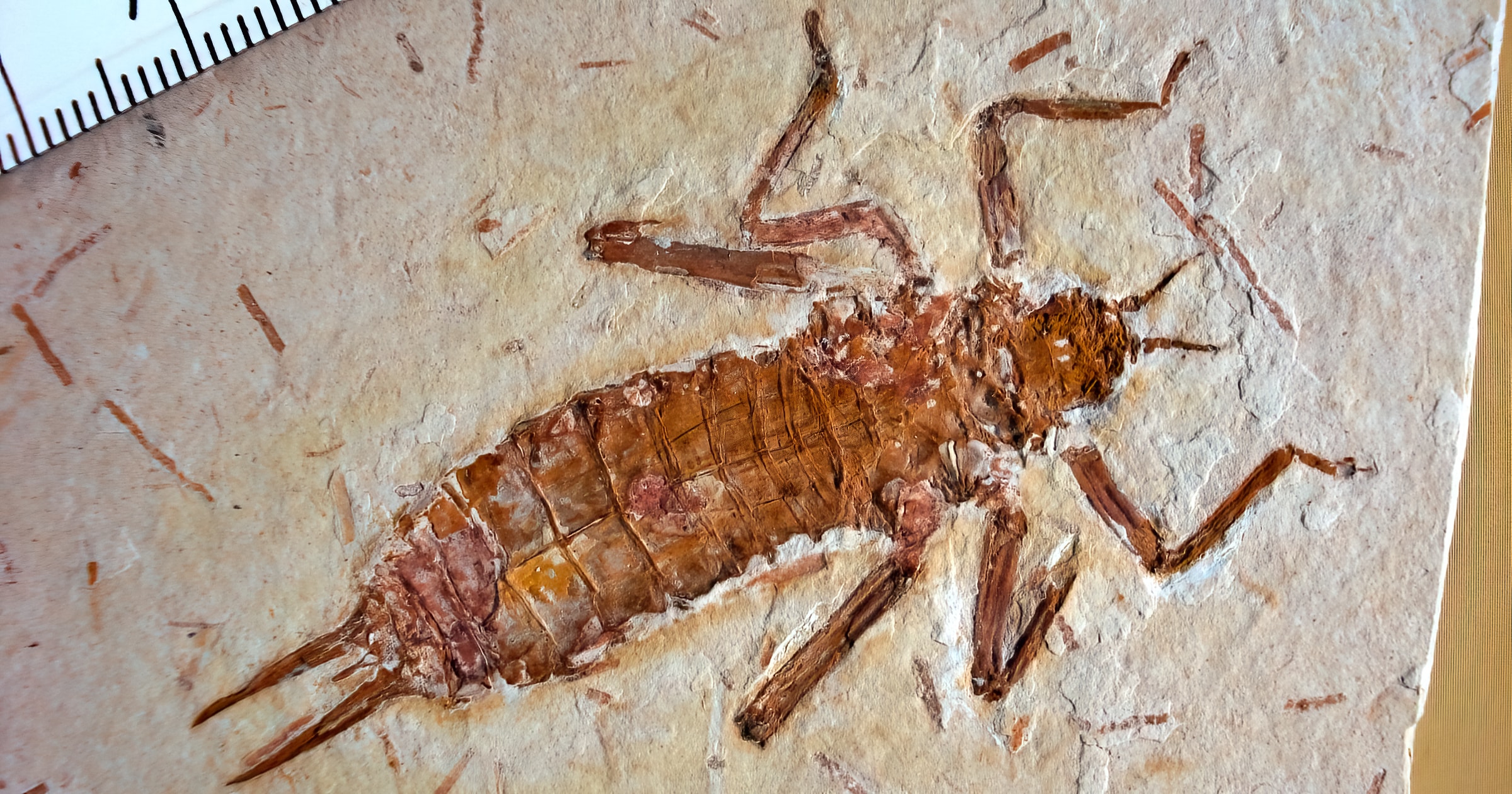
This Fossil Friday features Nothomacromia sensibilis, a strange type of dragonfly larva from the Early Cretaceous (ca. 115 mya) Crato limestones of northeast Brazil. I photographed this specimen at a German trader collection in April 2010, before it was acquired by the famous private collector Burkhard Pohl, who also runs the Wyoming Dinosaur Center.
These nothomacromiid larvae are not uncommon at this fossil locality and are found in different sizes corresponding to different instars. The largest ones are about three inches long, which implies very large adults.
In a monograph in 2007, I suggested that these larvae may not be genuine dragonflies of the suborder Anisoptera, but could instead represent the larval stages of the anisozygopteroid Cratostenophlebia. Another possibility is that these larvae correspond to the larval stages of the extinct family Aeschnidiidae that I featured last Fossil Friday. Whatever these enigmatic larvae were, they look highly unusual with their spidery legs, lyra-shaped antennae, and forcep-like anal appendages that do not form the typical anal pyramid of anisopteran larvae.