






































A long and fascinating article at Buzzfeed (“Will Misogyny Bring Down The Atheist Movement?“) is worth reading if you don’t mind a lot of crude language. Reporter Mark Oppenheimer describes the misogynist culture of the atheist-“skeptic”-materialist demimonde, and it’s an eye-opener.
I will not quote from it because the most fascinating passages would exceed the limits of tolerance for graphic talk by ENV‘s family-friendly audience. Suffice to say that, whether the rampant accusations of sexual harassment are all true, mostly true, or even just one quarter true, the New Atheism is a community that has a problem with women.
That’s not entirely unexpected. A picture of reality that casts men and women as animals, nothing more, naturally listens with some respect to animal wisdom, which in turn has no idea of manners, restraint, or self-denial. Animals predictably, unapologetically give in to base urges. Every man wrestles with them too, with more or less success, but animal wisdom is bereft of any compelling rationale for rising above.
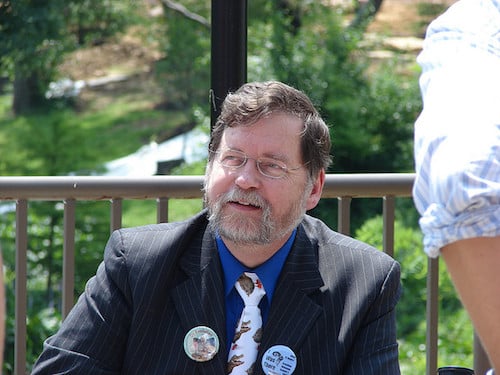
Among our atheist interlocutors in the evolution debate, biologist PZ Myers, aka the “Happy Atheist,” has been a notable critic of this nasty side of the skeptic community. He talked with Oppenheimer and was remarkably frank about his own compatriots:
[A]ccording to PZ Myers, atheists and skeptics may be uniquely unable to recognize their own flaws. “You’ll find the atheists who say, ‘I’m rational, therefore I’m better than everybody else,'” Myers said. “They take it for granted that all of their beliefs and positions are founded on rational thinking.”
Isn’t that the truth? An email correspondent of ours offered a good insight, which I wanted to quote but he didn’t respond to my request to do so. I’ll paraphrase.
Proponents of atheism, especially the science-flavored kind, imply with the term “skeptic” that they have liberated themselves from faith, shedding belief in favor of knowledge, cutting through all the fat and getting right down to the bone. But that’s a delusion. It’s like the naïve English speaker who thinks only he and his nearby neighbors speak unaccented English.
Obviously the reality is that everyone who speaks any given language does so with an accent. Some people just don’t recognize that they do. There’s no “unaccented” English, Spanish, Russian, French, or anything else.
The New Atheist subculture has its own “accent,” its own culture with its unquestioned assumptions, “tak[ing] it for granted,” says PZ Myers, “that all of their beliefs and positions are founded on rational thinking.” Some of those assumptions misrepresent scientific reality. Others, morally and spiritually, are vapid, ugly, or worse.
Unfortunately, however well meaning, leading “skeptics” have no resources for correcting their followers other than to appeal to gentlemanly ideals, without calling them that, which come ultimately from the religious cultures that they otherwise despise.