






































“Are you still an occasionist?”
“Occasionally.”
— Conversation among Discovery Institute staff, as imagined by Dr. Meredith.
In the Guide of the Perplexed, Maimonides addressed the student “perplexed” by seeming contractions between what he understands of his faith and what he has learned from other disciplines. Among the themes of the book is an insistent warning against the injuriousness of speculations conducted rashly and out of order. Maimonides counsels that before undertaking metaphysical subjects, or “divine science,” the student must first work his way up from logical studies and mathematics to physics, or natural science. Then he may be ready — or maybe not even then — to contemplate deeper mysteries.
What Maimonides means by physics or natural science isn’t exactly what we mean, but the advice still holds good. A discussion of theology as it pertains to the design of nature needs to be grounded in an understanding of the relevant science. Criticizing a scientific idea on theological grounds is simply backwards.
Yet that’s what Stephen Meredith did at length in First Things back in February (“Looking for God in All the Wrong Places“). He dismissed the theory of intelligent design and the evidence in Stephen Meyer’s Darwin Doubt because these ideas reminded Dr. Meredith of “occasionalism,” an obscure medieval theological concept held by Thomas Aquinas and others to be in error. Meredith seemed to think that by tagging ID as “occasionalist,” he could also automatically reject it as science — obviating the need to say where exactly the science of ID falls short. On the latter score, Meredith contented himself with referring readers to an axe-grinding Darwinist website, Panda’s Thumb.
He got things backwards just as Maimonides would predict. Even if ID were “occasionalist,” which it’s not, that doesn’t excuse you from having to grapple with the science. Then you can move on, if you wish, to theology.
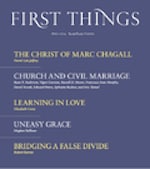
Had I written a letter to the editor of First Things, that’s what I would have said, though it hardly exhausts everything that’s wrong with the article. In the magazine’s current issue, other readers dismantle Meredith. It’s an enjoyable read — too bad it’s currently behind a pay wall. Here are the highlights.
Catholic philosophers Robert C. Koons (University of Texas) and Logan Paul Gage pin down Stephen Meredith on the contradiction of criticizing ID as both occasionalist and interventionist:
Meredith claims that Intelligent Design (ID) posits God as the sole efficient cause in nature and that it is necessarily committed to God’s intervention in nature. How he arrived at these conclusions, however, is unclear, since by his own admission ID proponents do not consider themselves occasionalists. And ID’s claim that the effects of intelligence in nature are empirically detectable clearly does not commit them to the stronger claim that God intervenes in the natural order by directly creating organisms.
Regardless, how can ID proponents be both interventionists and occasionalists? Occasionalists can’t believe in intervention, as they deny the existence of an order of natural causation in which to intervene. So Meredith must pick. If he says ID proponents are occasionalists, then the charge is false and lacking textual support in ID proponents’ writings. If he says ID proponents are necessarily committed to intervention despite their protests, then he owes them an argument that they are so committed.
Being philosophers “in the Thomistic tradition,” Dr. Koons and Dr. Gage are also in a position to tell Stephen Meredith where he goes wrong in recruiting Thomas Aquinas to his cause:
Meredith gives the false impression that the Thomistic or broader Catholic intellectual position supports his position that God only acts directly in salvation history (rather than natural history).
St. Thomas himself believed in the direct creation of Adam by God from the slime of the earth. In fact, Thomas held that God sometimes directly acts apart from the natural order so as to display his power and indicate that he did not create of necessity but of his own free will.
Louis Markos (Houston Baptist University) asks why ID should be prohibited from the use of arguments to which other sciences habitually make recourse:
Abductive reasoning underlies archeology and anthropology, where scientists have methods to determine whether a grouping of stones was the result of intelligent agents or the impersonal forces of weathering and erosion. Why are ID theorists to be denied the same method?
Lynnette Renner (San Diego State University) reflects on the irony of First Things readers being directed to a source like Panda’s Thumb for their science.
Not only does he claim that Intelligent Design proponents lack “intellectual honesty,” but he refers readers to websites like The Panda’s Thumb, apparently so they may learn about why ID proponents are so dishonest.
That website is a haven for ad hominem attacks. Perusing its blog posts and comments, one finds that ID proponents are regularly subjected to invectives like “liars for Jesus” and “mendacious intellectual pornographers,” as well as to comparisons to members of the KKK, Holocaust deniers, or worse. PZ Myers, the virulently anti-Catholic atheist blogger, is a longtime contributor to The Panda’s Thumb, where he enjoys accusing ID proponents of “stupidity and dishonesty.”
It is equally unfortunate that Meredith was so dismissive of Stephen Meyer’s book Darwin’s Doubt, failing to engage its major arguments.
Actually I didn’t notice that Meredith engaged any of the arguments in Meyer’s book, whether major or minor.
Michael Behe (Lehigh University and, of course, Discovery Institute) takes issue with Meredith’s ruling out ID, without considering the science, on the grounds that it seems to imply things that, on theological grounds, Meredith doesn’t like.
Stephen Meredith wants to label theories as nonscientific-by-definition if they have theological implications. “God is not really an empirical datum,” he explains. But definitional gerrymandering has a very poor track record in science. Many people think the Big Bang theory has theological implications, including scientists who declare it to be nonscientific because of that.
…
In this respect, Intelligent Design in biology is like the idea of a beginning to the universe in physics: Both may have theological implications, but both are based entirely on empirical evidence.
To these and other objections, Meredith’s reply is just lame. To Michel Behe, for example, he says:
I do not want to “label theories as nonscientific-by-definition if they have theological implications”; I want to label theories as non-scientific if they are theology disguised as science.
But how in the world can you say an idea like ID is no more than “theology disguised as science” if you give no evidence yourself of having weighed the scientific case it claims to make? Oh for goodness sake, I think we’ve said enough about Stephen Meredith’s ridiculous article by now. For a roundup of other commentary published on ENV, see here:
- Writing in First Things, Stephen Meredith Offers Confusion in the Guise of Critique
- Critiquing Intelligent Design in First Things, Stephen Meredith Seeks to Serve Two Masters
- Dissecting a Dead Jellyfish: Reading Stephen Meredith on Intelligent Design
- A Reader Asks: What Did I Mean by “Rarefied Design”?
- At First Things, Columnist Stephen Webb Gives Intelligent-Design Critic Stephen Meredith an Education
- Status Transactions in the Darwin Debate
- Am I an Occasionalist? Christian Philosophy and Intelligent Design
- What I Learned from My Visit to the National Center for Science Education
We have given Dr. Meredith the attention we have only because of the weightiness of the venue, First Things, a journal from which we have come to expect great things.
I’m now on Twitter. Find me @d_klinghoffer.