







































David Berlinski

A Graduate Student Writes

The Ineffable Higgs
A Flower of Chivalry: Berlinski on Hitchens, 1949-2011
Majestic Ascent: Berlinski on Darwin on Trial
Responding to Stephen Fletcher’s Views in the Times Literary Supplement on the RNA World
To the EditorThe Times Literary SupplementThe RNA World Sir:Having with indignation rejected the assumption that the creation of life required an intelligent design, Mr Fletcher has persuaded himself that it has proceeded instead by means of various chemical scenarios. These scenarios all require intelligent intervention. In his animadversions, Mr Fletcher suggests nothing so much as a man disposed to denounce alcohol while sipping sherry. The RNA world to which Mr Fletcher has pledged his allegiance was introduced by Carl Woese, Leslie Orgel and Francis Crick in 1967. Mystified by the appearance in the contemporary cell of a chicken in the form of the nucleic acids, and an egg in the form of the proteins, Woese, Orgel and Crick argued that Read More ›
An Open Letter to Donald Prothero
Hey Don — I want you should do me a favor. I noticed that you put up this real negative review of Steve Meyer’s Signature in the Cell on Amazon. I want to tell you, I loved the stuff about the slow fuse and all. It brought back memories of the time Boom Boom Salacio was a Senior Fellow at the DI. The Putznagel Salami Fire? That was Boom Boom. We all miss the Big Guy at the DI. But here’s the thing. The moment your review hit the stands, bang! sales of Meyer’s book go through the roof. I mean you’re taking Boom Boom to a whole new level. So I was thinking that maybe you could give my Read More ›
I Told You So
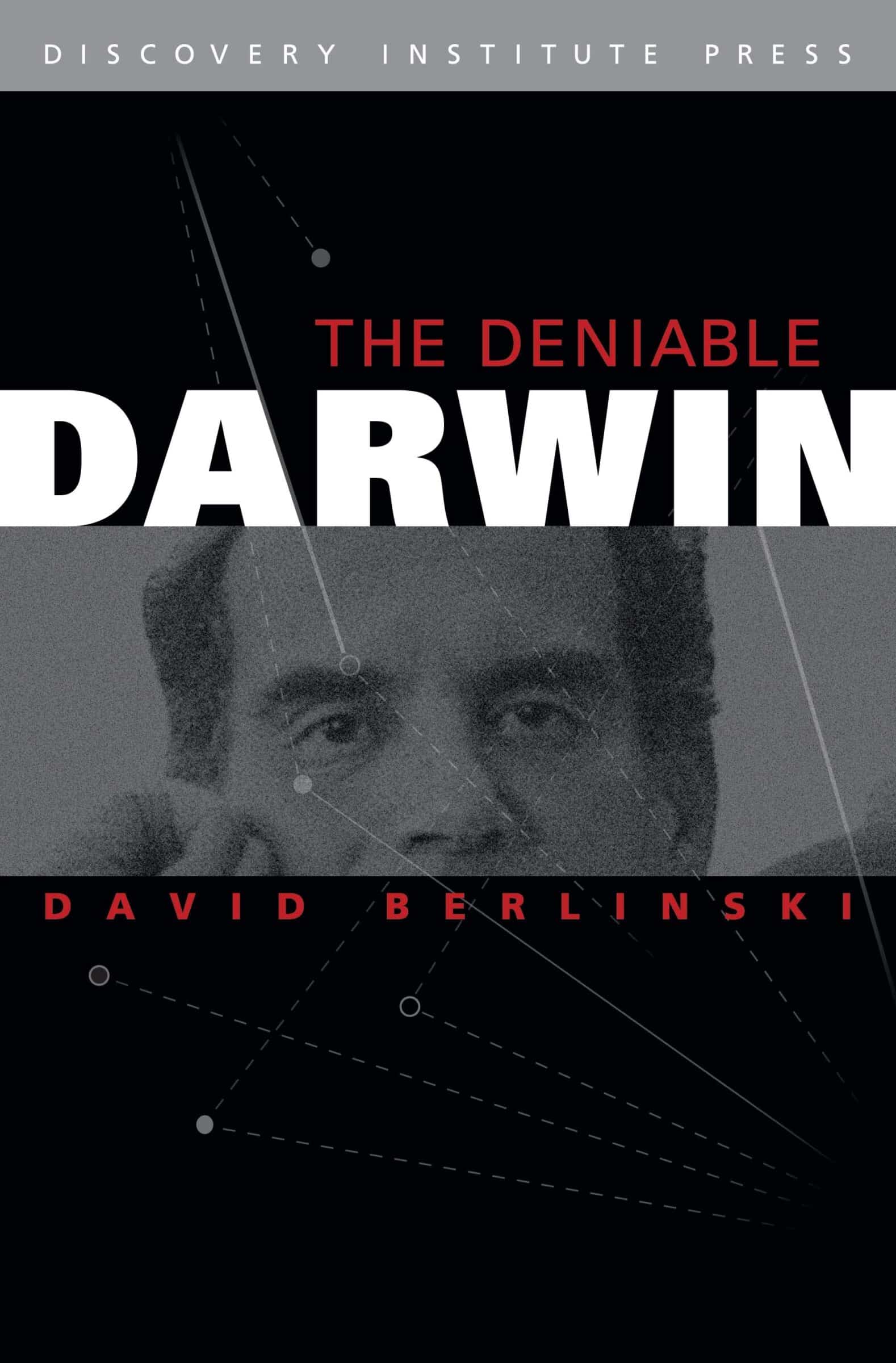
From the introduction to The Deniable Darwin: My own view, repeated in virtually all of my essays, is that the sense of skepticism engendered by the sciences would be far more appropriately directed toward the sciences than toward anything else. It is not a view that has engendered wide-spread approval. The sciences require no criticism, many scientists say, because the sciences comprise a uniquely self-critical institution, with questionable theories and theoreticians passing constantly before stern appellate review. Judgment is unrelenting. And impartial. Individual scientists may make mistakes, but like the Communist Party under Lenin, science is infallible because its judgments are collective. Critics are not only unwelcome, they are unneeded. The biologist Paul Gross has made himself the master of Read More ›
Darwin and the Mathematicians
ENV: In the past, you’ve remarked about mathematicians and their opinions of Darwin’s theory of evolution. They were skeptical, you said; very skeptical. John Von Neumann was an example. How do you know that about him and about other mathematicians?
DB: How do I know? Here’s how:
I have been close to a number of mathematicians, and friends with others: Daniel Gallin (who died before he could begin his career), M.P. Schutzenberger (my great friend), René Thom (a friend as well), Gian-Carlo Rota (another friend), Lipman Bers (who taught me complex analysis and with whom I briefly shared a hospital room, he leaving as I was coming), Paul Halmos (a colleagues in California), and Irving Segal (a friend by correspondence, embattled and distraught). Some of these men I admired very much, and all of them I liked.
I had many other friends in the international mathematical community. We exchanged views; I got around.
Among the mathematicians that I knew from very roughly 1970 to 1995, the general attitude toward Darwin’s theory was one of skepticism. These days, I do not get around all that much, and whatever the mathematician’s pulse, I do not have my finger on it. But the reactions of which I speak were hardly surprising. Until recently, mathematicians have been skeptical of any discipline beyond mathematics, and I say until recently because attitudes as well as times have changed.
In talking of the mathematician’s skepticism, I mentioned Von Neumann because his name was widely known. I might have mentioned Gian-Carlo Rota. He despised the enveloping air of worship associated with Darwin; he thought biology primitive and dishonest.
Read More ›David Berlinski on The Deniable Darwin and Commentary
Q: Many of the most important and lengthiest essays in The Deniable Darwin were originally published in Commentary magazine. How did that fruitful partnership, or patronship, come about? Did you encounter any resistance from the Commentary readership?

DB: My association with Commentary was a stroke of good luck. I wanted a wider readership. Who doesn’t? So I wrote [editor] Neal Kozodoy a letter. It was 1994. Neal, for reasons of his own, thought it important to broaden Commentary‘s intellectual horizons. We had been struck by the fact that science as an institution lacks for critics. To a very surprising extent, it gets a free pass. So our association began. I’ve never known a better editor. “The Deniable Darwin” provoked a great deal of controversy when it was published. It still does. Bloggers still feel obliged to waddle into Blogginess with a counter-critique. Some readers found my Commentary essays difficult, especially those dealing with the origins of life and the evolution of the eye. They objected, perhaps rightly so. They are difficult. But Commentary, you must remember, is a Jewish magazine, and it was the thought that I might in some way be offering encouragement to Christian evangelicals that some of Commentary‘s readers found troubling. They were fearful that in the very next issue I might be found speaking in tongues or eagerly handling snakes.
Read More ›