






































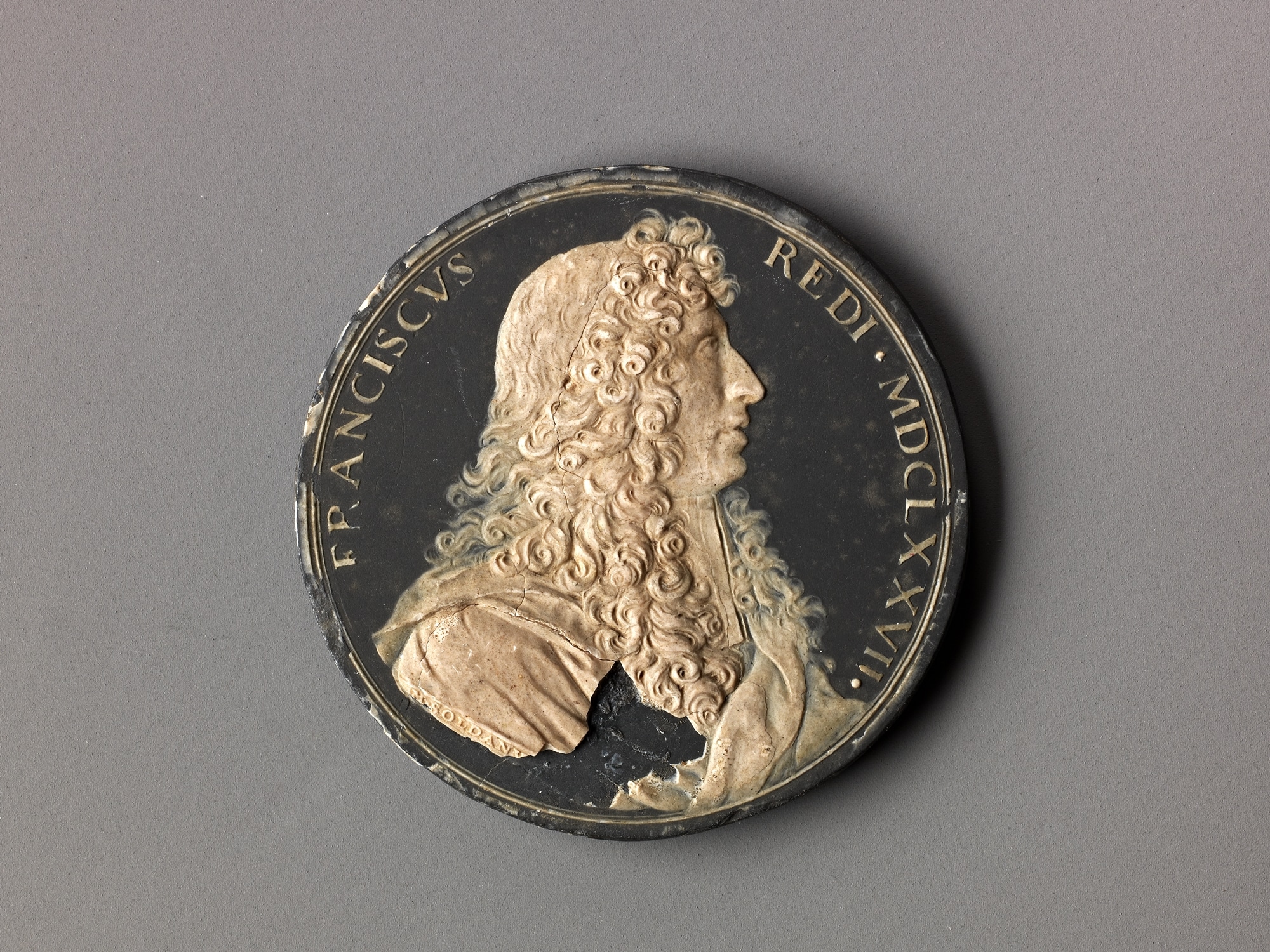
Editor’s note: The late Italian geneticist Giuseppe Sermonti (1925-2018) is the author of the 2005 book Why Is a Fly Not a Horse? This year we observe the 100th anniversary of his birth. To mark the occasion, we are offering a FREE digital copy of his book if you sponsor Science and Culture Today at any level. Please do so now! The following is excerpted from his book’s Chapter 1, “Achilles Inspires Redi.”
Modern biology can be said to have been founded in the year 1688 (though the term “biology” dates from the early 1800s, when it was first used by Lamarck). In that year, Francesco Redi, doctor, physiologist and poet of Arezzo, demonstrated that worms do not come from meat that has gone bad but from eggs that flies deposit on the meat. Worms that hatch from those eggs penetrate the meat and make it decompose, then they develop into flies. A somewhat sad beginning for the new science, with the stench of death and the swarming of worms and flies. Biology rises from life at a minimum, life at the frontiers of death, insignificant and despicable, then science accords it dignity and autonomy. Omne vivum ex ovo (“all life comes from the egg”) was the watchword of this new biology as it went about recruiting that ignoble worm and troublesome fly to its purposes.
A Perfectly Simple Experiment
Redi performed a perfectly simple experiment. He placed pieces of fresh meat in glass jars, some of which he covered with several layers of gauze, and some of which he left open. The meat in the uncovered jars immediately became infested with flies and in a few days was swarming with worms and gave off a putrid stench. The meat in the covered jars remained unaffected for a long time. To be sure, this was not enough to demonstrate that every living thing is born only from its own kind (and Redi himself doubted this was the case with gall flies). Here was a charming fable, a fairy tale about unsullied purity and a recipe for preserving meat. Most importantly, this was a case of delving into the invisibly small in search of the mystery of life.
Why was it so important that the flea should have come out of an egg and not simply from filth? Was it so important that biology should start — almost literally — looking for fleas on nature? The problem was to decide whether life at its minimum was of so little account that it could be “spontaneously” generated and then cross without a passport over the frontier of animal existence. And the answer was No.
A Place in the Zoo
After Redi had left the scene, worms were accorded a place in the zoo, with instructions to reproduce by means of eggs, just like birds, reptiles, and fishes — and this at a time when it was still undecided whether human females and other mammals also had eggs. In the 20th century these minuscule worms, which it was conceded could be governed by the same rules as the higher animals, were to rise in importance, as scientists began learning rules of behavior and structure from these minutest of pariahs among living beings. From the mid 20th century on, any self-respecting biologist has had to turn his attention to microbes, viruses, and molecules in order to be regarded at all and obtain funding, not to mention win a Nobel Prize.
Spontaneous generation has continued to be disputed territory between the “major systems” in biology until more or less our own day. The problem in the 18th century was not whether flies came from formless matter, but whether life originated from a seething mass of blind, aimless molecules, or from an intention — from chaos or from a causal principle. For a long time, advocates of chaos sought to create life in a test tube, because if life came from chaos this should be possible. But if life is ordered according to principles, one cannot create it by randomly combining molecules in a test tube.
Biology has advanced in status with every new confutation of the spontaneous generation thesis.