






































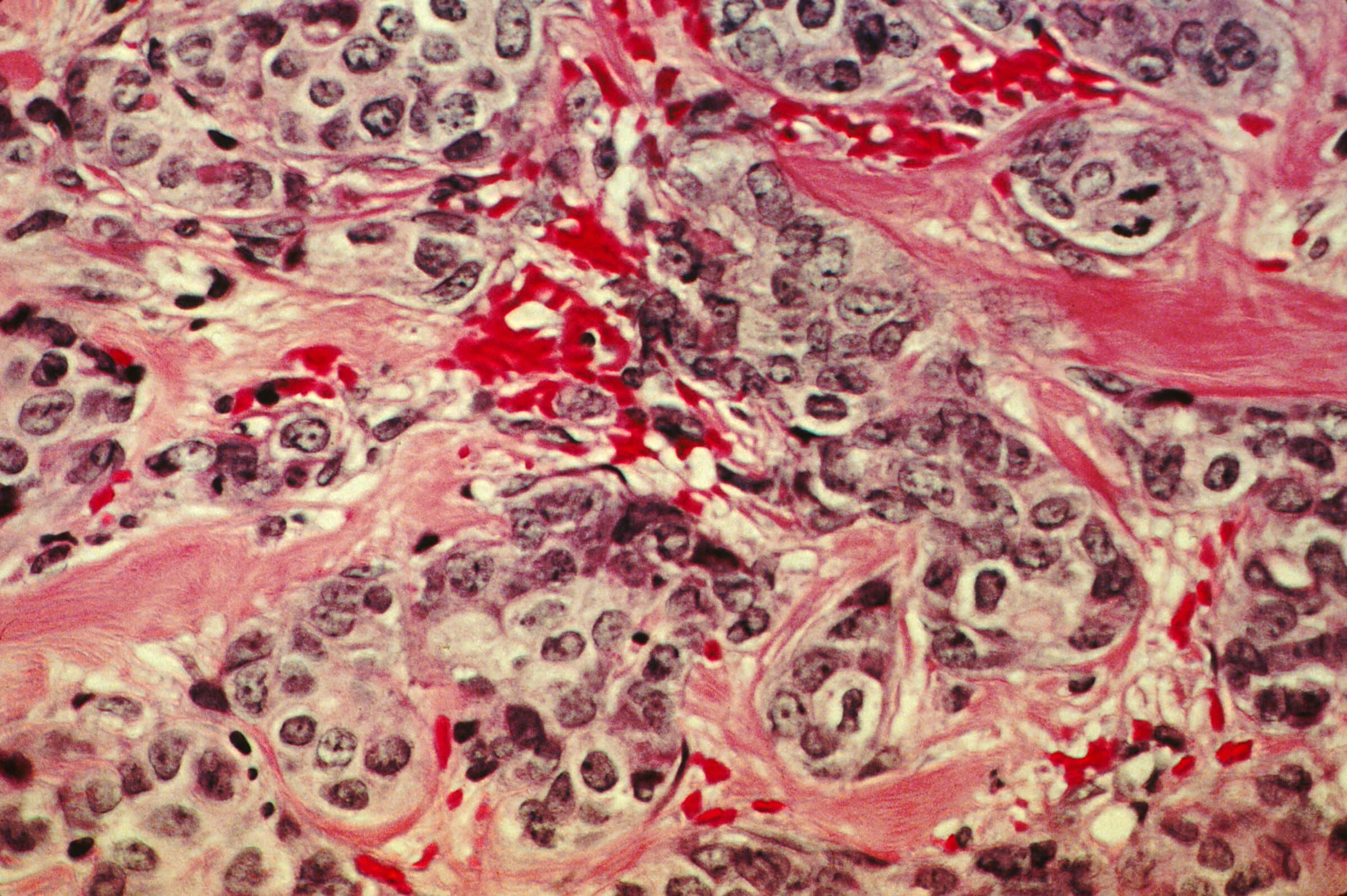
People often want to know, “What practical benefits can intelligent design have?” Last month I wrote about two scientific papers written by pro-ID biochemist Karl Krueger on how cancer involves breaking mechanisms that inhibit out-of-control cell growth, fitting nicely with Michael Behe’s “Darwin Devolves” thesis. Now, I am excited to report that a Discovery Institute-funded research paper published in the prestigious journal Scientific Reports (part of the Nature family of journals) has further contributed to our understanding of cancer — and it was inspired by intelligent design.
The paper, titled “Green synthesis of silver nanoparticles using Magnolia alba leaf extracts and evaluating their antimicrobial, anticancer, antioxidant, and photocatalytic properties,” was published by a team headed by Biola University biochemistry professor Richard Gunasekera, a researcher who is a key part of our ID 3.0 Research Program. Professor Gunasekera has been a supporter of intelligent design for many years. Grounded in his ID-based views of what he has observed in nature, he has often wondered if organisms that are distant from humans on the “tree of life” might be designed to help us to fight disease. Thus, he has researched whether certain plant molecules, even at nano levels, can have therapeutic benefits towards treating cancer and other diseases.
In the past, Gunasekera has researched and published articles that show evidence that natural bioactive molecules such as curcumin, lycopene, lutein, and similar others are able to prevent and treat certain types of cancers. For instance, his research has shown that lycopene from tomato and red grapefruit are able to selectively inhibit prostate cancer cell growth while this phytochemical has no such effect on benign cells. In this latest paper, after much experimental work, his team has demonstrated the “antimicrobial, anticancer, antioxidant, and photocatalytic properties” of “green synthesized” (i.e., plant-based) silver nanoparticles from the leaf extract of the tree Magnolia alba. We want to congratulate Professor Gunasekera and his team for this excellent paper!
Are Natural Medicines Superior to Human-Designed Synthetic Drugs?
Humans have bioengineered many drugs to fight cancer. We’ve all seen this: Many cancer drugs may work but they often have devastating side effects. But Professor Gunasekera’s team notes that using “natural medicines” like the ones he studied may in fact have fewer side effects and be more biocompatible with treating human disease:
Traditional synthetic drugs face challenges with microbial resistance, rendering many ineffective over time. Additionally, synthetic drugs often have side effects, causing researchers to seek alternative treatments with fewer adverse effects. Attention has shifted toward natural medicines with their potentially safer profiles. Similarly, treatment of cancer is also moving from chemotherapies to targeted, green synthesized nanomedicines that have fewer side effects. As such, nanotechnology, manipulating matter at the nanoscale (1–100 nm), has emerged and is showing promise in the design of new, highly targeted therapies. Nanoparticles, which have unique quantum effects and high surface-to-volume ratios, have garnered interest across various scientific and industrial fields. These properties make nanoparticles useful in areas such as medicine, drug development, cancer treatment, water purification, and textile production.
Isn’t That Interesting?
Our best attempts to intelligently design anti-cancer drugs may be inferior to what already exists in nature. Why should that be?
Their paper finds a similar trend in other drugs:
Recent research suggests natural antioxidants, such as those in flavonoids and polyphenols, may be safer than synthetic alternatives. Green synthesized silver nanoparticles have demonstrated antioxidant activity comparable to natural compounds, making them a promising alternative to synthetic antioxidants.
Traditional antibiotics remain the primary treatment for infections, but their overuse has led to antibiotic resistance, posing a serious threat to global health. Green synthesized silver nanoparticles offer a potential solution, especially since the particles combine with phytochemicals enhancing their antimicrobial effects and making it difficult for bacteria to develop resistance. Green synthesized silver nanoparticles have been shown to fight drug-resistant strains effectively and prevent biofilm formation by targeting bacterial cells through both contact and ion-mediated mechanisms.
Again, why would natural medicines prove superior to human-designed drugs? Does this make sense under a materialistic worldview?
They even find that these green medicines may be more economical to produce:
In conclusion, green synthesis of MAgNPs is rapid, cost-effective, and reproducible. Silver nanoparticles, particularly when synthesized from natural sources like Magnolia, offer broad applications in medicine, antioxidant therapies and pollution control. Their bioactive properties and environmental compatibility suggest great potential in the quest for safer, more effective solutions across various fields. Magnolia synthesized silver nanoparticles have clearly been shown to have both antibacterial and antifungal properties against known bacterial and fungal species of medical interest thus rivaling costlier chemical antimicrobials currently in use.
Consider blind evolution (materialism), and intelligent design. On which viewpoint would you predict a higher likelihood that organisms very far removed from humans on the tree of life would provide us with molecules that are not only more effective, but also safer and cheaper to produce compared to human-designed drugs?
Inspired by Design
Now I’m not going to pretend that non-ID researchers have not tried to do this kind of research too. Of course they have, and they deserve credit for doing such research. Indeed, many people throughout human history, even in pre-scientific eras, have recognized the therapeutic benefits of plants in treating disease. But the difference with Gunasekera’s research is that he was led to pursue this research precisely because of his view that the biosphere was designed.
And why should plants have such benefits? Though most non-ID researchers would surely recognize the benefits of using plants to treat disease, we might ask the question: Without intelligent design, why should organisms FAR from humans on the “tree of life” contain biomolecules with powerful therapeutic effects for treating human disease? It’s hard to imagine why molecules from a species as far removed from humans as plants should be useful in treating cancer in our human bodies. But under a design paradigm — where we might suppose that different organisms were designed to benefit us — it makes complete sense. It seems like the biosphere is designed to give us useful substances to help our survival.