







































Science and Culture Today Discovering Design in Nature
edge
Photo credit: Shashank Sahay, via Unsplash.
Latest

Listen: Evolution on the Edge

Categories
Evolution
Share
Facebook
Twitter/X
LinkedIn
Flipboard
Print
Email

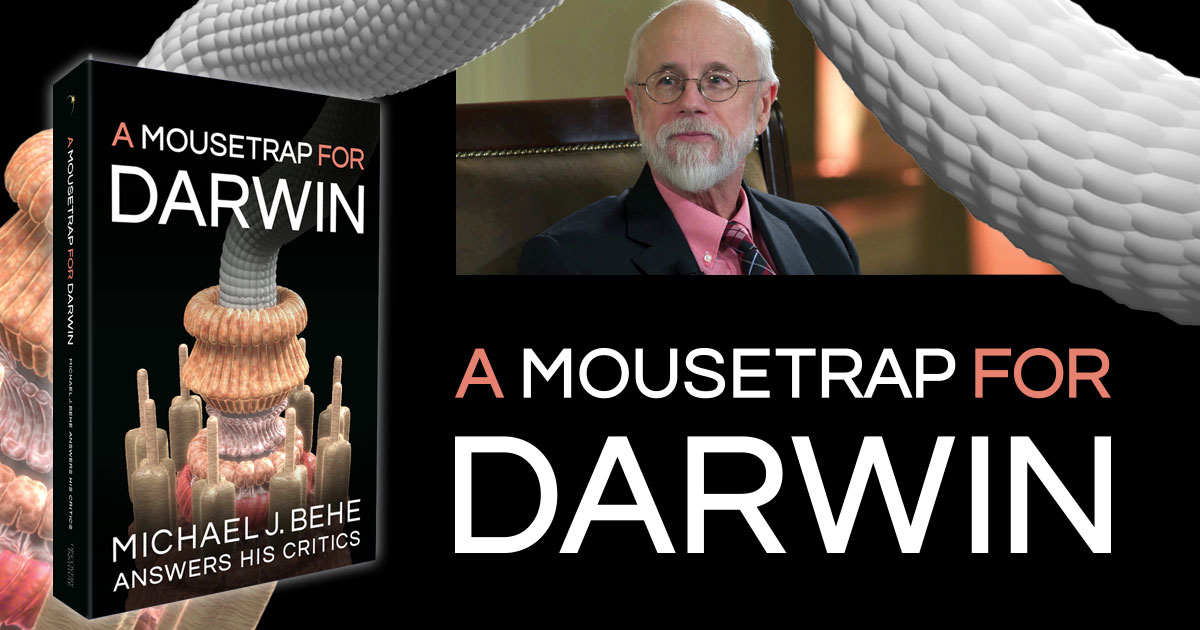
On a new episode of ID the Future, Lehigh University biologist Michael Behe goes deeper into A Mousetrap for Darwin. Behe and host Eric Anderson turn their attention to the new book’s section defending Behe’s earlier work, The Edge of Evolution. Download the podcast or listen to it here.

In that earlier book, Behe reviewed hard data from evolution studies of malaria parasites, HIV, and E. coli, showed that blind evolutionary processes face severe limits as to what they can build, and argued that intelligent design was required for the origin of life’s great diversity. In this new conversation Behe touches on some of the attempts to refute that argument and suggests why those attempts fail. For a more in-depth look at his defense of The Edge of Evolution, get your copy of A Mousetrap for Darwin: Michael J. Behe Answers His Critics and check out Part 3 of the book.
Jonathan Witt

Executive Editor, Discovery Institute Press and Senior Fellow, Center for Science and Culture
Jonathan Witt, PhD, is Executive Editor of Discovery Institute Press and a Senior Fellow with the Center for Science and Culture. His co-authored books include Intelligent Design Uncensored (IVP), A Meaningful World: How the Arts and Sciences Reveal the Genius of Nature (IVP), and The Hobbit Party: The Vision of Freedom That Tolkien Got, and the West Forgot (Ignatius Press). Witt is also the lead writer and associate producer for Poverty, Inc., winner of the $100,000 Templeton Freedom Award and recipient of over 50 international film festival honors. His latest book is a YA novel co-authored with astronomer Guillermo Gonzalez, The Farm at the Center of the Universe.
Benefiting from Science & Culture Today?
Support the Center for Science and Culture and ensure that we can continue to publish counter-cultural commentary and original reporting and analysis on scientific research, evolution, neuroscience, bioethics, and intelligent design.

© Discovery Institute