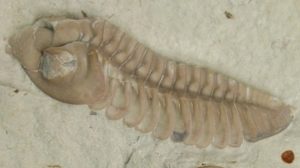
Kainops_invius_lateral_and_ventral Type post Author Günter Bechly Date May 29, 2018 CategoriesEvolutionIntelligent Design Tagged , __k-review, Allison C. Daley, Anomalocaris, artifact hypothesis, Cambrian Explosion, Cambrian News, Darwin's Doubt, Darwinian theory, David Klinghoffer, Debating Darwin's Doubt, Donald Prothero, Ediacaran Period, fossil record, Graham Budd, Hallucigenia, Kimberella, Nick Matzke, Oxford University, paleontology, phyla, PZ Myers, Rusophycus, Spriggina, Stephen Meyer, trilobites Alleged Refutation of the Cambrian Explosion Confirms Abruptness, Vindicates Meyer Günter Bechly May 29, 2018 Evolution, Intelligent Design 10 The top-down pattern of appearance of animal phyla during the Cambrian explosion represents major conflicting evidence for Darwinian evolution. Read More ›
Upper Ordovician Type post Author David Klinghoffer Date February 20, 2018 CategoriesEvolutionIntelligent DesignPhilosophy Tagged , __k-review, biodiversification, Cambrian Explosion, common descent, Darwinian theory, fossil record, great Ordovician biodiversification event, Günter Bechly, ID the Future, intelligent design, paleontology, phyla, podcast, Sarah Chaffee, Stephen Meyer, theistic evolution Bechly: In the Fossil Record, “Abrupt Appearances Are the Rule” David Klinghoffer February 20, 2018 Evolution, Intelligent Design, Philosophy 2 The notable German paleontologist discusses a fact that, frankly, doesn’t get anywhere near the attention it should. Read More ›
ape and human hands Type post Author Jonathan Witt Date September 10, 2017 CategoriesHuman Origins and AnthropologyIntelligent Design Tagged , __k-review, chimpanzees, Chromosomal Fusion, classes, common ancestry, common descent, common design, convergent evolution, Darwinism, evolution, human evolution, intelligent design, Jaguar, junk DNA, Mustang, Neo-Darwinism, phyla, species Common Descent or Common Design? An Exercise in Question-Begging Jonathan Witt September 10, 2017 Human Origins and Anthropology, Intelligent Design 4 Darwinists point to similarities across species, classes, and phyla, and argue that this shows we’re all descended from a common ancestor. Read More ›