






































An Uncivic Biology
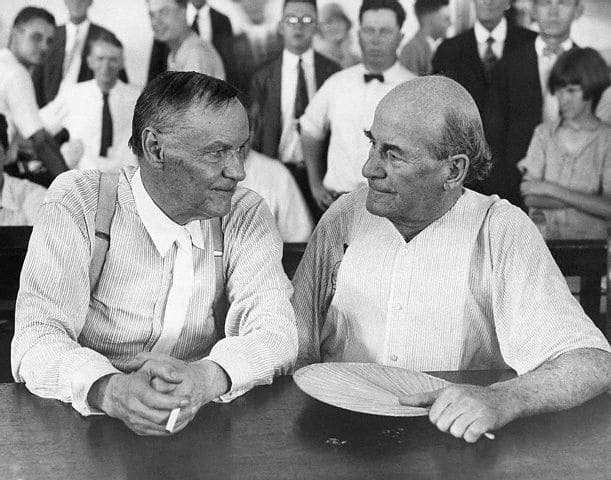
The Scopes trial is often depicted as an apocalyptic struggle between the forces of light (scientific Darwinists) and the forces of darkness (benighted citizens of Tennessee who didn’t want Darwinism taught to their children). Jerome Lawrence and Robert Edwin Lee’s 1950s play “Inherit the Wind,” a fictionalized account of the Scopes trail, portrays the trial as a struggle between scientific enlightenment and ignorant fundamentalism and has become a staple of high school English classes. Yet the Scopes trial wasn’t, as a matter of law, just about teaching Darwinism in an abstract sense. Scopes violated the Tennessee law by teaching from a textbook — George William Hunter’s A Civic Biology: Presented in Problems (1914).
In a recent essay in the weekly standard, A Book for No Seasons: the forgotten aspects of John Scopes’ famous biology textbook, Garin Hovannisian recounts the truth about the biology textbook that was at the center of the Scopes trial.
Hovannisian observes:
George William Hunter’s A Civic Biology: Presented in Problems (1914) was the book that sparked the controversy. Condemned as heretical in 1925, today it would seem to be a manual for enlightenment’s battle against religion’s perceived mysticism. Yet if John Scopes were to teach the very same Civic Biology in a modern classroom, he would probably be put on trial again. Because buried under the dust of history is the fact that this progressive, pro-evolution text was also quite racist.
Hovannisian quotes from page 196 of Hunter’s textbook:
Read More › This week’s WORLD Magazine features an interview (available