





































Shortly after publication of my False Messiah: Darwinism as the God That Failed1 I had occasion to re-read Nick Spencer’s Atheists: The Origin of the Species,2which touches on some issues that I had discussed in my book. Here I am taking the opportunity to enlarge upon some of those themes whilst taking advantage of relevant points brought up by Spencer. My hope in this endeavor is to throw additional light on the subject of Victorians’ reception of Darwin’s Origin of Species, asking specifically what factors might explain our ancestors’ acquiescence in accepting a theory bereft of empirical documentation.
Perhaps the best way of initiating the discussion would be to cite the parodic story with which Spencer prefaces his book where he lays out in simple terms the myth of creation from an atheist perspective. Couched in the tongue-in-cheek register of children’s literature, his “parable” goes as follows:
The Monster in the Sky
Once upon a time there was a terrible monster that lived in the sky. No one had ever seen it because it lived a long way away, and because it was invisible, but everyone knew that it was there because a long time ago it had shown itself to some very clever men (…) Sometimes the monster would get angry and when it did the clever men would offer it sacrifices, dragging people into market squares where they would burn them alive, just to show the monster how much they loved it. The people listened to the very clever men3 and believed them. But they still yearned to be free of the monster.
And then, one day, a few brave men, who had only ever pretended to believe in the monster, unearthed a chest of strange metal. The chest had been hidden by an earlier, wiser, freer people who had lived in the land before the monster came and had known a better way of life. Ever so slowly, the men began to work the metal, which they called “reason,” using it to forge a new weapon, which they called “science,” and they used “science” to attack the monster. (…) Their band multiplied and their weapons grew in number until one day a brilliant, reclusive rebel invented a super-weapon, which he called “evolution,” which could punch clean through the monster’s armoured scales. After that, the attacks increased in frequency and ferocity until one day the rebels were able to show the people what they had long known themselves. The monster had never actually existed (…). Or so the story goes. Every culture has its ancient creation myth and this is atheism’s.4
The God-as-Monster Hypothesis
A decade before the publication of Origin, historian James Henry Froude wrote The Nemesis of Faith (1849), raising troubling questions such as, How could people worship a God who sanctioned the massacre of the Canaanites and imposed vile punishments on “the unchosen”? Against the background of such barbarity, Darwin confided to his diary that he was not sure why anyone would even wish the Christian religion to be true.5 It is possible to suppose that a portion of Darwin’s readership found themselves tempted to think along similar lines. This in fact remains an ongoing theodicean hurdle of such magnitude that it has come to the surface again in Stephen Law’s recent “symmetry thesis” — meaning that the actual evidence for a benign God is no greater than that pointing to a malign or at least indifferent one.6
Some archaeological work has tended to support that notion, although I confess to being wary of archaeological findings on principle since my friendship in the late 1970s with Dennis Harding (Abercrombie Professor of Archaeology in the University of Edinburgh until 2007). It was Harding who drew my attention to the tenuousness of all interpretations of the mores and thought ways of preliterate civilizations. Be that as it may (but with Harding’s caveat in mind), 17th-century British antiquaries such as John Aubrey (1626-97) had begun to speculate on the belief-systems held by the ancient, pre-literate inhabitants of Stonehenge and Avebury in southern England, the Ring of Brodgar in the Orkney Islands, and Pentre Ifan in west Wales. Although evidence was — and remains — scanty and debatable, there is some evidence at prehistoric sites of ritual practices suggestive of a religious context. Some have come to the conclusion that the attitude of our remote ancestors to their gods was as much negative and placatory as worshipful in the positive sense.7
In the mid 20th century religious historian Mircea Eliade had noted that “in many cases the customs and beliefs of European peasants represent a more archaic state of culture than that documented in the mythology of ancient Greece.”8 This was seemingly borne out by a study of peoples on the historically isolated island of ancient Corsica. Even after the late penetration of Christianity as the official religion, there remained a tendency to preserve older beliefs side by side with the official ones, pointing to a degree of cognitive dissonance regarding the goodness or otherwise of the gods.9 Why the anomalous syncretism? Bailey puts the matter particularly bleakly:
Why should megalithic religion be so hard to extirpate? Essentially because people feel it is true to their experience, that there is no inbuilt justice in the universe or natural world.10
Biblical Disharmonies
Even after the Judeo-Christian tradition had gained ascendancy, many still registered keenly the anomalous lack of ethical harmony between Old and New Testaments. Some Victorians found it difficult to reconcile what Bailey terms the “megalithic” image of the Old Testament God with the gentler and more forgiving ethics found in the New Testament. Historically, most ordinary people’s acquaintance with the theme of doubt about God (or at least doubt about His unquestionable beneficence) occurs in the Book of Job. The Book of Job introduces its protagonist as a totally blameless man11 and the puzzling kernel of the book concerns why the good should have to suffer whilst the wicked prosper. A key verse occurs when Job, accursed with a multiplicity of maladies, broke silence and cursed the day of his birth (Job 3:1-2). One of the early Church fathers, Gregory the Great, contended that Job’s curse did not connote any loss of faith in God or in his (ultimate) beneficence, “Job ex impatientia maledictum non protulit” (= Job did not emit his curse out of petulance [regarding God’s goodness]).12 Likewise, St. Hilary of Poitiers would later describe Job as inculpabilis (innocent); and of course the book ends with Job fully restored to health after what most have glossed as his testing by God.
Whether all would be inclined to be as forgiving of either Job or indeed of God Himself would remain a moot point. For the Job theme was not allowed to rest there: it arose again as a sort of medieval calque in the form of a German novella written circa 1200 AD titled Poor Henry.13 Here a beloved lord of the manor, Henry, is afflicted with leprosy. The reason for his affliction is partly a means of God’s testing but there is also a hint that Henry is being punished for the sin of pride (Middle High German hochvart). Eventually, after what many might be tempted to view as gratuitous sufferings, Henry is restored to health, happiness, and indeed matrimonial harmony with a virginal young bride. According to the interpretation of an erstwhile medieval Germanist colleague of mine,
God is providing an ultimate salvation for both Job and Heinrich — their suffering constitutes the guide to a higher insight at the same time as a manifestation of God’s grace.14
That of course is an interpretatio christiana to which not all would assent. In the approaching Renaissance period (after explorers had discovered other faith systems such as Confucianism which functionally appeared to be equally as effective as Christianity15), some form of atheism was espoused by all conditions of people — as much by the ill-educated as it was by sections of the intellectual classes. In the year 1600 the Bishop of Exeter complained that in his diocese the question of whether God existed or not was a matter of “common dispute” whilst in 1617 a Spanish ambassador to Britain estimated that close to a million Britons (a sixth of the then total population of the United Kingdom) were atheists.16
The trend towards atheism will have been strengthened by the bloody confessional wars of 16th- and 17th-century Europe. After one horrendous Protestant/Catholic conflict, the eventually negotiated Peace of Augsburg (1555) came up with the compromise cuius regio, eius religio — meaning that a person’s faith should be accepted as part and parcel of the area in which (s)he was brought up, and respected as part of any given citizen’s identity.17 Such a concordat was expedient but will inevitably have led to disquieting thoughts about the relativity (and possibility even questionability) of all faiths and denominations.
Subsequently the death-knell for belief in a tutelary, interventionist God was sounded for many 18th-century Europeans by the great Lisbon earthquake of 1755. That disaster resulted in uncountable numbers of deaths since it also triggered a tsunami which affected vast swathes of the Lisbon hinterland. Just as destructive as the physical carnage was the toll it took on people’s hearts and minds, as Voltaire recognized.18
Faith and Hypocrisy
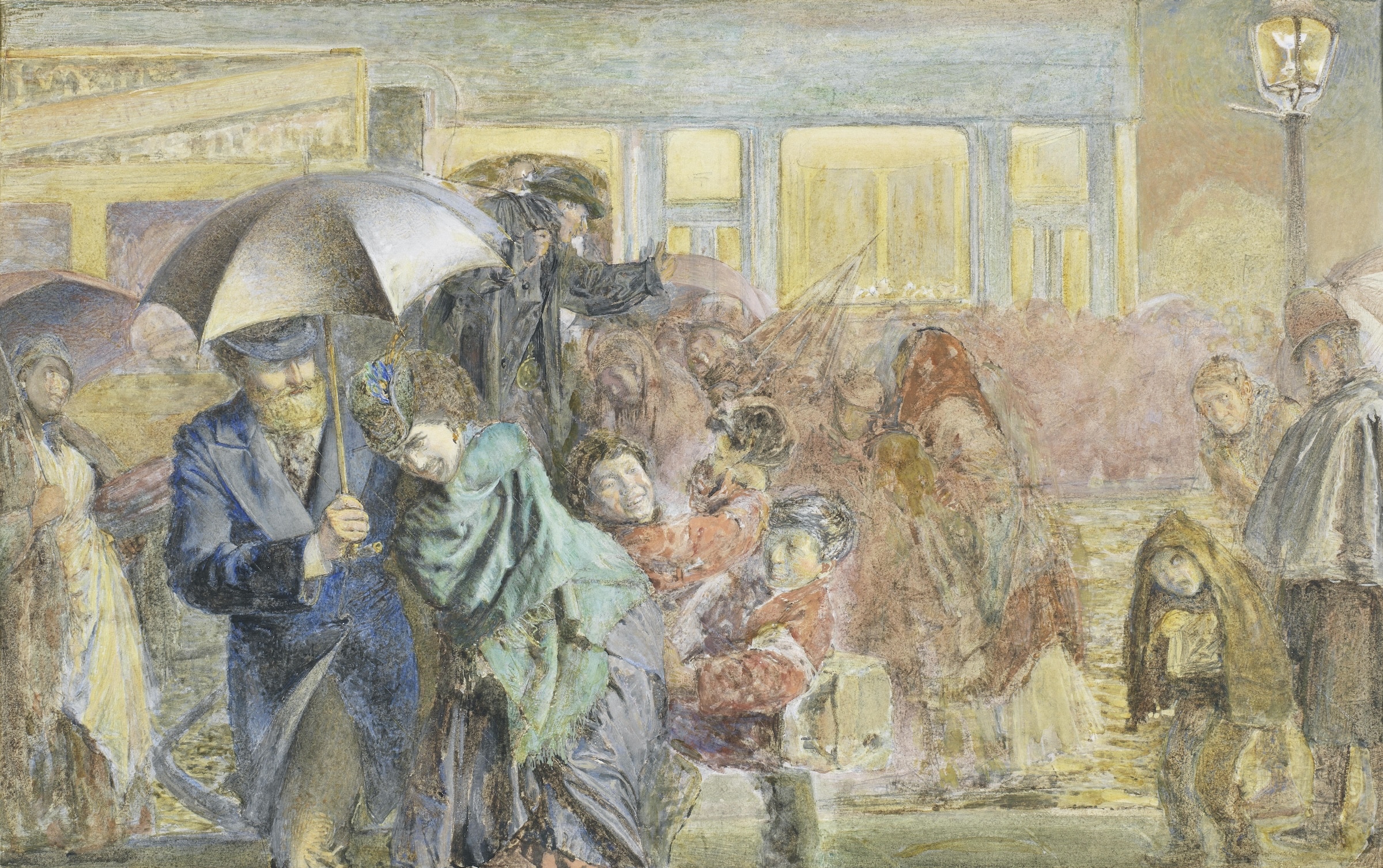
One misleading narrative about Victorian Britain still lingers on in many people’s imagination. It is of a fabled time when being respectable and chaste was a virtue persistently extolled from the pulpits of those numerous churches up and down the land whose pews were all occupied by God-fearing men and women respectfully attired in their “Sunday best” (clothes). The word “morality” was commonly used in the context of sexual morality and to accuse any woman of having “loose morals” was a stigma which would have damned her in the eyes of the respectable classes. However, in Kellow Chesney’s illuminating The Victorian Underworld that comfortable understanding is turned on its head, for Chesney, basing his conclusions on standard studies of the London poor dating back to the 1820s,19 found that up to a sixth of the female population of the metropolis was engaged in prostitution.20
Chesney himself expresses some astonishment that his findings are so contrary to the official and publicly accredited attitudes of the day (at least as posterity has interpreted or maybe fondly imagined them). He writes,
Nothing formed so close a bond between the underworld and respectable society as prostitution. By modern standards the importance of commercial sex in Victorian life seems extraordinary; and what is so striking is not just the number of prostitutes in a society that has become a byword for sexual repression, but the blatancy with which they carried on their trade, even in the heart of fashionable London.21
In that golden age of Victorian hypocrisy (as it now seems to posterity) there was clearly a greater degree of unacknowledged atheism or even bland indifference in matters spiritual than many sanitized school textbooks might indicate. To use a phrase current in the Victorian era, those referred to delicately as the demi-monde, together with their “clients,” would come under the heading of being practical atheists, whose contemporary meaning connoted all those who act as if God did not exist. Their disbelief was inferred from their obvious lack of fear of divine retribution for their sins.22 The logic imputed to such sinners appears to have been: if there is no God then “anything goes.” Darwin’s Origin (about which of course many will have heard about only by word of mouth) will have left many unfazed by its author’s purported “deicide” because they had clearly given no serious thought to divine matters in the first place. In the context of such alienation and/or apathy, Darwin was pushing at an open door. In its effect, Darwin’s Origin functioned not as a scientific finding but rather as a de facto referendum on people’s religious beliefs (or non-beliefs). The fact that Darwin’s evolutionary ideas could not be shown to be scientifically coherent remained for the uncritical a side issue.
Darwin’s Origin of Species — Much Ado About Nothing?
Hence Spencer’s amusing account of how “one day a brilliant, reclusive rebel invented a super-weapon, which he called “evolution,” which could punch clean through the monster’s armoured scales” represents too sweeping a generalization. It might well apply to the devout such as Sir Leslie Stephen (who lost his faith after reading Darwin together with some of the German Higher Criticism), but for untold millions Darwin would have been like water off a duck’s back. It was no super-weapon capable of piercing the monster’s armored scales; indeed, it was no more a “weapon” than a peashooter. “Practical atheists” had no need to “close their account with” God then because they had never opened an account with Him in the first place, or at best had only a kind of “half belief,” to borrow the phrase of the historian Hugh Trevor-Roper.23 In the final analysis it was the secularizing trend in people’s hearts and minds which had set in progressively over the centuries that became determinative of people’s attitudes, and I would wager that future historiography will treat Darwinism as but a small and largely inconsequential footnote to the larger convulsions wrought by prior centuries of secularization.24
Notes
- Neil Thomas, False Messiah: Darwinism as the God that Failed (Seattle: Discovery Institute Press, 2025).
- Nick Spencer, Atheists: The Origin of the Species (London: Bloomsbury, 2014).
- Spencer’s faux-naive fable can of course be easily decoded and transposed into adult terms. The “very clever men” referred to is clearly a collective expression used to refer to Epicurus, Lucretius, and other pre-Socratic philosophers, including their philosophical legatees in later ages (such as, for example, Erasmus Darwin, David Hume and the 18th-century French philosophes).
- Spencer, Atheists, Introduction, pp. xiii-xiv.
- The Life of Charles Darwin, edited by Nora Barlow (London; Collins, 1958), p. 87.
- Stephen Law, “The Evil God Challenge” in Philosophers on God: Talking about Existence, edited by Jack Symes (London: Bloomsbury, 2024), pp. 103-18.
- Pastor Adrian Bailey refers to sundry antitheodicean sentiments simmering under the surface of the megalithic stage of human civilization: “Was God a monster to have allowed life to develop with all its suffering? Megalithic religion had a very simple answer to this question: Yes.” See Adrian Bailey, Why Darwin Matters to Christians (Shrewsbury UK: Youcaxton, 2011), p. 43.
- Mircea Eliade, The Sacred and the Profane: The Nature of Religion (New York: Harcourt, 1959), p. 164.
- Dorothy Carrington, Granite Island: A Portrait of Corsica (London; Penguin, 1984), especially chapters 3 and 4.
- Bailey, Why Darwin Matters, p. 43
- “There lived in the land of Uz a man of blameless and upright life who feared God and set his face against wrongdoing” (Job 1:1).
- J. P. Migne, Patrologia Latina: Documenta Catholica Omnia, vol. 75 (Lille: Université Catholique de Lille, 1849), pp. 638-9.
- Der Arme Heinrich, by Hartmann von Aue (Oxford: Blackwell, 1967).
- Judith Hunter, “Sam Joben den richen: Hartmann’s Der Arme Heinrich and the Book of Job,” Modern Language Review 68 (1973), pp. 358-368 (here p. 368).
- Missionaries reported that the Chinese had no concept of God but that their society was fully functioning, guided only by Confucian maxims and the application of practical reasoning.
- Spencer, Atheists, p. 2.
- The civil and ecclesiastical authorities of the Early Modern period appeared to have been less vexed by the absolute, existential import of dissent. Shakespeare’s dramatist contemporary Christopher Marlowe (author of Dr Faustus in the 1590s) claimed that religion was in effect little more than a means of social control. As Spencer puts it, “Questions of atheism were as much about what happened in this world as what happened in the next (…) To reject God was to reject the authority structures established in his name, undermining the authority of both prelate and prince” (Atheism, pp. 9 and 7).
- Voltaire was to exploit the notorious event first in his Poème sur le Désastre de Lisbonne, written in the immediate aftermath of the earthquake, and again in his famous anti-clerical satire, Candide.
- See Henry Mayhew, London Labour and the London Poor, edited by Victor Neuburg (London: Penguin, 1985), a book made up of Mayhew’s journalistic articles over some decades.
- Kellow Chesney, The Victorian Underworld (London: Penguin, 1970), pp. 363-433. It should however be noted that the documents of the Victorian era did not necessarily distinguish between sex workers and women in “irregular” unions.
- Chesney, The Victorian Underworld, p. 363.
- The phrase “practical atheist” is a common 19th-century term, but it harks back to the medieval idea of God as being able to look into the hidden recesses of our hearts. In this aspect of His being, God was referred to as the cordis speculator (= He who sees into our hearts and souls). This was a logic which is lost to non-believers but was very much present in the minds of our medieval ancestors. See for instance the Introduction by Ad Putter and Myra Stokes to their edition of The Works of the Gawain Poet: Sir Gawain and the Green Knight, Pearl, Cleanness, Patience (London: Penguin, 2014).
- Hugh Trevor-Roper, The European Witch Craze of the Seventeenth Century (London: Penguin, 1967).
- I have of course given only summary mentions of the reasons and effects of this secularization in this essay. For a much-expanded account, see Giles St. Aubyn, Souls in Torment: The Conflict between Science and Religion in Victorian England (London: New European Publications, 2010).