






































As many already know, the beloved podcaster Scott Adams, beset by cancer, is wavering on death’s portal and has announced that he will embrace Christianity as close to the last minute of his life as possible. He’s not persuaded by theology, but plans to act in deference to Pascal’s wager.
Clearly, the evidence for God’s existence moves different people differently. Some feel they have experienced God’s presence directly, so rational arguments might be interesting, but not crucial. My old colleague Kathryn Lopez writes at National Review, asking her fellow Christians to take it easy on Adams with their proofs and their “theological mandates.” Instead, “Let the Savior be the Savior.”
That’s a very fair point. Yet many people require and are seeking such “proofs.”
Well, Which Is It?
The ambivalence of this has struck me today from several directions. At Science and Culture this morning, for example, philosopher Steve Fuller examined the modern myth that faith and science and reason are in a state of perpetual warfare. Also this morning, however, mathematician Granville Sewell, while on one hand presenting what he says is a simple yet powerful argument for intelligent design, also conceded — on the other hand — that God is in a sense hidden.
Hidden or revealed? Apparently, both.
This dynamic of “On the one hand, on the other hand” has been a persistent feature of human thinking. In the Judeo-Christian tradition (that suddenly controversial idea!), going back to the Middle Ages, theologians have sought to give what Maimonides called a Guide for the Perplexed, reconciling faith with science. Yet that seminal Jewish work, which influenced Aquinas and Christian philosophers, is far from an easy read.
Two Different Takes
Into this never-finished struggle to aid those among the perplexed who seek guidance, I offer today two different takes on the evidence for God, for very different audiences. The curious and the open-minded need to be addressed where they are. So here is an initial episode of our series for young people, based on the graphic novel The God Proofs. Episode 1, “All Life Runs Code,” is out now:
The multifunctional DNA code, all 3.2 billion characters in almost all of your 30 trillion cells, is a powerful piece of evidence that can be understood by young and old. Codes don’t write themselves. The numbers and the coding are, as science, not in doubt.
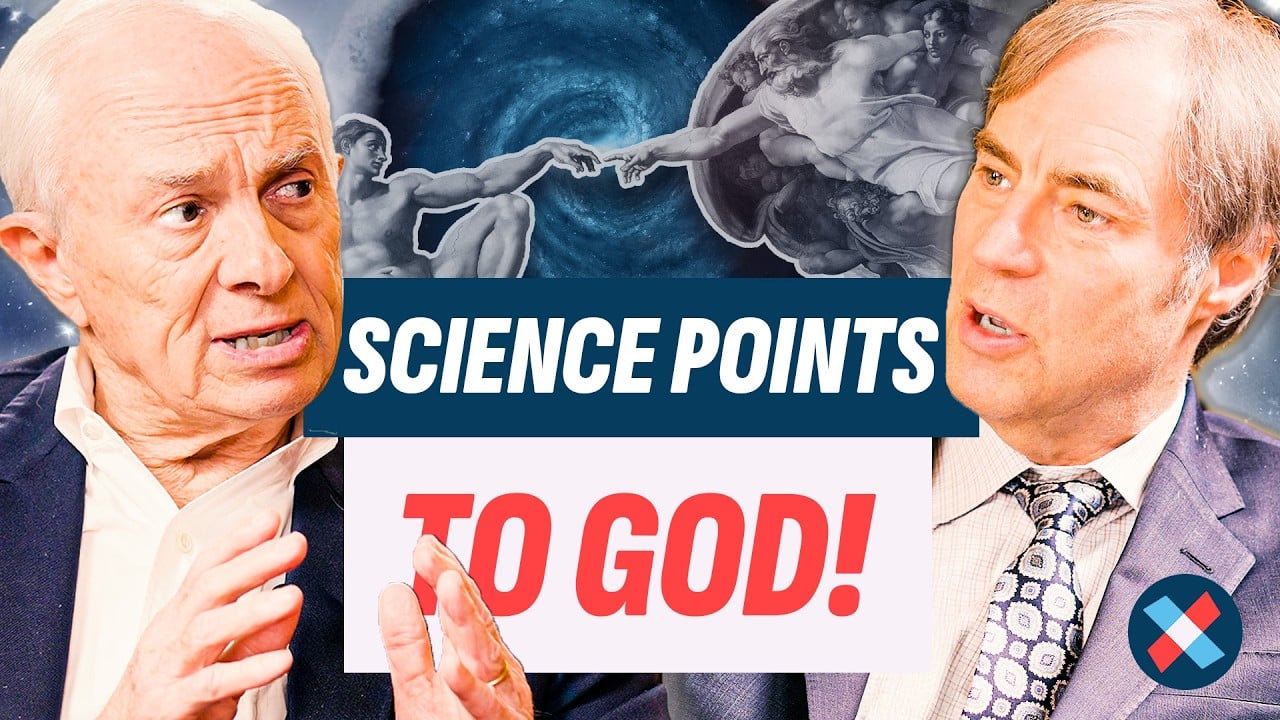
Meanwhile, something very different: a new conversation among three authors of recent books about what philosopher of science Stephen Meyer calls the God Hypothesis.
They are Dr. Meyer himself; Michel-Yves Bolloré, whose international bestseller is God, the Science, the Evidence; and the wonderful interviewer Justin Brierley, whose own book is The Surprising Rebirth of Belief in God. While complementary, as Meyer says, the three books approach their subjects in different ways.
Once in Your Life
Bolloré, a French computer engineer, co-wrote his book with Olivier Bonnassies. As he mentions, they came to the project from different perspectives: Bolloré inherited his Catholic faith, while Bonnassies, a rational seeker without preconceptions, had not inherited any faith at all.
I like what Bolloré says about how everyone, at some point in life, owes it to himself to carefully weigh the evidence for a “clockmaker,” as he puts it, behind the “clock” that is the universe. Considering the ultimate nature of the question here, that seems like a reasonable expectation to place on yourself, at whatever level you may be.
Editor’s note: This article is sponsored by Palomar Editions, publisher of God, the Science, the Evidence. However, Discovery Institute staff were responsible for the editorial content of this posting.