






































In the debate about intelligent design, most discussion falls into three main categories: cosmological, or how could something have come from nothing; anthropic, or why was the Earth so perfectly suited for mankind; and informational, or mustn’t there be a designer who intelligently coded DNA? Those are scientific questions, but a new video in the God Proofs series for young people prompts us to consider another tool: common sense. Of course, science can’t work without some measure of common sense, but maybe it should be equally important. It definitely is more easily understood.
When Discussing Nature
Charles Darwin once wrote: “If it could be demonstrated that any complex organ existed, which could not possibly have been formed by numerous, successive, slight modifications, my theory would absolutely break down. But I can find no such case.” We now know that both biology and, in particular, the human body is loaded with complex, yet obvious examples. Just name an animal, plant, organ, tissue, cell type, or any of life’s processes or mechanisms.
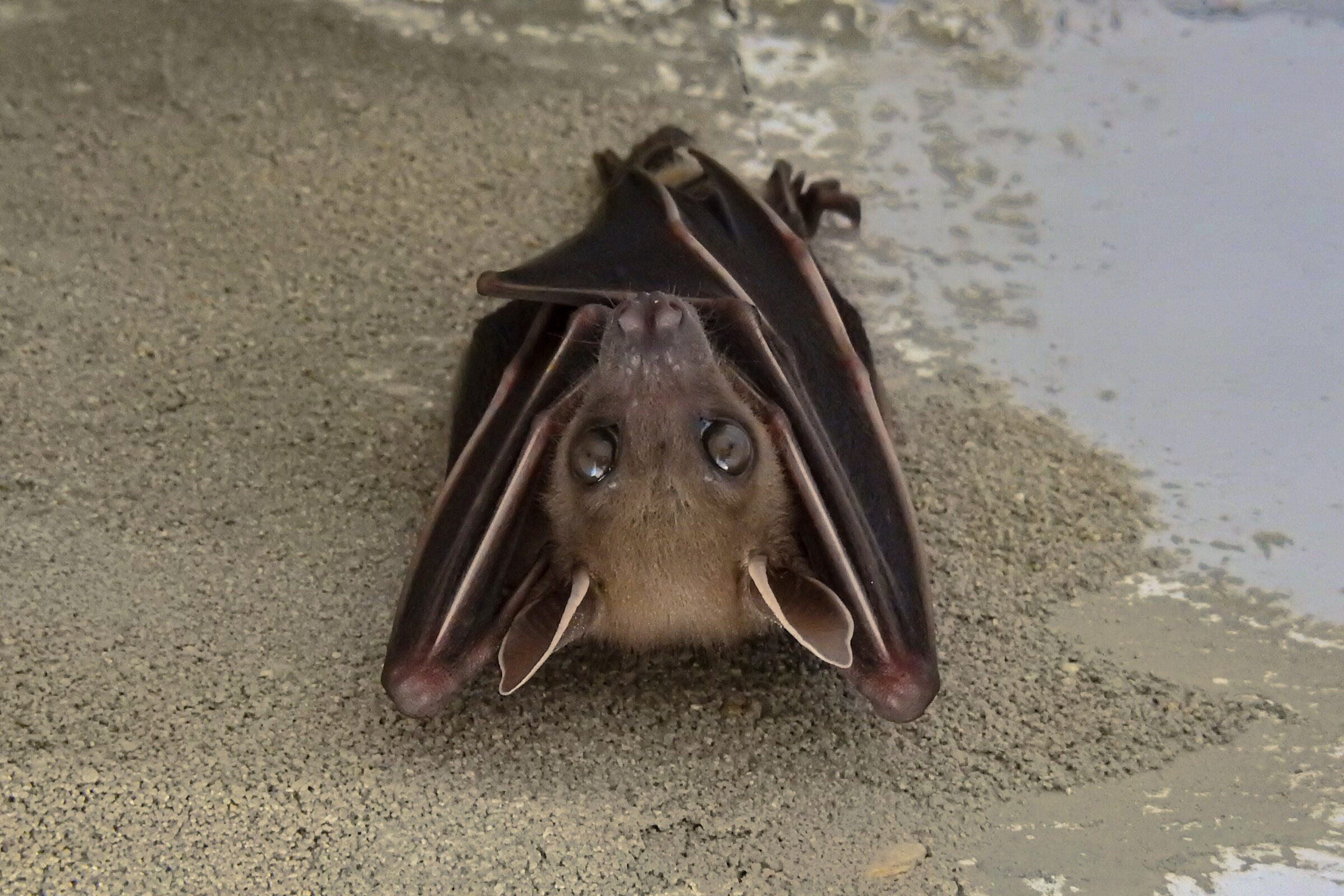
Take bats, for example. Many types eat upside down, yet they flip to eliminate wastes. Did evolution start them off hanging upside down for excretory functions to evolve? Not likely. Was there an era of messy progressive trials and errors with widening flips? Did the arrival of the critical locking tendons in their feet precede trials at hanging upside down? Or did that come after? If not, bats must have been falling from the ceilings of caves right and left all day long. The evidence suggests all of these systems (including flipping and hanging) arrived together, along with the wing thumbs to make a two-point grab of the perch before flipping. All these features had to come about together, not incrementally. Imagine how life would be for bats if the right-wing thumb preceded the left-wing thumb, making their two-point hold lopsided with the poor bat swinging rather than hanging.
Did the first fish walk out of the sea wearing flip-flops to protect their forme frust fin-feet from the burning-hot sand? Were there showers nearby to stay moist, refreshment stands selling worms and sunglasses? If the presence of lungs preceded the beach exploration, there must have been billions of fish drownings. What if it was only males who walked ashore?
Which came first, bird nests or egg laying? It’s nonsensical to think these were staggered. Otherwise, eggs would have rolled down branches and crashed to the ground, over and over again. And then, there’s the weaverbird mother who builds her nest upside down. Did her unfortunate babies simply fall through the hole in the bottom? One might wonder why all breeds of birds have a different song. Imagine how it would be if they all sounded the same. Every breed in the area would fly to the same female.
Uncountable Questions About Mammals
There are uncountable questions when studying mammals, too. Did the sharp, stiff quills of the porcupine prevent babies from traveling down the birth canal? Ouch! How could that have come about by small increments? It has to be timed so that the quills start hardening (quickly) outside the birth canal. Accidental or designed? This same timing works with the scales of the pangolin. A different yet similar mechanism applies to the extremely sharp hooves of the newborn giraffe and horse. These daggers arrive with gelatinous coverings that quickly fall off after the birth. Note the giraffe has a reservoir of blood just beneath its brain so that the animal can swing its head up and start running without passing out. What if the earliest skunks could not tell friend from foe?
Similar Logic for Human Beings
Most people barely understand anything about the human body (see the New York Post, June 24, 2020). According to several surveys — Pew, Gallup, and the National Center for Science Education — a majority of Americans believe in evolution despite massive amounts of scientific information to the contrary. It has been my experience that most audiences have limited knowledge, if any, of what intelligent design means. Most have no idea what materialism means. Maybe it’s the opposite of immaterialism? Few know about or understand irreducible complexity, which simply means a process or a mechanism must have every part at the same time to function.
One example that challenges neo-Darwinists is the daily life of our red blood cells (RBCs). Adult humans have a constant flow of 20-30 trillion of these microscopic, donut-shaped discs (without a hole), which travel from the lungs through the heart and out to every cell in the body where oxygen is exchanged for carbon dioxide, and then back to the lungs for the reverse operation, carbon dioxide for oxygen. Specialized cells are needed to help download or upload these gases. They all travel through the tiniest capillaries to every cell in the body. The passageways are much smaller than the diameter of these cells. Maybe 50 percent narrower. Think about exploring a cave and finding such an obstacle. But our RBCs are much more flexible than you or me. They can flatten, stretch, fold, and twist to get through. As they travel, they squeeze and bend; as they emerge, they flip back to the donut shape with a different gas on board. Short of rare mutations, why would there have been RBCs that don’t fit through these passageways or RBCs that know how to carry oxygen to the cells but have no idea how to bring carbon dioxide back? That would be a potentially deadly occurrence.
If there’s no simultaneous development of brain cells that control walking, talking, eating, chewing, sleeping, thinking, and singing, the newborn will not survive. Well, I suppose you could get by without singing, although life would certainly be poorer for it. If the child lacks cells that break down food products in the stomach and/or cannot selectively absorb nutrients in the small intestine, the baby will not make it. Also, don’t forget a means to propel food along.
In childbirth, if there’s no placenta with an umbilical cord to deliver nutrients and oxygen and take away waste products, there will be no baby. If there’s no simultaneous development of skin, entry port (mouth), bones, muscles, cartilage, ligaments, heart, lungs, liver, kidneys, adrenal glands, stomach with an esophagus, intestines, exit port, and brain, there’s no simultaneous baby. And this is the short version of all that’s required.
Part of the Problem
Explaining aspects of human anatomy, physiology, genetics, and cellular interactions can be a daunting task. For some audiences, scientific terms, even terms to explain terms, might sound like a foreign language. A stepladder of terms might be mindboggling. Genetics has moved far beyond Mendel’s garden peas. What the small intestine does has gone beyond just absorbing glucose and other nutrients, to microbiomes, feedback loops, and the enteric nervous system. The liver has over 500 complex, vital functions, many of which are dependent upon each other. I suspect Darwin in his time could not have named a single one. Incremental changes here would drastically fail to produce a human, or a bat.
In some ways, we are deep in a scientific revolutionary war that is loaded with battles on how to teach and explain what’s old news, what’s new news, and what might or might not be news. Fortunately, the weapons are words not explosive devices. Should we talk as fast as a man can and cover as much material as possible — there’s much to say — or should we concentrate on specific areas? Might it be worth studying our audiences in advance, to see what average listeners in some of these situations understand and what might go over their heads?
Might the old naval acronym KISS, Keep It Simple Sailor, apply?