





































Science and Culture Today Discovering Design in Nature
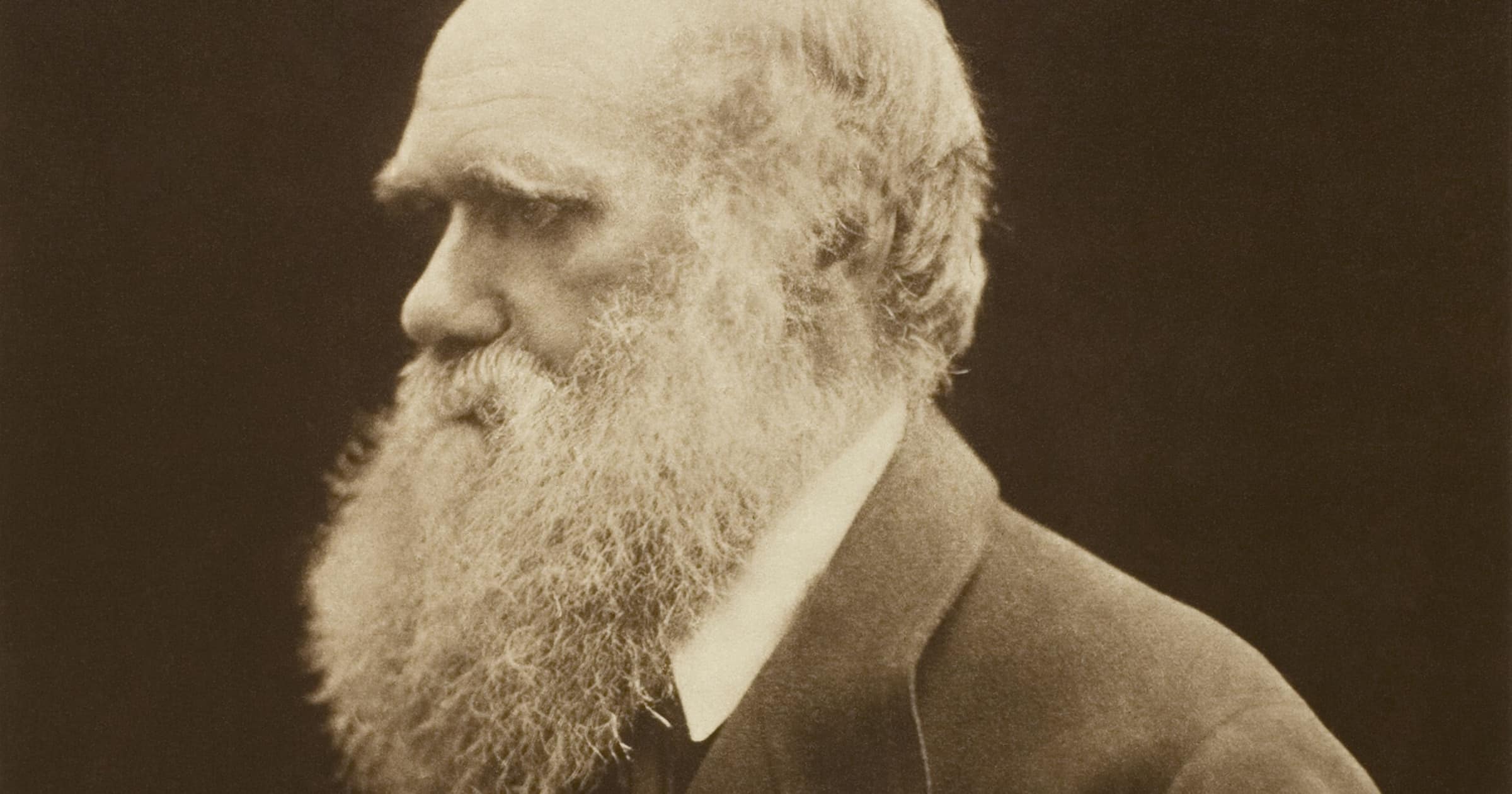
Charles_Darwin_by_Julia_Margaret_Cameron,_c._1868
Photo: Darwin in 1868, by Julia Margaret Cameron, via Wikimedia Commons.
Latest

Father Martin Hilbert on Darwinism’s Fatal Flaws

Categories
Biology
Evolution
Faith & Science
Origin of Life
Share
Facebook
Twitter/X
LinkedIn
Flipboard
Print
Email

When Charles Darwin formulated his theory of evolution, he offered up a new god and a new understanding of mankind. But does his creation myth satisfy the scientific evidence we have today for the design and complexity of life? On a new episode of ID the Future, I read an excerpt of a new book that exposes the inadequacy of Darwinism and dispels the darkness of Darwinian materialism. A Catholic Case for Intelligent Design, by Father Martin Hilbert, is now available from Discovery Institute Press.

Click here to display content from YouTube.
Learn more in YouTube’s privacy policy.

In this excerpt from the introduction to his book, Fr. Hilbert reveals that one of Darwin’s motives for conjuring his theory of natural selection was removing God from the picture. And though his proposal was light on scientific evidence and full of wild assumptions, it succeeded in casting doubt about the role of God in the natural world, ushering in an era of scientific materialism that is still evident today. But as Fr. Hilbert explains, a close examination of Darwinism reveals fatal flaws. It turns out there’s a much more plausible theory of life’s origin and development, one that rightly understood, harmonizes perfectly with the Catholic theological tradition. Download the podcast or listen to it here.

Dig Deeper

Andrew McDiarmid

Director of Podcasting and Senior Fellow
Andrew McDiarmid is Director of Podcasting and a Senior Fellow at Discovery Institute. He is also a contributing writer to Mind Matters. He produces ID The Future, a podcast from the Center for Science & Culture that presents the case, research, and implications of intelligent design and explores the debate over evolution. He writes and speaks regularly on the impact of technology on human living. His work has appeared in numerous publications, including the New York Post, Houston Chronicle, The Daily Wire, San Francisco Chronicle, Real Clear Politics, Newsmax, The American Spectator, The Federalist, Technoskeptic Magazine, and elsewhere. In addition to his roles at Discovery Institute, he promotes his homeland as host of the Scottish culture and music podcast Simply Scottish. Andrew holds an MA in Teaching from Seattle Pacific University and a BA in English/Creative Writing from the University of Washington.
Benefiting from Science & Culture Today?
Support the Center for Science and Culture and ensure that we can continue to publish counter-cultural commentary and original reporting and analysis on scientific research, evolution, neuroscience, bioethics, and intelligent design.

© Discovery Institute