




































In you live in a place like Seattle, you see them everywhere: yard signs announcing “IN THIS HOUSE, WE BELIEVE,” followed by a series of statements that all sound obvious enough at first. One statement says, “SCIENCE IS REAL.” Now, who doesn’t believe that? Have you ever met someone who thinks that science is NOT real? I sure haven’t.
These signs fascinate me. They imply that the homeowner thinks he may have neighbors who the believe the scientific enterprise itself to be fake (as opposed to disagreeing with certain scientists on certain controversial or other-than-scientific matters). But of course the signs’ function isn’t to make such a ridiculous assertion. They are more like a notification that the people living in the house are enlightened and morally superior, and of the true faith. That’s the real point.
How did science, of all things, come to be a vehicle for virtue signaling, a virtual religion, with insiders and outsiders, the churched and the unchurched, believers and deniers, the saved and the damned? Philosopher Logan Paul Gage addresses that question in a series of lectures, “How Science Became a Religion.” You can watch the first lecture here. It’s excellent:
Historical Light on an Influential Fiction
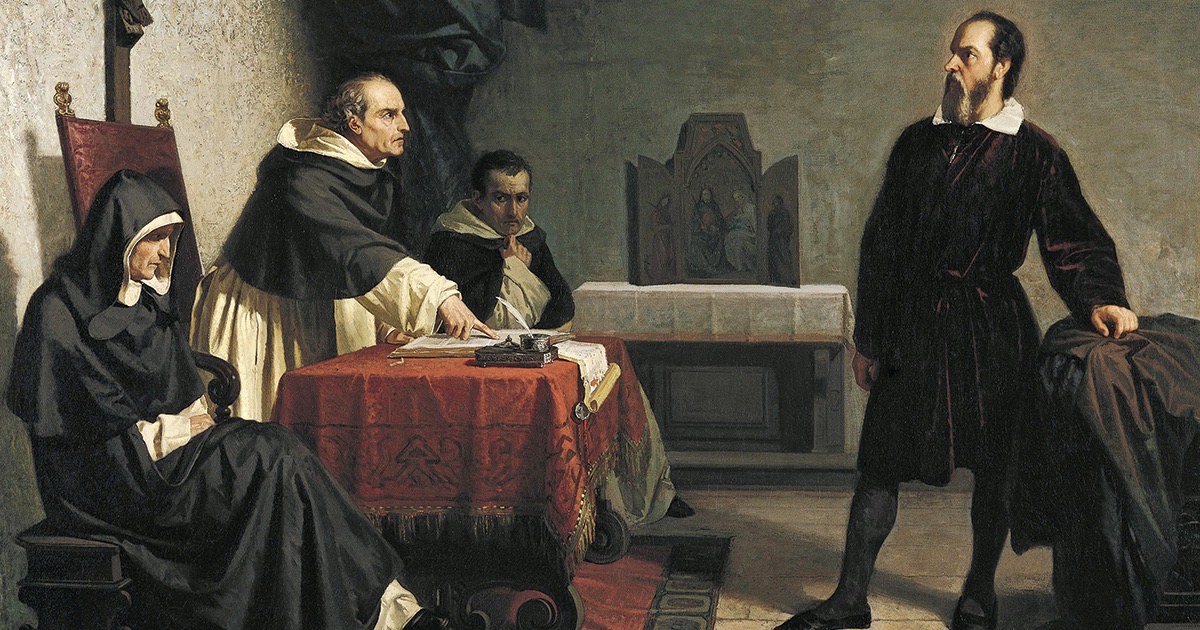
Professor Gage, who teaches at Franciscan University, is smart to cast the subject in a historical light. The novel religion of science, he says, goes back to the “Galileo legend” that established an influential fiction: scientists are the pure and the holy while the traditional religions, especially Christianity, are their benighted persecutors. In fact, Gage reminds us, the Galileo story “was hardly a simple case of the church blindly clinging to tradition, or reason versus superstition.” The history is much more fascinating and complicated than that.
But a really effective myth must be simple. Belief in this myth establishes the dividing line between the virtuous and the unholy, Science versus Anti-Science. We all live in the shadow of Galileo, a falsified shadow, and those “SCIENCE IS REAL” yard signs are there to remind you of it every time who go by.
You can and should watch the rest of the series here at the New Polity website. It’s FREE NOW through October 15.