






































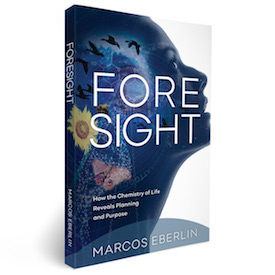
On a new ID the Future podcast, Brazilian chemist Marcos Eberlin talks with biologist Jonathan Wells, suggesting to me yet another good question to ask the next Darwinist you meet. They discuss Dr. Eberlin’s new book, Foresight: How the Chemistry of Life Reveals Planning and Purpose. Download the episode or listen to it here.
Dr. Wells voices the concern of many Darwinists in criticizing intelligent design: that “science only considers material causes and what you’re talking about is not science.” Dr. Eberlin responds with a remarkable suggestion, a new definition of science: “My definition of science is not restricted by natural causes. I think that science should only consider one type of causes, causes that are supported by evidence, causes that are supported by data.”
Only consider causes that are supported by evidence? What a notion! Ask your favorite Darwinist what’s wrong with that way of defining science. Because of course, in our daily experience of the real world, we distinguish between natural and intelligent causes all the time. It can be a very urgent question. A scratching at the window: Is it a tree branch moving in the wind? Or a prowler trying to gain entry to my home?
An exciting thing about Dr. Eberlin’s book, like Finnish bioengineer Matti Leisola’s Heretic: One Scientist’s Journey from Darwin to Design, is to see how design thinking has made its way around the world. Eberlin has his own take on the design hypothesis. But this is true whether rendered in English, Finnish, or Portuguese: Science deals with the real world. That it should be limited to seeing purposeless causation alone is an arbitrary modern prejudice. Nothing more.
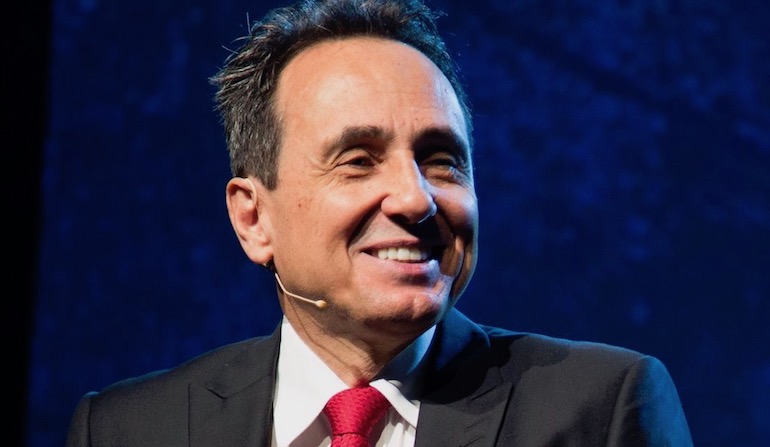
Photo: Marcos Eberlin speaking in Dallas, TX, this past Sunday night, by Chris Morgan.