







































On a new ID the Future podcast, host Andrew McDiarmid talks with science historian Michael Keas about his new book, Unbelievable: 7 Myths About the History and Future of Science and Religion. Up for discussion is the myth of the “Dark Ages.”
As Dr. Keas points out, even calling the period the “Middle Ages” is prejudicial, as if these centuries, which in fact witnessed remarkable scientific advances and the invention of the first universities, were a mere transition, the historical equivalent of Flyover Country. Download the podcast or listen to it here.
Keas also tells the enjoyable story of his experience testifying before Texas State Board of Education. He was arguing that it’s good pedagogy for high school students to learn about both the strengths and weaknesses of Darwinian theory. Protestors on hand would have none of this, and brandished signs comparing Keas and other Darwin skeptics to “Dark Ages” Christians who supposedly believed the Earth is flat.
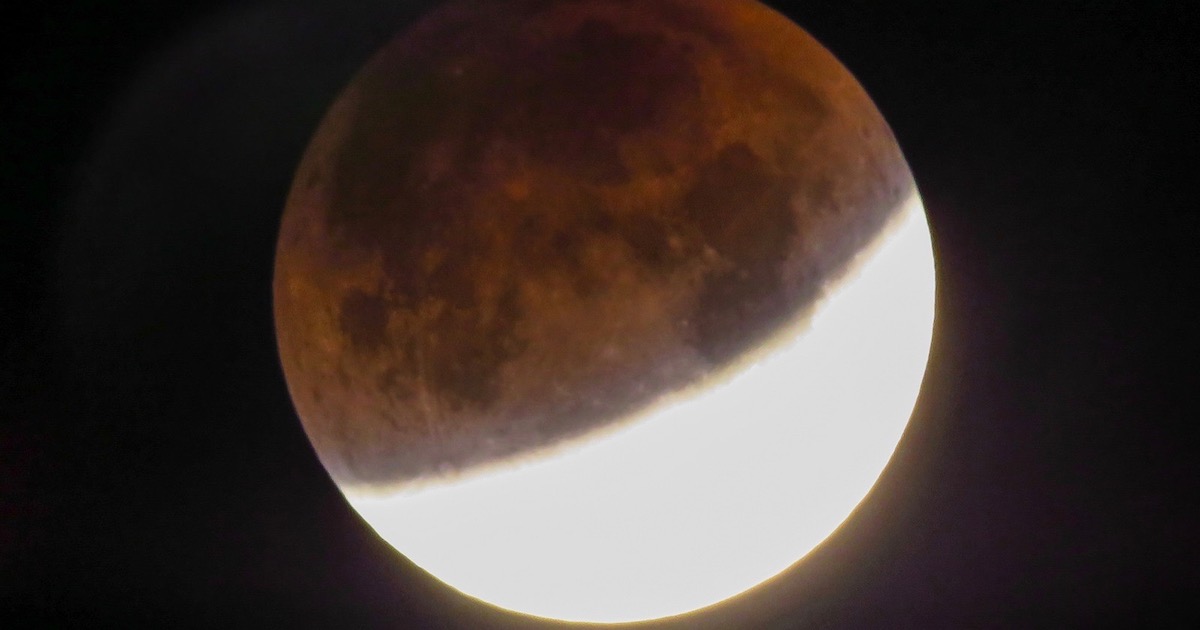
One sign showed a picture of a ship sailing off the edge of the Earth. As Keas points out, the joke was on them: Educated people in the medieval period were well aware that the Earth is round, a fact immediately evident when you see a lunar eclipse. What Keas calls the “Flat Myth” is a product of poor education, not in the Middles Ages — which were “not Dark Ages after all” — but in our own time when kids are taught misinformation by educators who are misinformed themselves or who have an axe to grind against the heritage of the European West.
Photo: In a lunar eclipse, the shape of the Earth, round not flat, is obvious; by Rocky Raybell via Flickr (cropped).