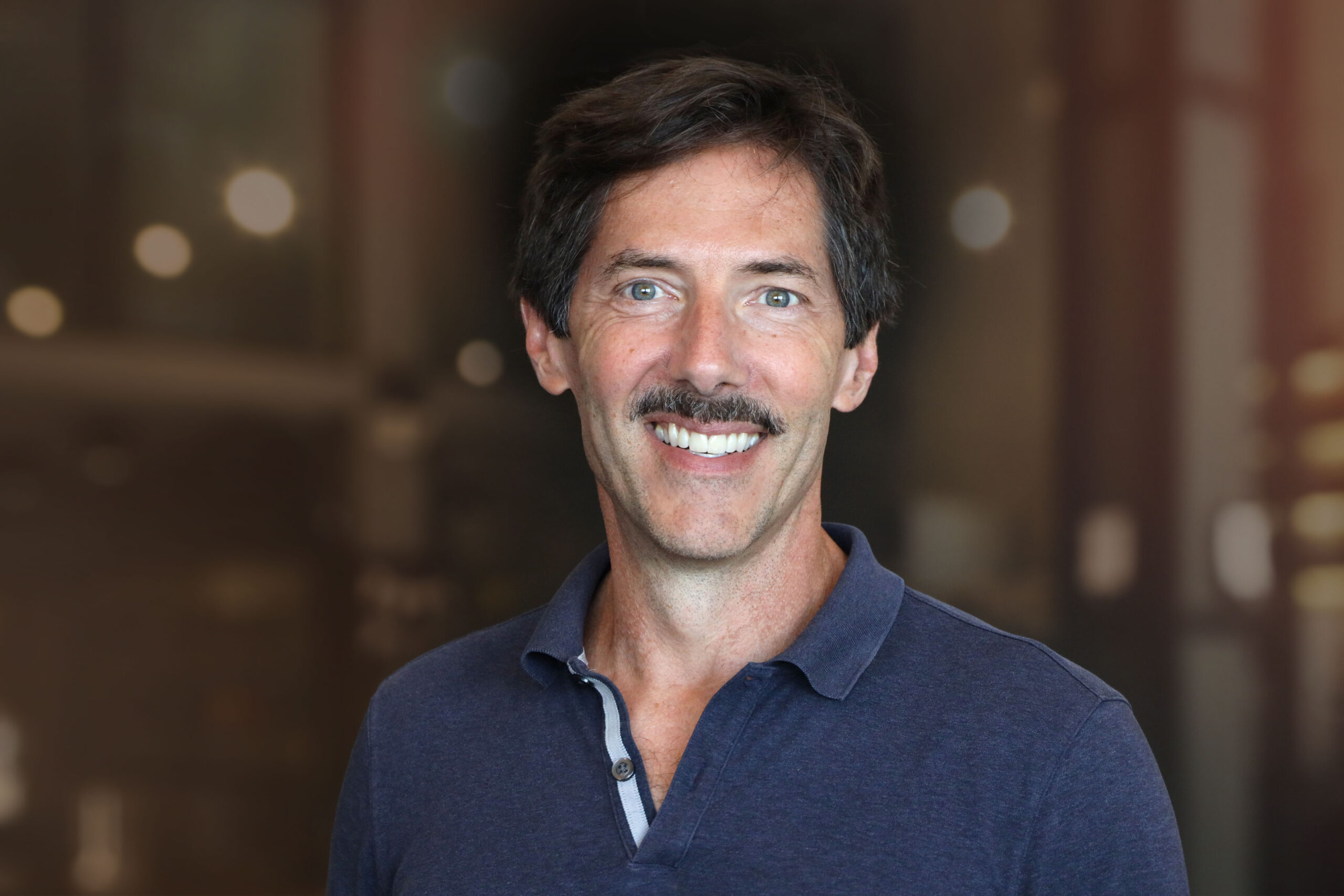






































In a really excellent new ID the Future episode with Todd Butterfield, Steve Laufmann puts the engineering challenge to gradualist evolutionary schemes about as powerfully as one could do. An enterprise architecture consultant, he is a most gifted and entertaining explainer.
There are 37 trillion cells in the human body, some 200 cell types, and 12,000+ specialized proteins. How does it all come together? In human ontogenesis, a 9-month process “turns a zygote into what I call a tax deduction,” says Laufmann. Building a system like this that “leaps together at the same time to create us” (as Butterfield puts it) is the most stunning engineering feat ever accomplished as far as we know.
The discussion features one memorable phrasing after another. “Life is a discontinuity in the universe,” and explaining it means explaining the property of “coherence” associated with engineered systems. Darwinian theory proposes that this was accomplished through random changes gradually accumulating. That entails maintaining “an adaptive continuum” of life where “any causal mechanism that’s proposed has to be able to produce all the changes for every discrete step within one generation.” In this way, unguided evolution could accomplish trivial changes – on the order of skin color, the shape of the nose or the earlobe – but “basics” (how a spleen functions, for example) are quite outside the range.
For the Darwin proponent, it looks hopeless. Laufmann: “Random changes only make the impossible even more impossible. It’s like the impossible squared. It just can’t happen.”
Taking all of this together, what you expect, rather than gradual change as evolutionists picture it, is sudden explosions of complexity. And this is just what the fossil record shows.
It’s a wonderful and enlightening conversation, demonstrating again the necessity of introducing the engineer’s perspective in any realistic estimation of how evolution could work. Darwin proponents almost never seem to consider these challenges. Listen to the podcast here, or download it here.
Photo credit: NASA/Bill Ingalls.